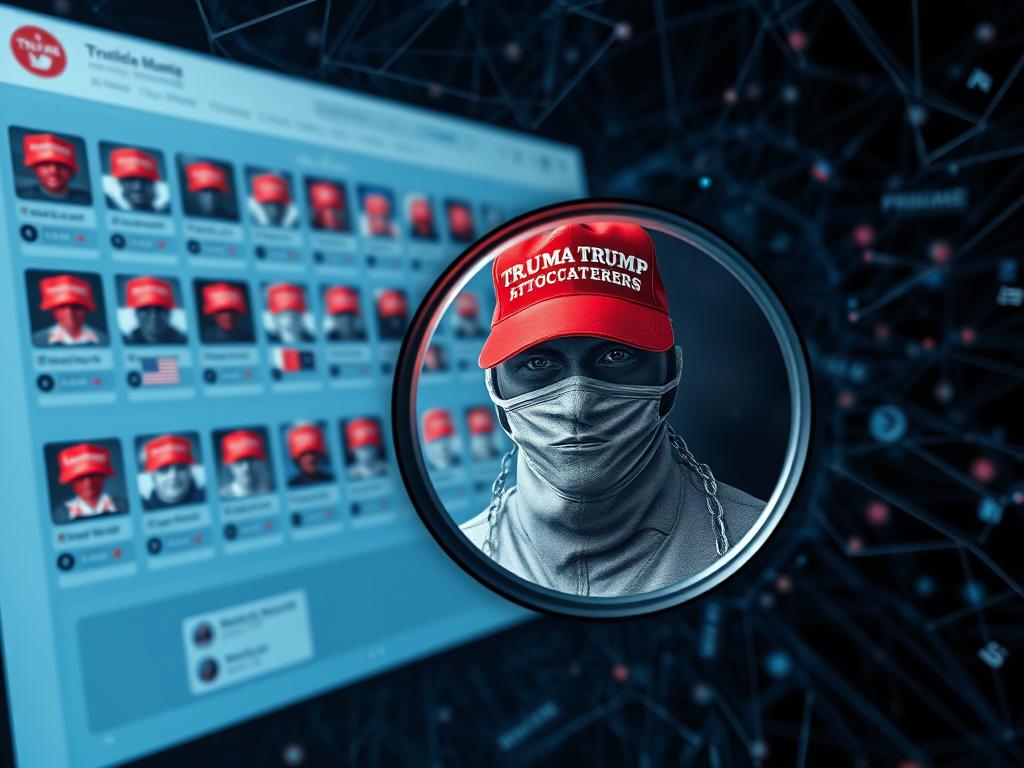
In a startling revelation that underscores the complexities of social media manipulation, a pivotal new Twitter feature has uncovered that many accounts profiting from the ‘Make America Great Again’ (MAGA) narrative are, in fact, being operated by scammers from the developing world. Hardly the grassroots supporters they profess to be, these accounts have been adeptly masquerading as ardent proponents of the online right, capturing both attention and monetary gain from unsuspecting American followers.
This unanticipated discovery has sent ripples through political and social media spheres, likely impacting not only the credibility of these influencers but also the trust dynamics within online movements. For a long time, these accounts have thrived by tapping into the fervor of political discourse, a strategy that has proven lucrative given the charged atmosphere surrounding American politics. However, how much of this engagement was truly organic? The financial consequences for these operators might be significant, but the reputational cost to the MAGA movement could be even higher.
The unveiling of these foreign-run accounts is akin to a digital house of cards tumbling down. It sparks critical reflection on how technology can both empower and exploit users, pointing to the importance of maintaining vigilance in the digital age. For platforms like Twitter, this development reinforces the need for robust verification processes to discern authentic voices from concocted ones. It also raises broader questions about the global reach of misinformation, where geographical boundaries blur, but the impact remains sharply local.
From a societal perspective, this narrative dissolution emphasizes the alarming gullibility factor, where users fail to question the authenticity of their online interactions. The notion that some followers transferred funds based on ideological alignment now strikes a discordant chord, revealing an echo chamber that is not only self-perpetuating but vulnerable to external manipulation. The insights gleaned from this situation point towards a dire need for heightened digital literacy and skepticism among the digital populace.
Ultimately, this revelation serves as a cautionary tale about the pitfalls of blind allegiance in internet communities. The facade of these MAGA accounts being foreign-operated scams highlights a new arena in cyber deception, one that calls for increased transparency and accountability. As technology continues to evolve, so too must our awareness and critical engagement with it. The onus lies with social media users to question, scrutinize, and, most importantly, think independently in a world where not everything is as it seems.