






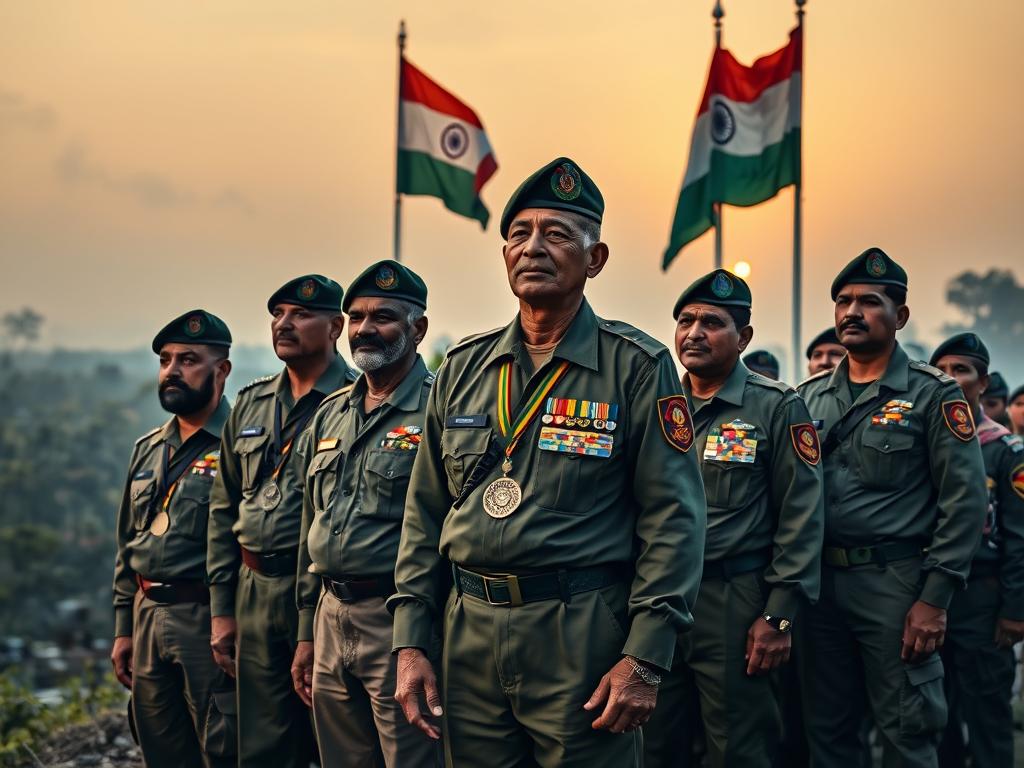
The Indian Army is about to make a much-anticipated salute to its warriors by officially honoring the bravery exhibited during Operation Pawan, a significant mission from the turbulent 1980s. This operation, which sought to bring stability to the strife-torn nation of Sri Lanka, marked a challenging chapter in military history, often overshadowed in the annals of counter-insurgency efforts. Now, after decades, the valor and sacrifices of those involved are set to be formally acknowledged, providing closure to many veterans and recognition of a pivotal period in regional history.
Operation Pawan unfolded during one of the most complex geopolitical settings in South Asia. The Indian Peace Keeping Force (IPKF) was deployed in Sri Lanka amid a civil conflict tearing the island nation apart. While their primary mission was peacekeeping, intense battles ensued, displaying the military’s resolve and dedication under arduous conditions. The delay in honoring these brave souls hints at the multi-layered nature of international interventions where undertakings such as Operation Pawan are often caught between the crosshairs of diplomacy and military action.
This recognition speaks volumes not only about the courage demonstrated by the soldiers but also about the evolving perspective within military honors. By officially acknowledging their efforts, the Army reiterates a commitment to remembering its heroes even when the circumstances surrounding their mission: controversial and politically sensitive. This move reinforces the idea that understanding history comprehensively means valuing the experiences of those who lived through it, irrespective of the mission’s immediate political outcomes.
The significance of formal recognition decades later cannot be overstated. It helps in mending the frayed bonds with the veterans and their families, who have long awaited acknowledgment of their sacrifices. More than mere ceremonial functions, these honors offer a reminder of the sacrifices inherent in peacekeeping missions. They highlight the human element within military strategies often reduced to numbers and statistics, offering a narrative of courage and determination that has, for many years, been eclipsed by larger geopolitical discourses.
This long-overdue commemoration does more than honor the past; it opens pathways for dialogue and reflection within the veteran community and the nation. By spotlighting Operation Pawan, the Army also sets a precedent for examining other ‘forgotten operations.’ It encourages historical introspection and an understanding that every mission holds lessons for the future. By formally recognizing these soldiers, the Army renews its pledge to ensuring their stories resonate with the honor they have always deserved.