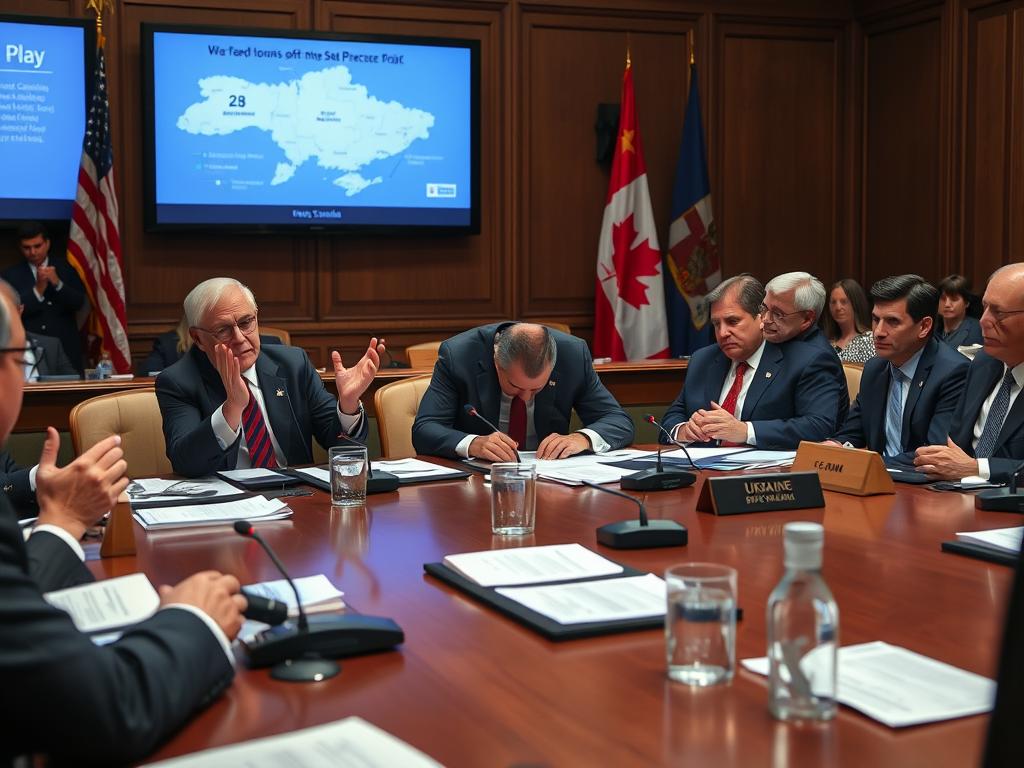
In a recent gathering at an international security conference in Canada, American senators voiced strong disapproval of President Donald Trump’s peace proposal concerning the conflict in Ukraine. This has sparked a heated debate not only among those in attendance but also across geopolitical spheres worldwide. The 28-point plan, intended as a roadmap to peace, has been criticized for what some see as a lack of strategic foresight and potential to destabilize the region further.
The contentious proposal, which was unveiled by President Trump himself, has garnered particular scrutiny from senior U.S. senators who are concerned about its implications for both Ukraine and global security. Among the sharpest critics at the conference was a senator who boldly declared the proposal as a grave geopolitical error — one of the most significant in recent memory. This critique underlines the growing tension between certain U.S. political figures and the current administration’s approach to foreign policy.
Critics argue that the peace plan largely overlooks the complexities of the conflict in Ukraine, particularly the historical tensions and territorial disputes that date back decades. Instead of offering a nuanced approach, the proposal is seen by many as a simplistic solution that could inadvertently empower aggressive postures rather than fostering genuine dialogue and resolution. This perspective was echoed by several senators at the conference, who urged for more comprehensive and collaborative international efforts.
Supporters of Trump’s plan, however, suggest that the proposal is a bold step towards breaking the stalemate and encouraging peaceful dialogue between conflicting parties. They argue that any move towards peace, regardless of its initial reception, is a positive development that could eventually lead to more stable relations. Yet, the divide between this optimism and the cautious skepticism expressed by critics reflects the broader debate over America’s role in international diplomacy under the current administration.
As the dust settles from this contentious conference, one thing remains clear: the path to peace in Ukraine is fraught with complexities and requires a concerted effort from both regional powers and global stakeholders. The controversy surrounding Trump’s proposal highlights the urgent need for thoughtful, informed, and inclusive approaches to international conflict resolution that prioritize long-term stability over short-term political gains. In the end, achieving peace will depend on collaboration, understanding, and a willingness to address the underlying issues fueling the conflict.