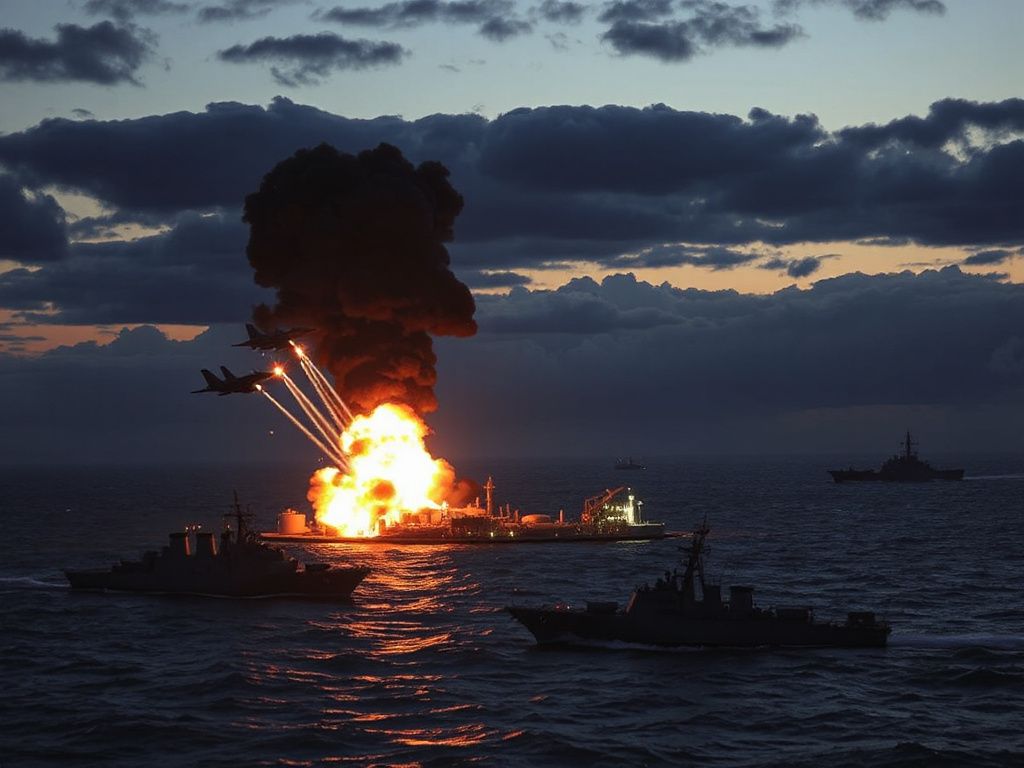
In a dramatic escalation of military tactics, President Donald Trump announced that U.S. forces had launched strikes on Iran’s Kharg Island, crucial for its oil exports. This development represents a significant flare-up in hostilities between the two nations, potentially threatening the stability of not just regional but global oil markets. As the world watches closely, the repercussions of these actions could reverberate far beyond the Persian Gulf.
The U.S. military’s targeting of such a vital node in Iran’s economic infrastructure suggests a shift towards broader economic pressure tactics. By striking the core of Iran’s oil export capabilities, the move appears aimed at crippling Iran’s economy, thereby increasing pressure on the Iranian government to curb its military activities. However, this course of action risks elevating tensions and prompting retaliatory measures from Iran, posing severe risks to international peace.
Iran’s response, as articulated by various officials, highlights the perceived aggression and violation of its sovereignty. Tehran views the attack as a provocative act of war, which it believes demands a strategic response. The Iranian leadership is likely to capitalize on this incident to rally domestic support and could lead to increased military posturing in the Strait of Hormuz, a critical chokepoint for global oil transit.
The U.S. administration, while asserting its defense for the missile strikes, might have underestimated the global economic implications. Oil price volatility can already be observed as markets respond to the potential disruptions in oil supply chains. As tensions heighten, other nations dependent on Middle Eastern oil might be forced to re-evaluate their energy security strategies, influencing international diplomatic stances and economic policies.
In conclusion, while the U.S. military action aims to assert dominance and deterrence, it carries the inherent risk of further escalating an already volatile situation. As both Iran and the United States navigate these turbulent waters, the global community waits apprehensively for a diplomatic resolution that can de-escalate tensions while ensuring the security of vital economic resources. Ultimately, the path forward will require delicate diplomacy to avert a broader conflict and ensure stability within the region and beyond.