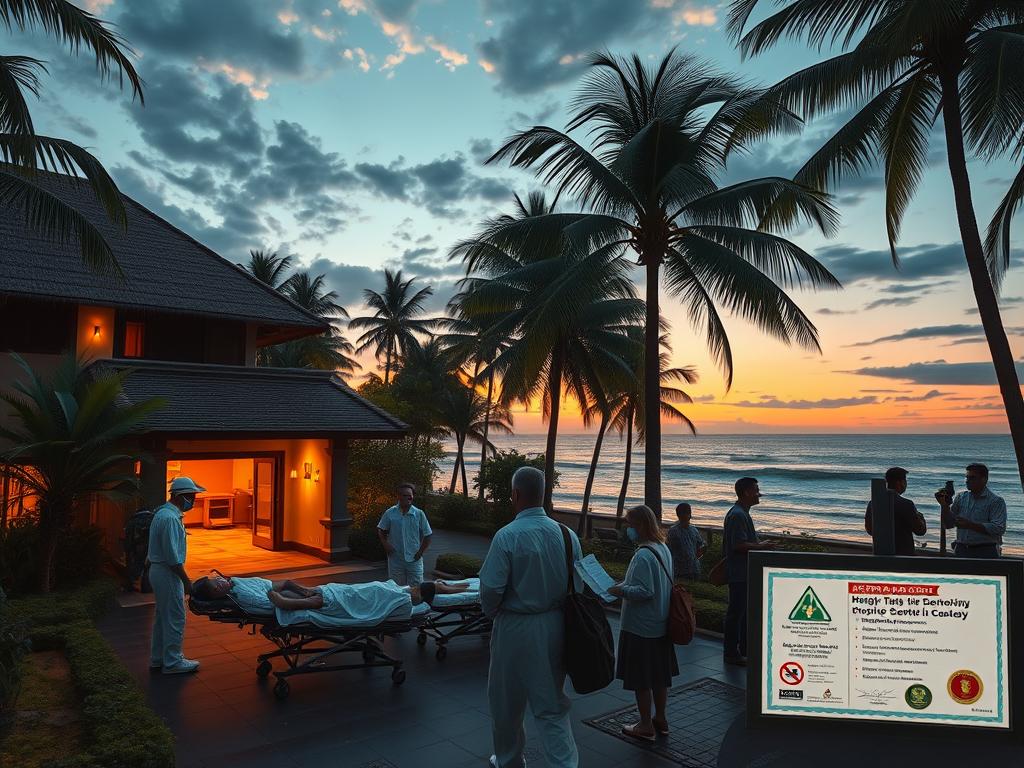
In the tranquil paradise of Bali, a recent incident has shaken the foundation of what travelers consider safe accommodation. A suspected mass poisoning at a local hotel claimed one life and left ten others in critical condition, drawing international attention and raising urgent questions about the safety protocols in place at tourist destinations. While the tragedy is still under investigation, initial suspicions point towards pesticide use, bringing to light a chilling reminder of previous incidents linked to chemical applications.
This unsettling event is not without precedent. Historical cases, including some notorious ones, have attributed tourist fatalities to the improper use of pesticides meant to tackle issues like bed bugs. The fumigation process, if not administered with stringent safety measures, poses significant risks not just to bugs, but also to guests. The thin line between eliminating infestations and endangering human lives demands an urgent revisitation of standard practices and regulations across the hospitality industry.
From a safety perspective, travelers should be aware that hotel choices can significantly impact their well-being. Ensuring you stay at accommodations with clear and transparent health and safety records should be a priority. Furthermore, raising awareness about possible hazards such as chemical treatments is vital. Guests should not hesitate to inquire about a hotel’s pest control measures and the safety procedures they adhere to.
The Bali case serves as a stark reminder for hotels around the globe to prioritize guest safety by employing environmentally friendly and human-safe pest control practices. This includes regular audits and staff training about the potential repercussions of mishandling chemical substances. Continued negligence or lapses in safety measures can quickly turn a dream vacation into a nightmare, emphasizing the need for hospitality leaders to maintain exemplary standards of care.
Ultimately, the precious balance of providing comfort while ensuring safety is an ongoing challenge for the tourism industry. Incidents like the one in Bali act as a crucial impetus for change, urging reassessment and continuous improvement in safety protocols. As travelers, a proactive approach — coupled with informed choices — will not only safeguard personal health but also push for necessary reforms to secure a safer future for global tourism.