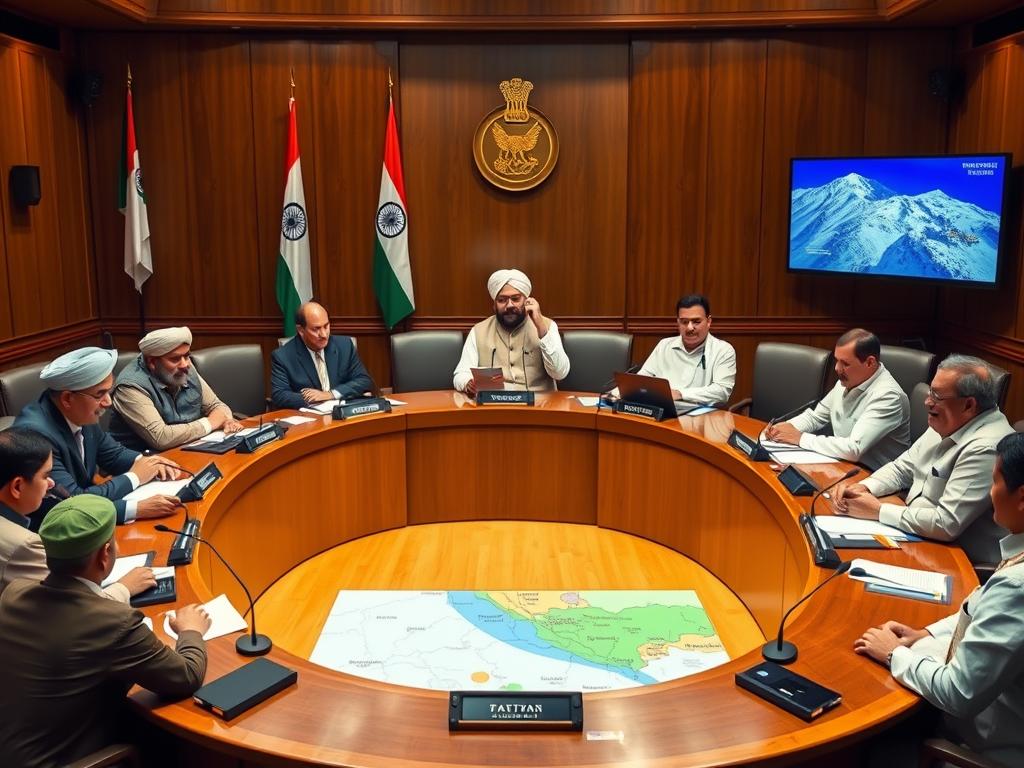
The northern states of India are once again on a collision course over regional rights and resource allocations, as highlighted by Punjab’s Chief Minister Bhagwant Mann’s recent statements at the Northern Zonal Council (NZC) meeting. At the heart of the dispute is the accusation that neighboring states, including Haryana, Himachal Pradesh, and Rajasthan, are encroaching on Punjab’s rightful claims and resources. This meeting has sparked a debate about the equitable distribution of resources in a region grappling with historical rivalries and modern challenges.
The NZC serves as a pivotal platform for discussing inter-state issues, aiming to foster cooperation among states that share not just geographical proximity but also cultural and economic links. However, the latest meeting underscored the difficulties in reaching mutual agreements, with Punjab’s grievances bringing to the fore longstanding disputes over water sharing, industrial development, and economic resources. The reliance on bureaucratic intervention and the need for enhanced intergovernmental dialogue were key themes underpinning the session.
Mann’s firm stance resonates with the growing call for region-specific strategies that respect the unique needs and contributions of each state. In an era where sustainable development and effective resource management are vital, Punjab’s leadership argues for a fair reassessment that considers Punjab’s position and its historical contributions to the nation’s agricultural and industrial growth. This call for re-evaluation highlights the need for a balanced approach to federalism that transcends mere political rhetoric and focuses on practical, equitable solutions.
On the flip side, representatives from Haryana, Himachal Pradesh, and Rajasthan assert that their demands and developmental needs are equally pressing, especially as they strive to uplift rural economies and enhance infrastructure amidst rapidly changing economic landscapes. The challenge lies in balancing these differing needs without triggering further territorial and political friction, which could detract from the cooperative spirit intended by these council meetings. A nuanced approach is crucial to address both tangible and strategic long-term goals for all involved states.
Ultimately, the dispute at the NZC meeting reflects broader themes in inter-state politics. Beyond the immediate concerns of resource allocation and jurisdictional disputes, it exemplifies the ongoing struggle to achieve unity and fairness within a diverse and complex federal structure. To move forward, these states might explore innovative dispute resolution mechanisms, perhaps even adopting a more collaborative governance model that emphasizes dialogue and shared responsibility, thus paving the way for a more harmonious future in the region.