





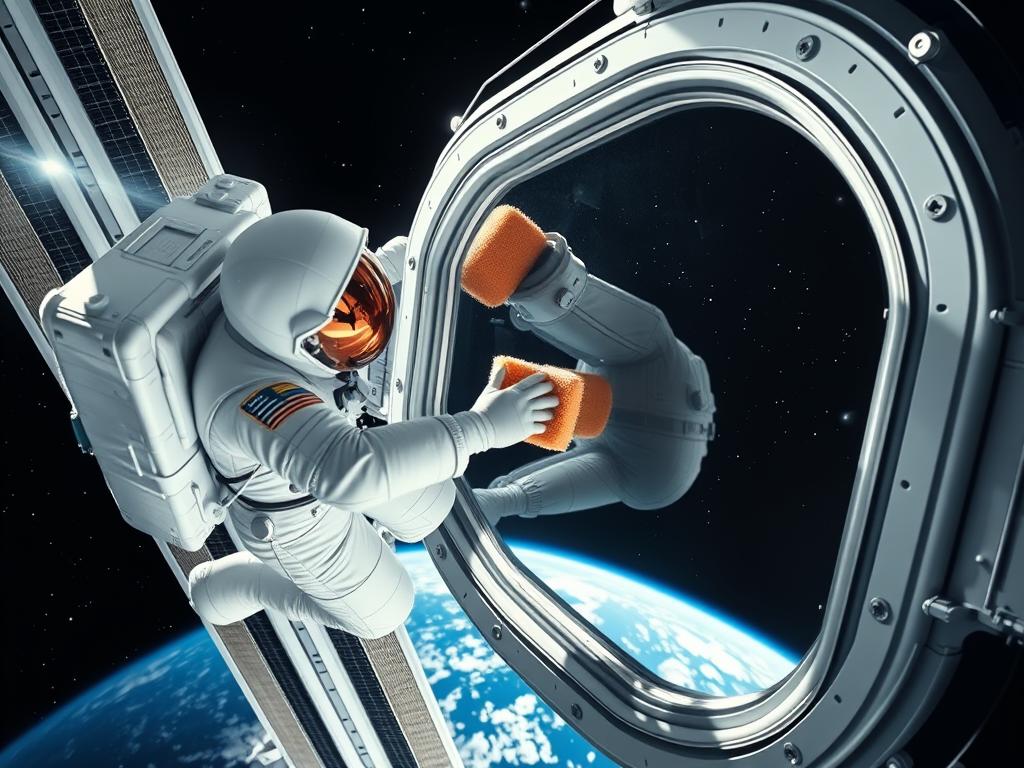
In a pioneering move that marries the timeless chore of cleaning with the cutting-edge realm of space exploration, a cosmonaut recently embarked on a unique task: cleaning the windows of the International Space Station (ISS). This task, seemingly mundane yet profoundly symbolic, showcases the constant human effort to maintain our space outpost not just functionally, but visually pristine as well. In a world increasingly fascinated with the expanse beyond Earth, the act of window cleaning in space elevates itself to a new dimension of human curiosity.
Cleaning spaces and places have always been a part of our routine on Earth, but when such activities occur hundreds of miles above the surface, they remind us of the different layers of habitation that space exploration entails. The ISS, serving as a scientific laboratory and a temporary home for many astronauts and cosmonauts, needs upkeep akin to any abode. This mission to clean the windows underscores the importance of maintenance in prolonging the operational life and safety of the station.
While the importance of cleaning the ISS windows might initially seem novelty-inspired, it plays a crucial role in enhancing visibility and, by extension, safety during spacewalks. Crystal-clear windows mean clearer observations and better recordings of the processes occurring both within and outside the station. This clarity can be essential for monitoring the condition of the spacecraft structure and observing celestial phenomena, thus enhancing scientific inquiries.
From a broader perspective, this task reflects on the growing focus towards more sustainable long-term living conditions in space. As humanity inches closer to the dream of space colonization and longer missions to Mars and beyond, the necessity for such unconventional chores will only increase. Understanding and solving such micro challenges today paves the way for more complex solutions tomorrow, ultimately leading to a more self-sufficient and leisurely life in orbit.
In conclusion, as humanity gazes further into the mysteries of the universe, it’s the small, sometimes overlooked tasks that provide a foundation for grand futuristic plans. Whether it’s cleaning a window or planting the first saplings of an orbital garden, these tasks integrate the mundane with the extraordinary. Each effort reflects our aspirations not just to explore, but to create viable and nurturing spaces every step of the way. The sponge wielded by a cosmonaut on a space mission is emblematic of our ongoing commitment to bridge the gap between what we dream and what we can achieve.