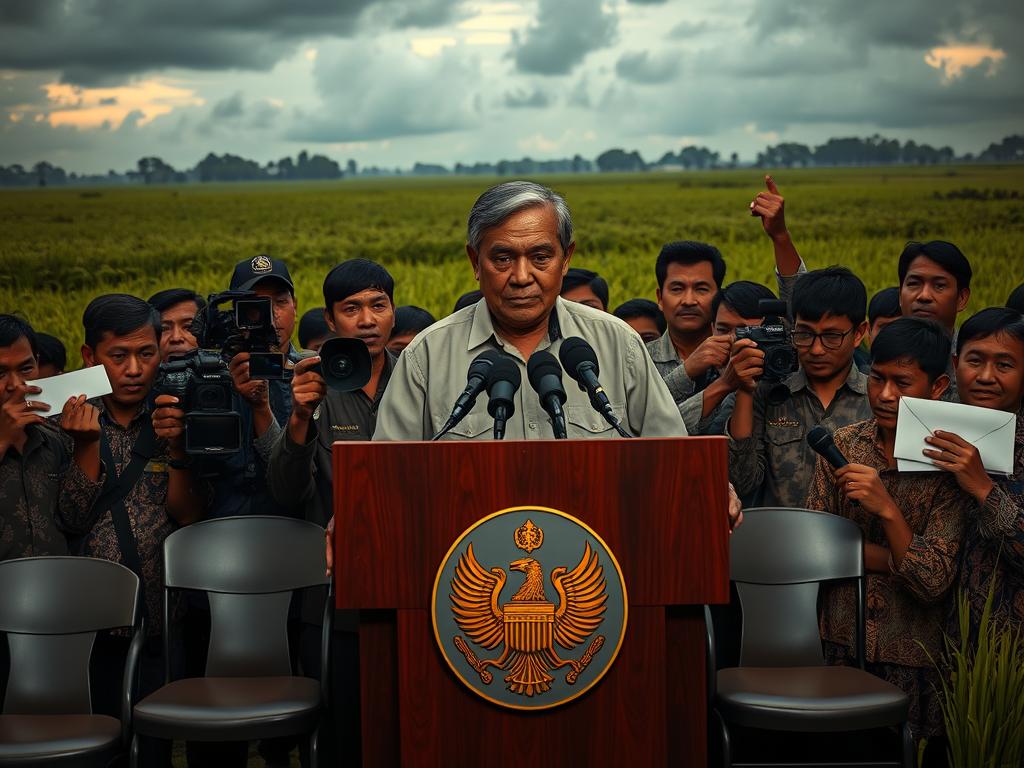
In the bustling world of agricultural policy and politics, the name Amran Sulaiman has become synonymous with the vigorous debate surrounding Indonesia’s rice production figures. As the current Agriculture Minister, Sulaiman finds himself at the center of scrutiny, with conflicting reports casting doubt on the government’s claims of increased rice yields. An investigation has brought to light the challenges in obtaining a direct response from the minister, making it a topic of interest for those concerned about the agricultural future of the nation.
Throughout November 2025, journalists made multiple attempts to engage Sulaiman for clarity on these figures. Despite their efforts, including delivering formal requests to several locations associated with him, access to the minister remained elusive. This leaves a critical gap in public understanding, especially when agricultural success stories play a vital role in shaping national policies and economic strategies. In an era where transparency is a public expectation, this lack of communication adds an intriguing layer to the story.
It’s essential to consider the broader implications of such opacity. Rice is not just a dietary staple but a cultural cornerstone in Indonesia. The government’s assurance of increased production can impact everything from local food security to international trade agreements. Discrepancies in reports can lead to mistrust and uncertainty among farmers and consumers alike, potentially exacerbating tensions in a country where rice shortages can lead to significant unrest.
Moving beyond the immediate focus on statistics, this situation highlights the broader necessity for reform in how agricultural data is reported and verified. Transparent and consistent data sharing is crucial for public trust and for the formulation of policies that reflect reality on the ground. If disparities in data continue unchecked, it risks undermining not just current leadership but the entire framework of agricultural governance.
In conclusion, the case of Amran Sulaiman and the rice production figures is more than just a statistical dispute; it is a reflection of the need for accountable governance and open dialogue. As stakeholders across the spectrum await more clarity, the situation serves as a poignant reminder of the importance of transparent leadership in bolstering both the agricultural sector and public confidence. It remains vital for those in power to rise to the occasion, providing precise and honest accounts that bolster, rather than erode, national unity and progress.