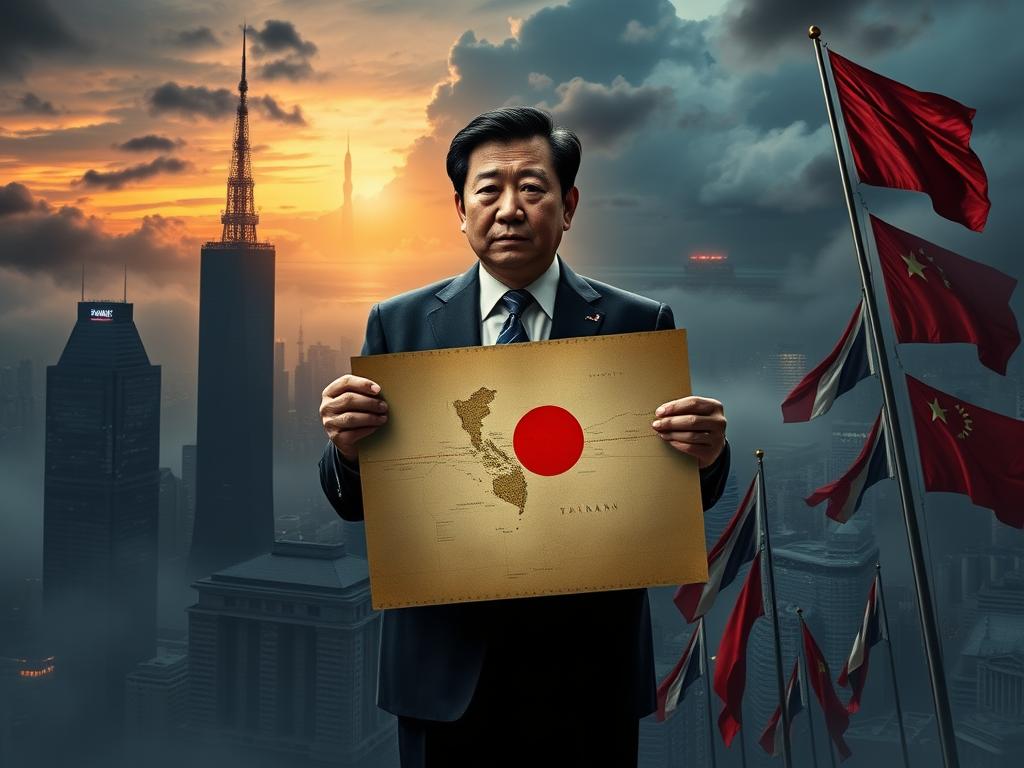
The geopolitical landscape in East Asia is witnessing heightened tension following the recent remarks by Japan’s newly appointed Prime Minister Takaichi. The comments, suggesting that Japan might consider military intervention should China attempt to reunify Taiwan by force, have set off a diplomatic alarm in Beijing. China views these statements as a serious threat to the longstanding, albeit delicate, balance that has defined China-Japan relations for decades.
Japan’s foreign policy has traditionally been cautious, preferring diplomacy over military aggression in regional disputes. This new stance on Taiwan underscores a potential shift in strategy, seemingly aligning more closely with Western perspectives on Taiwan’s autonomy. Despite Taiwan’s status as a self-governing entity, China maintains that it is a part of its territory, and thus the issue is a highly sensitive subject in Sino-foreign relations. Takaichi’s comments have not surprisingly evoked a strong response from Beijing, which denounced the remarks as destabilizing.
For Japan, the Taiwan question is not just about regional security but also involves complex historical and economic ties. Taiwan was under Japanese rule from 1895 until World War II’s conclusion, and the nations today share robust economic links. Any conflict over Taiwan would inevitably impact Japan’s security and economic interests, compelling Tokyo to reassess its defense strategies and alliances. Takaichi’s willingness to address these potential threats head-on could indicate a new era of more assertive Japanese policy in the region.
From a broader perspective, these developments could lead to a domino effect in regional security dynamics. China’s belligerence has occasionally been met by a show of international support for Taiwan, particularly from the United States and its allies. Increased tension could push Japan and other regional powers to further solidify their defense commitments and partnerships. As countries in the region recalibrate their policies in response, the delicate equilibrium that has so far prevented large-scale conflict could become increasingly fragile.
In conclusion, while Takaichi’s comments may have sparked immediate controversy, they also bring to the fore the critical issue of Taiwan’s future. As China and Japan navigate these choppy diplomatic waters, the international community is reminded of the intricate ties that bind economies and the potential for instability when these ties are tested. It is in the interest of all involved to seek a balanced approach that upholds peace and adheres to international norms, lest the delicate fabric of regional stability unravel further.