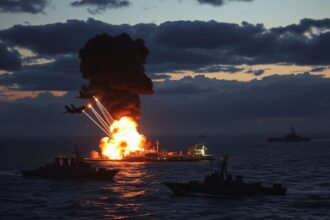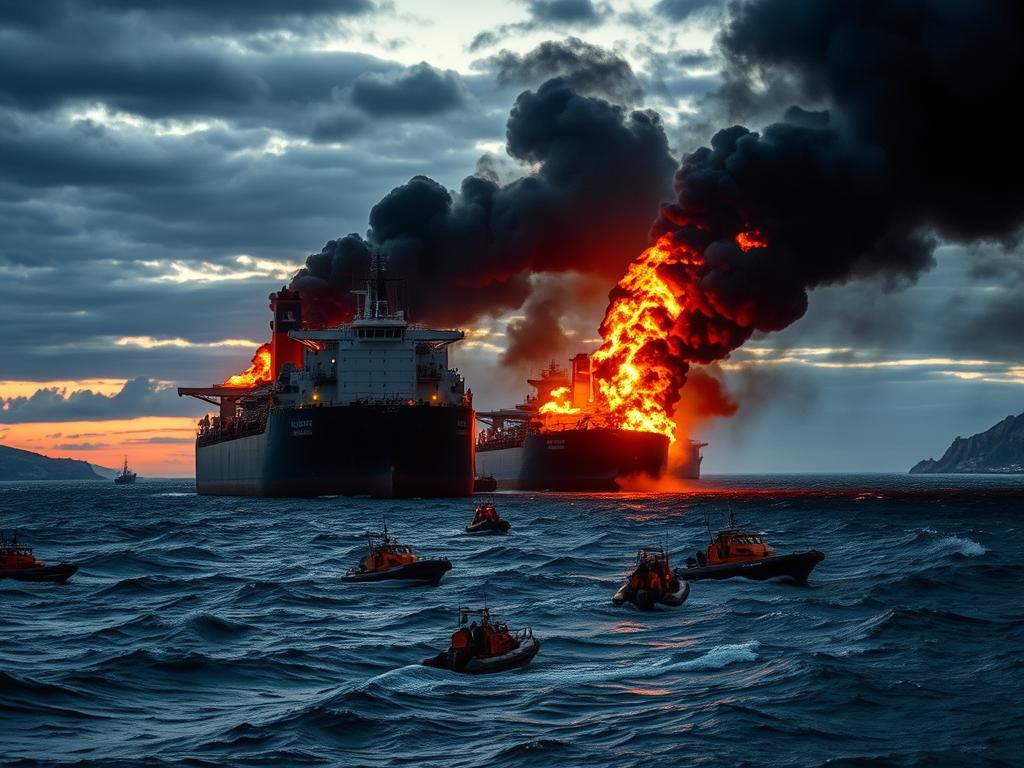
The Black Sea, a critical conduit for maritime trade, has witnessed a dramatic episode as two tankers were struck and subsequently burst into flames. This alarming development was reported by Turkish authorities on Friday, igniting both the vessels and immediate rescue operations. As flames rose into the sky, it underscored the enduring vulnerability of maritime routes to unforeseen hazards, demanding a re-evaluation of safety protocols for vessels traversing such pivotal waters.
The incident has once again highlighted the precariousness of maritime navigation in bustling trade corridors. The Black Sea, bordered by countries with varying geopolitical interests, often finds itself at the center of tense maritime maneuverings. Although details on the perpetrating strike remain under wraps, the situation reflects a grim reality: the sea lanes are often as contentious as the lands they connect.
Rescue efforts are underway, with Turkish authorities deploying emergency response teams to assist stricken crew members. The swift action is a testament to Turkey’s preparedness for maritime emergencies in its adjacent waters. However, the incident raises questions about long-term environmental damage. With oil tankers involved, the risk of significant spillage and subsequent marine pollution looms large, threatening the delicate ecological balance of the Black Sea’s marine life.
Beyond the immediate chaos, this event fuels broader discussions about international maritime security. Strikes on commercial vessels amplify calls for enhanced protection protocols and cooperative international monitoring. Nations benefiting from these maritime arteries must collaborate, crafting strategies that shield both human and environmental interests from potential conflicts or accidents.
As the situation continues to develop, the world watches closely. Incidents like these serve as a stark reminder of the fragility of the systems we rely on for global trade. Strengthening safety measures, increasing cooperation among bordering nations, and addressing environmental vulnerabilities are crucial steps forward. This isn’t just about salvaging the present—it’s about securing a sustainable future for the Black Sea and the communities it serves.