






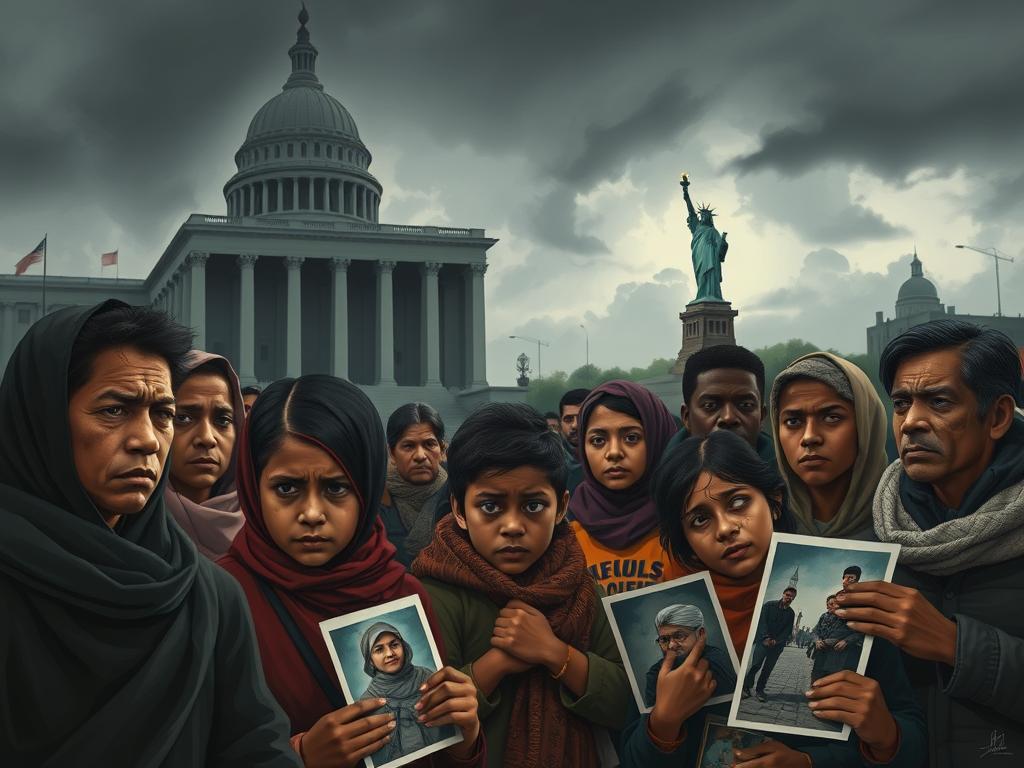
The recent announcement by the Trump administration to reassess the refugee admittance policies executed under President Biden has stirred a wave of unease among those who could be directly affected. This move not only places many refugees living in the U.S. in a precarious situation but also raises broader questions about the consistency and humane approach of America’s refugee policies. As history has shown, the constant shifting of immigration policies only serves to increase fear and instability for individuals who have already endured unimaginable hardships.
The concern for these refugees, whose lives remain in the balance, is palpable. Many refugees undergoing resettlement have already spent significant time planning and adapting to their new realities in the U.S., believing that they had moved past the initial hurdles of immigration. With this unexpected review, the specter of possible deportation or the delay in family reunifications looms large, undermining the sense of belonging and safety that had been slowly nurtured. These decisions affect not solely individual livelihoods but also the social fabric of communities enriched by diverse cultures and experiences.
From an analytical perspective, one might argue that evaluating refugee policies is a necessary exercise in maintaining national security and ensuring that those granted refuge meet established criteria. However, such reviews must balance rational security measures with empathy and justice, particularly for those fleeing dire circumstances. Critics of the review point out that the wide-scale re-evaluation of refugees admitted under a previous administration sets a concerning precedent, where each political shift could potentially invalidate the legal processes and promises made to vulnerable populations.
This policy review also underscores the deeply embedded political divisions over immigration in the United States. The fluctuation between administrations and their immigration priorities can create an unpredictable environment for refugees and immigrants alike. This instability might erode international confidence in the U.S.’s role as a global leader regarding human rights and asylum, complicating relationships with countries that view America as a sanctuary for those seeking safety and opportunity.
In conclusion, the Trump administration’s decision to review Biden-era refugee admissions highlights the stark human ramifications of political changes in immigration policy. The U.S. now stands at a critical juncture: To reaffirm its ethos as a nation that welcomes those in need, or to risk redefining its core values in the eyes of the world. The outcome will not only shape the future of countless individuals seeking refuge but also reflect the American character and its commitment to justice, compassion, and inclusion.