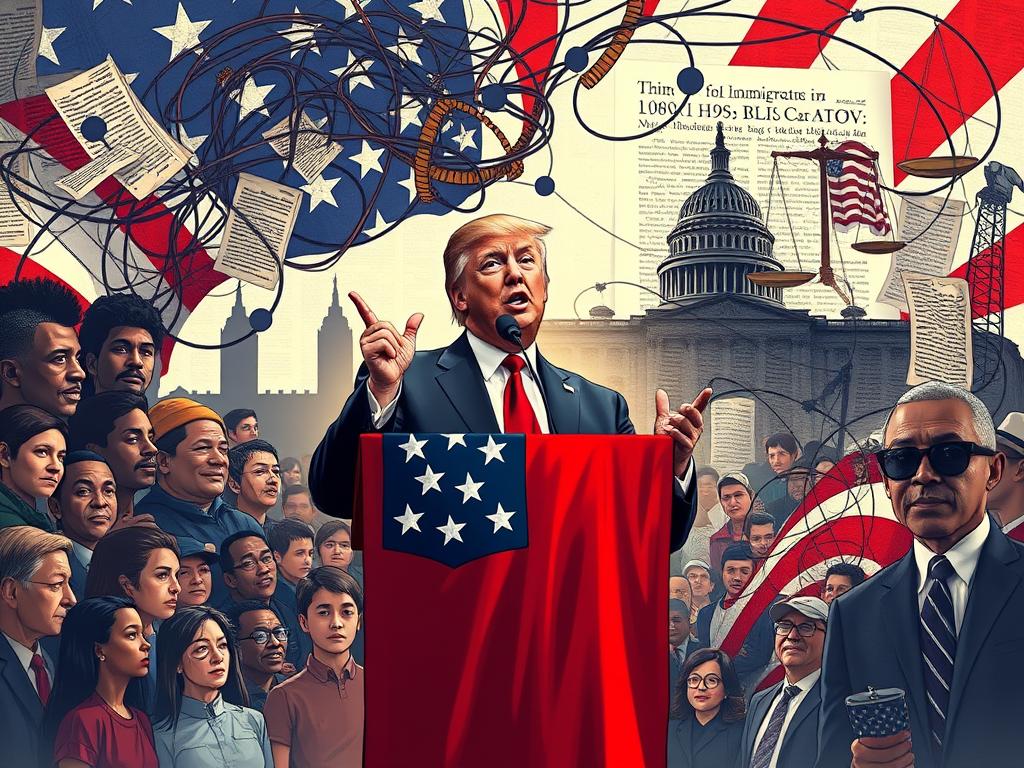
In a bold declaration, former President Donald Trump announced his intention to implement a ‘permanent pause’ on immigration from developing nations. This statement came in the wake of a tragic incident in Washington DC involving a fatal shooting purportedly carried out by an Afghan immigrant. Trump’s proposal to reassess the status of millions of immigrants challenges the current trajectory of the United States’ immigration policy.
At first glance, this proposed policy shift echoes Trump’s past rhetoric aimed at securing U.S. borders and prioritizing national security. However, the implications of such sweeping immigration changes are profound. Restricting immigration from third-world countries not only influences the demographic tapestry of America but could also ripple through various sectors, potentially affecting the economy, cultural exchange, and international relations.
Proponents of stricter immigration measures argue that these actions are necessary to bolster domestic safety and prevent future security threats. They see the review as an opportunity to ensure that immigration policies better serve American interests. Nevertheless, there are substantial concerns from critics who warn that such measures could perpetuate xenophobia and retreat from America’s foundational values of welcoming diverse populations seeking refuge and opportunity.
Amidst these debates, it’s crucial to approach the discussion around immigration with nuance. Each immigrant community includes individuals who contribute uniquely to American society, enriching its culture and economy. Caution is required to avoid policies that indiscriminately penalize groups for the actions of a few. An effective policy should balance security with empathy, recognizing the human stories behind immigration statistics.
The dialogue on this topic is far from over. As Trump signals his potential return to policymaking, the discourse on immigration will likely intensify. Whether his propositions result in tangible policy changes remains to be seen. As Americans, it is our responsibility to engage in informed and compassionate conversations about how to shape the country’s immigration future, ensuring it aligns with both security imperatives and humanitarian principles.