






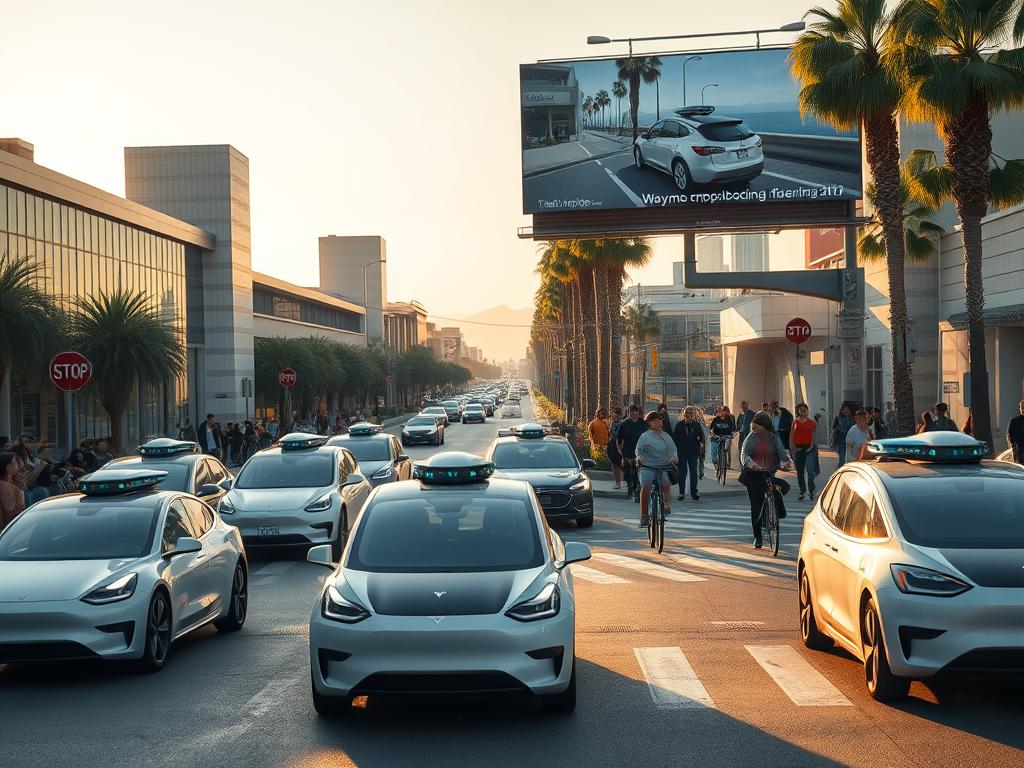
The bustling streets of California have long been the testing grounds for autonomous vehicle innovation, yet the relationship between self-driving tech companies and residents has grown increasingly complex. Recently, a viral video spotlighted Waymo, a significant player in the autonomous vehicle sector, depicting the company’s cars as nuisances rather than neighbors. This incident has sparked a broader conversation about the saturation of self-driving vehicles and their place in community dynamics.
California, often hailed as the cradle of technology advancement, hosts a variety of autonomous vehicle companies like Apolo, AutoX, Nuro, WeRide, Tesla Robotaxi, and Zoox. However, with this array of undertakings, residents may be experiencing a phenomenon akin to ‘autonomous vehicle fatigue.’ This term encapsulates the weariness that arises when tech that promises to simplify life actually complicates it with various glitches and inconveniences, as showcased in the Waymo incident.
The public’s reaction to Waymo’s faux pas raises significant questions about the intersection of innovation and everyday life. While the technology heralds potential benefits such as reduced traffic accidents and increased mobility for people without licenses, there is a growing need to ensure that these advantages do not overshadow community concerns. Ensuring that autonomous vehicles share spaces considerately is not just a technical challenge but a social imperative that demands attention from both companies and regulators.
With each misstep by self-driving cars, the need for stricter oversight becomes ever more evident. Residents must feel assured that their communities won’t be disrupted or treated as experimental zones without their input. Enhanced collaboration between local governments and tech companies could focus on implementing strategies that ensure these advanced vehicles blend seamlessly into neighborhoods rather than bulldoze through them.
In conclusion, the dilemma of integrating cutting-edge technology with established communities is one that requires careful navigation. As California and other states continue to host these vehicles, the onus is on companies like Waymo to prioritize being good neighbors. It’s not enough to drive technological progress; they must also ensure they don’t drive past the needs and concerns of the community. By balancing innovation with empathy and cooperation, autonomous vehicles can truly transform transportation and forge a harmonious relationship with their human counterparts.