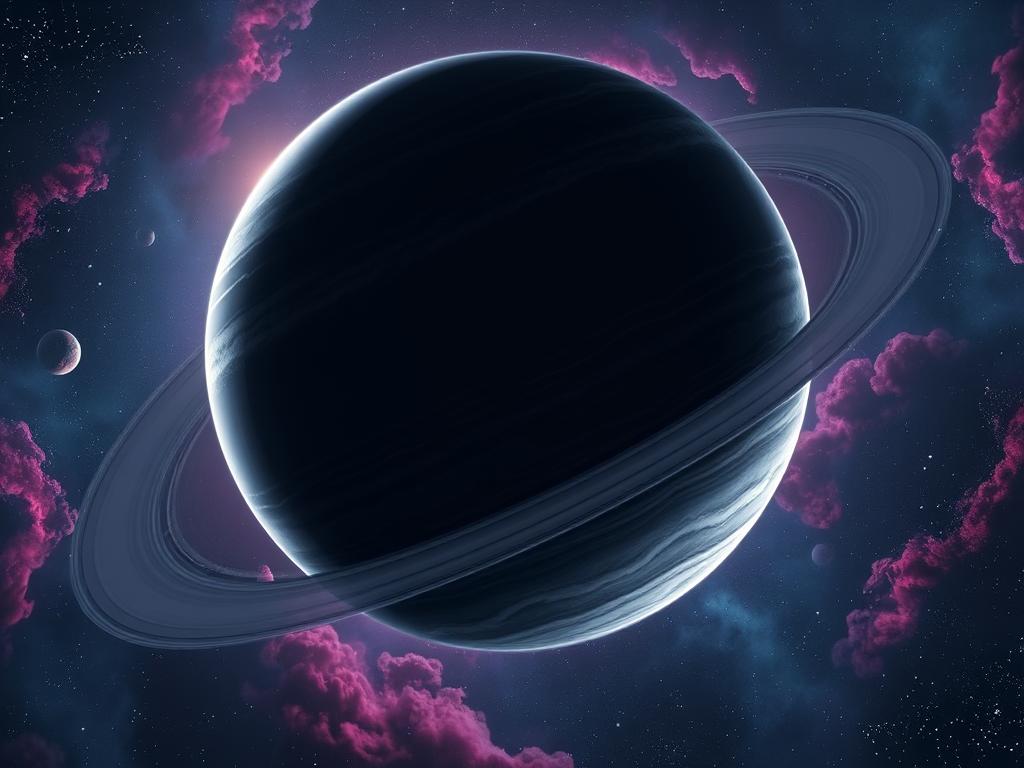
In the annals of astronomical discovery, a new chapter has been inscribed: the potential identification of a colossal exomoon orbiting a planet far beyond our own solar system. While astronomers have cataloged an astounding 6,000 exoplanets to date, this marks a groundbreaking moment in the search for celestial bodies that orbit them. The hunt for exomoons has been long and arduous, with countless researchers sifting through cosmic data, hoping to find evidence of these elusive satellites. This recent finding may finally give us the first glimpse of such a companion circling a distant world.
The prospect of discovering an exomoon is exhilarating, not only because it widens our horizon of celestial exploration but also because it challenges our understanding of moon formation and dynamics. This particular candidate is astoundingly large, rivalling the size of the gas giants in our solar system, and its discovery raises intriguing questions about how such a massive moon could form. Could it have formed in situ around a giant planet, or could it be a captured rogue planet? The implications for planetary formation theories are profound and could lead to a reconsideration of established models.
As telescopes and detection techniques become more sophisticated, astronomers are better equipped to peer into the distant reaches of the cosmos with unprecedented clarity. The detection of this exomoon was made possible by observing the minute gravitational effects exerted on its host planet. These advancements highlight the crucial interplay between technology and scientific curiosity in uncovering the universe’s hidden secrets. In many ways, this discovery is a testament to human ingenuity and persistence in the face of the cosmos’ vast, uncharted territories.
Examining this potential exomoon further will likely require collaborative international efforts, combining resources from various space agencies and research institutions. Detailed analysis will be crucial, using different observational approaches such as transits, direct imaging, and possibly spectroscopy to characterize its atmosphere and composition, if any. The thorough investigation of this exomoon could open new avenues in the study of astrobiology, as moons elsewhere might harbor conditions suitable for life—just as some scientists speculate about moons like Europa and Enceladus in our solar system.
The discovery of a potential exomoon marks more than a mere notch in our astronomical records; it signifies an expansion of our cosmic neighborhood and a deeper understanding of the universe’s diverse planetary systems. While much mystery surrounds these distant worlds, each finding brings us closer to answering fundamental questions about planetary formation and the possibility of life beyond Earth. As we continue this celestial odyssey, it is clear that for every answer found, a multitude of new questions arise, urging humanity ever forward into the vast unknown.