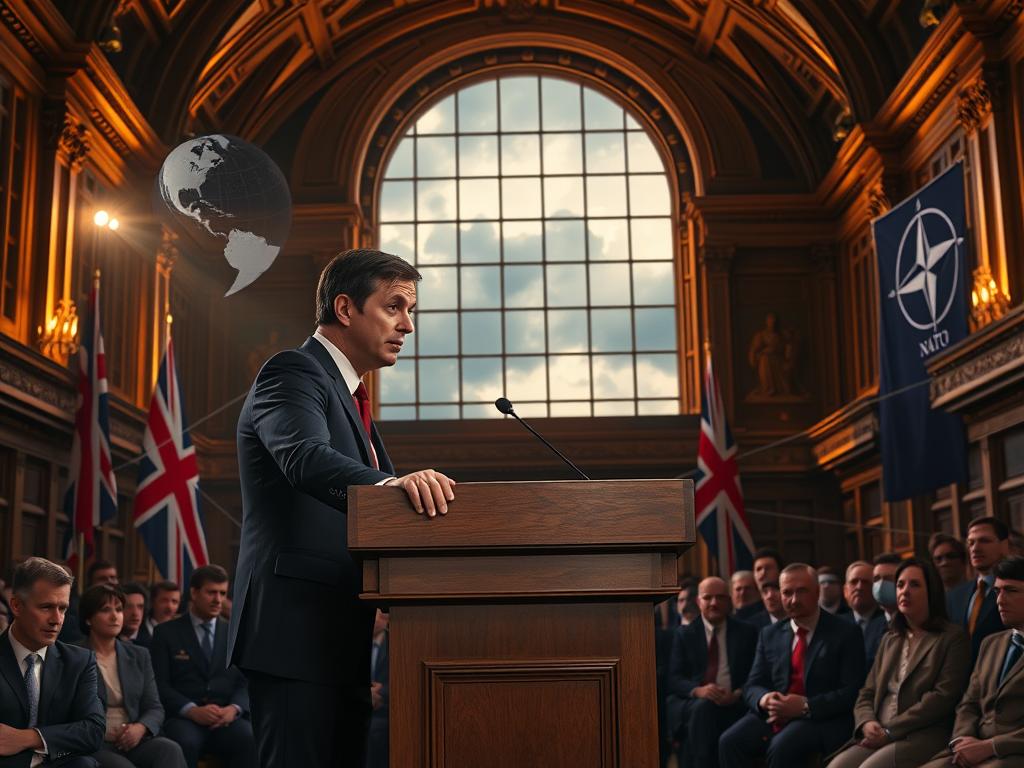
In a compelling speech at the historic Guildhall, Prime Minister Keir Starmer laid bare his vision for Britain’s role in today’s unpredictable international landscape. Steering British foreign policy through the complexities of a ‘chaotic world’ is no small feat, but Starmer insists the nation must remain steadfast in its international commitments. His message firmly counters those voices urging retreat from key alliances such as the European Convention on Human Rights (ECHR) and the North Atlantic Treaty Organization (NATO), advocating instead for a proactive stance in global affairs.
Starmer’s speech underscores a belief that withdrawing from multinational frameworks would only serve to weaken Britain’s standing on the world stage. He presented a strong argument against the allure of isolationism, warning of the potential perils that could arise from turning inward. Starmer’s rhetoric taps into the understanding that global alliances have historically offered stability, security, and support, especially when navigating through the tempests of geopolitical uncertainty.
The Prime Minister’s vision reflects a broader understanding that in today’s interconnected world, no nation can afford to go it alone. This perspective is grounded in the recognition that collaborative efforts in addressing transnational issues, such as climate change and security threats, are more effective than solitary endeavors. Starmer’s emphasis on union underlines a pragmatic approach to foreign policy, suggesting that Britain’s strength lies in its ability to forge and maintain robust international relationships.
However, Starmer’s approach faces challenges from domestic skeptics who question the costs of such commitments. These critics argue that Britain’s priorities should focus on addressing internal socio-economic concerns before extending resources to international engagements. Nevertheless, Starmer appears confident that these global responsibilities are not only necessary but could foster economic growth and stability at home by maintaining a stable international trade environment and fostering cross-border collaborations in technology and innovation.
In conclusion, Starmer’s Guildhall address marks a clear call for Britain to embrace its role as a global player with a commitment to collective security and international collaboration. In an era marked by uncertainty, his vision is one of engagement, partnership, and forward-looking diplomacy. While the road ahead may present its share of challenges, Starmer advocates for a foreign policy that is resilient enough to weather the storms while keeping Britain’s interests and values firmly anchored on the international stage.