In a groundbreaking leap forward, researchers at the Institute of Science Tokyo have unveiled an innovative 3D imaging technique that marks a significant advancement in capturing the precise shapes of moving objects. This development overcomes a longstanding limitation in optical systems, where tracking a moving target with high precision was like aiming to catch lightning in a bottle. Through the integration of neural networks, the team has managed to harness phase-shifting technologies in ways previously deemed unachievable.
Conventional 3D imaging systems have always struggled with effectively capturing rapid motion, often resulting in skewed data and blurry images. This is because traditional methods rely heavily on static subjects with predictable movements. In contrast, the new technique employs a sophisticated neural network that can adapt in real-time to changes in an object’s position and orientation. By doing so, it ensures that even the most dynamic subjects are rendered with sharp clarity and minute detail.
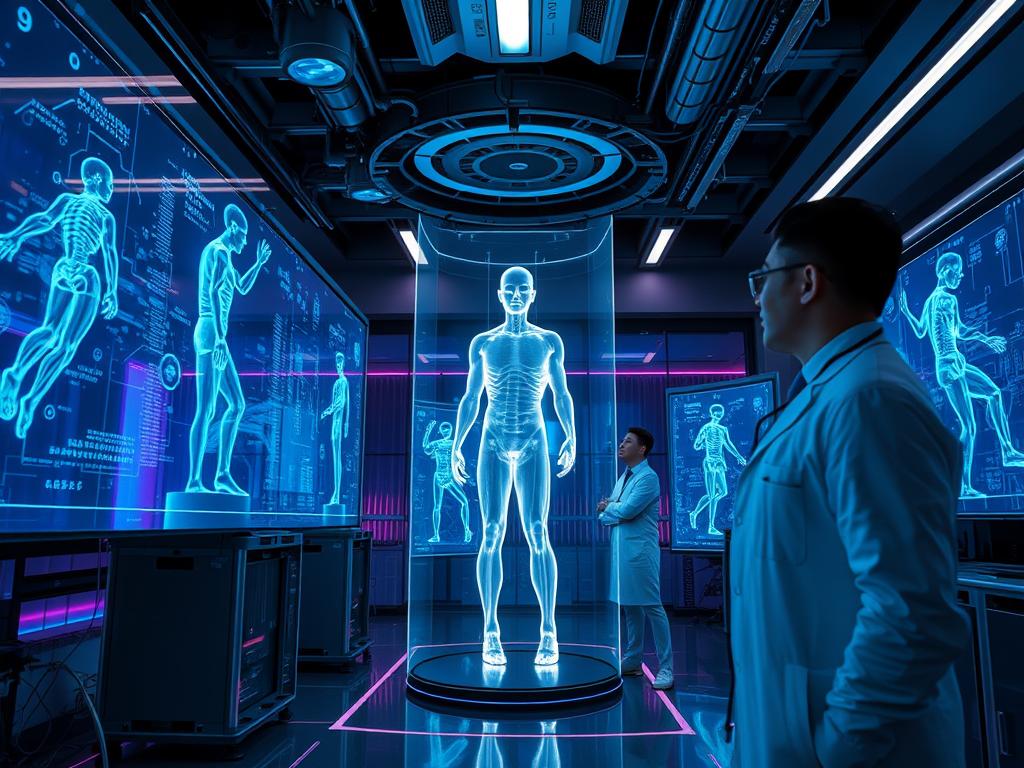
From the realms of entertainment to medical surgery, the potential applications for such technology are vast. Consider how animation studios could utilize this method to create more lifelike computer-generated imagery by accurately capturing the nuances of physical actors’ performances. On the medical front, precise 3D imaging of dynamic organs might revolutionize surgical planning and execution, reducing risks associated with complex operations.
What makes this technique particularly impressive is its ability to learn and improve over time. By using a neural network as the core component, the system can refine its algorithms based on accumulated data, meaning its accuracy and reliability will keep augmenting with continued use. This adaptive learning is what sets it apart from previous models, which were rigid and prone to errors when dealing with new or unpredictable movement patterns.
In essence, the work done by the scientists in Tokyo represents more than just a technical achievement; it ushers in a new era for industries relying on precision and efficiency. To think that machines can now not just mimic, but envision movement with such intense accuracy, opens up a world of possibilities. We are inching closer to a future where the line between virtual and reality blurs, all thanks to the unyielding quest for innovation. As we celebrate this milestone, anticipation builds for how these insights will transform everyday technology and live experiences in the future.