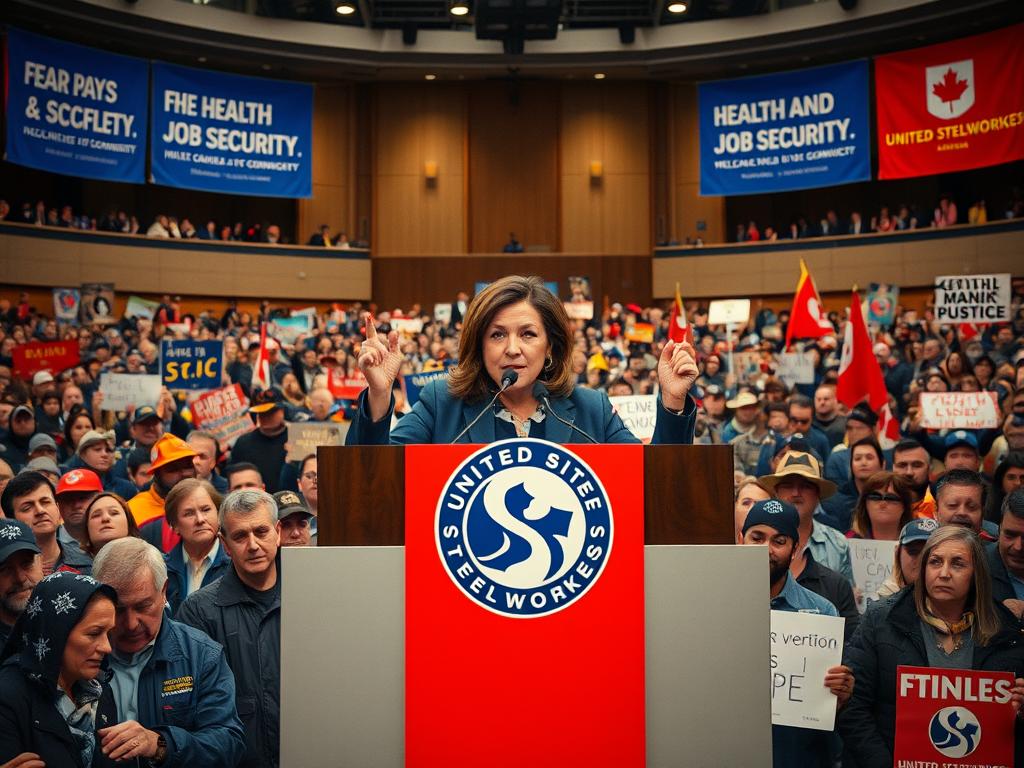
The atmosphere in Laval was charged with urgency as Magali Picard, the poised and passionate president of Quebec’s largest labour union, delivered a fiery speech that echoed beyond the walls of the United Steelworkers’ annual meeting. Picard’s words were not just a routine rallying cry but a clarion call to action, declaring an all-out battle against what she perceives as the Quebec government’s unjust policies towards labor. With the federation’s convention on the horizon, where Picard is expected to secure her leadership for another term, the stakes could not be higher.
At the heart of Picard’s vehement stance lies a deep-seated concern for the rights and welfare of Quebec’s workers, who she argues are facing unprecedented challenges. It’s clear that Picard sees the current climate not as a series of isolated struggles but as a holistic siege on the rights and dignities of laborers. This broader view of the ‘battle’ paints a picture of a leader who is aware of the complexities of modern labor dynamics—and one who isn’t afraid to confront them head-on.
In her speech, Picard drew attention to the critical issues affecting unions today, including fair wages, health and safety, and job security. The government policies she criticized are reportedly measures that could weaken labor rights and undermine the collective bargaining power that unions have fought for decades to achieve. This intensifying conflict between labor unions and the government might reflect broader global trends, where similar labor disputes have been emerging in various parts of the world, pointing to a potential resurgence of worker activism.
What makes Picard’s stance especially compelling is her ability to galvanize support by framing this struggle as not just a matter of economic rights but as a fundamental fight for dignity and respect. Through her address, Picard effectively positioned the labor union not only as a defender of workers’ rights but as a moral entity fighting for what she perceives as the soul of the worker’s community against a system that may exploit them.
As we look ahead, the upcoming FTQ convention could serve as a pivotal moment for the labor movement in Quebec. With delegates poised to recommit to Picard’s leadership, the union’s direction will undeniably wield significant influence on the province’s socio-economic landscape. If Picard’s calls to action are any indication, her approach might unlock renewed vigor in labor advocacy, reminding us that the fight for workers’ rights is a timeless one, always deserving vigilance and resolve.