






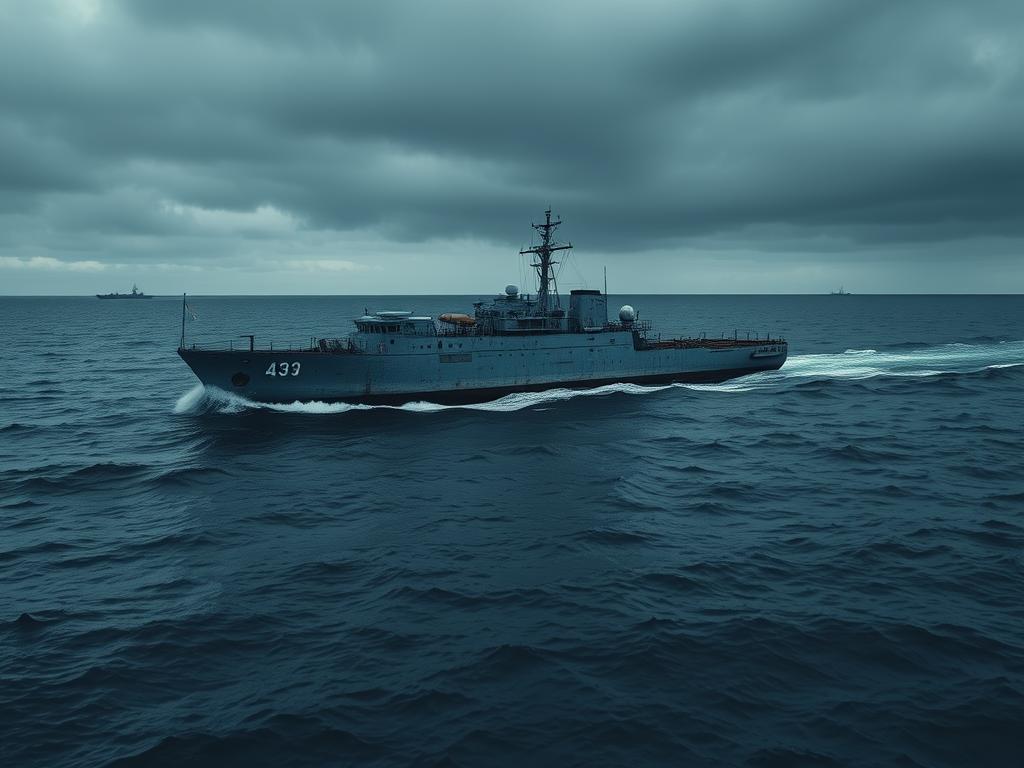
In the vast expanses of the sea, where mystery and intrigue often remain concealed beneath rolling waves, a seemingly innocuous vessel has captured the attention of international observers and defense analysts alike. Named Yantar, this Russian naval ship outwardly appears mundane and slightly worn, yet its capabilities hark back to the shadowy world of espionage reminiscent of a Bond film. While its appearance may not scream ‘spycraft’, Yantar’s true potential lies beneath its modest surface.
The concern surrounding Yantar stems from its sophisticated functionalities hidden below deck. Designed specifically for underwater research, the ship is equipped with submersibles and advanced technology that enable it to perform deep-sea operations. This includes the potential to interfere with undersea communication cables that are crucial for the global internet infrastructure. Such capabilities have led to heightened vigilance from Western nations, worried about the disruptive possibilities posed by Yantar’s clandestine missions.
Yantar’s presence in international waters has sparked conversations not just about military security, but also about the evolving nature of global maritime strategy. It exemplifies a shift from traditional displays of naval power, favoring smaller, more covert operations that can execute missions with precision and stealth. The implications of this shift are profound, prompting a reevaluation of national defense policies to address these nuanced threats.
Despite the technological prowess of Yantar, it is important to consider the broader geopolitical context in which these activities occur. As nations seek to potentially disrupt each other’s communication networks, an arms race of maritime technology might be underway, escalating geopolitical tension. Addressing these concerns requires diplomatic finesse and international cooperation to build frameworks that mitigate aggressive maritime strategies, ensuring these advancements are not misused to foster instability.
Ultimately, the Yantar is a reminder of the complex chess game being played beneath the ocean’s surface. While it serves the interests of its operators, the broader consequences of its missions merit vigilant attention and thoughtful diplomacy. For while the techniques and tools may have advanced, the underlying game remains the same: the delicate balance of power, taking place in the world’s deep blue arenas.