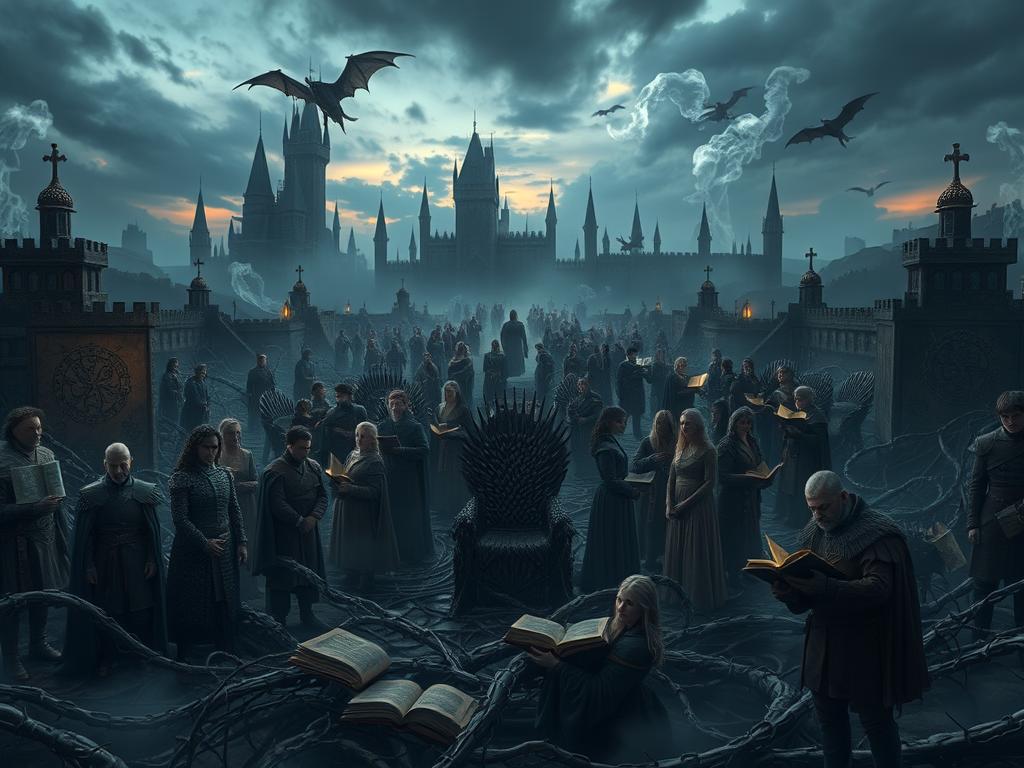
The world of Westeros is once again igniting conversations and stirring debates as news surfaces about an upcoming Game of Thrones sequel. This fresh installment, which has recently been given the green light for production, poses a unique conundrum, especially for readers eagerly awaiting George R.R. Martin’s next novel, ‘The Winds of Winter.’ Fans of the series, both televised and literary, now find themselves pondering the implications this sequel might have on the unresolved narrative threads left by the books.
As the sequel draws nearer to its air date, anxiety grows among those devoted to the literary series. The television series famously diverged from the books in its closing seasons, and many enthusiasts are worried that the new sequel could pre-emptively reveal crucial plot developments meant for the unreleased novels. The intertwining of these mediums presents a double-edged sword; while the lore of Westeros receives further expansion, the pace at which these expansions occur may undermine the suspense built around the forthcoming novels.
It’s worth noting that for casual viewers, the distinction between the books and the TV series isn’t as pronounced. Many simply wish to continue exploring the rich landscapes and intricate politics of the fictional world, regardless of which medium delivers the experience. However, for staunch followers of Martin’s writing, the book series holds a sanctity that risks being breached by screen adaptations. This dichotomy raises intriguing questions about the nature of storytelling across different formats and the expectations set upon each.
The complex task of balancing fidelity to original material with creative cinematic interpretation becomes even more challenging in a universe as beloved and multifaceted as Game of Thrones. While the producers promise to uphold the legacy of the original series, the lack of published material to draw from implies an artistic liberty that could either enrich the saga or detract from anticipated literary revelations. Given this scenario, one might argue that the true ‘spoiler’ isn’t the potential unveiling of future plot points, but rather the altering of how they are eventually perceived and valued by fans.
Ultimately, this development underscores the evolving relationship between literature and its adaptations in popular culture. As fans brace themselves for the sequel’s debut, the hope remains that both mediums can coexist without one overshadowing the other. Ideally, the screen version should augment the existing mythology of Westeros, adding layers of depth rather than removing the anticipation and mystery that fans of Martin’s novels have cherished for years. With careful handling, the sequel might yet enhance the storytelling experience for all audiences involved.