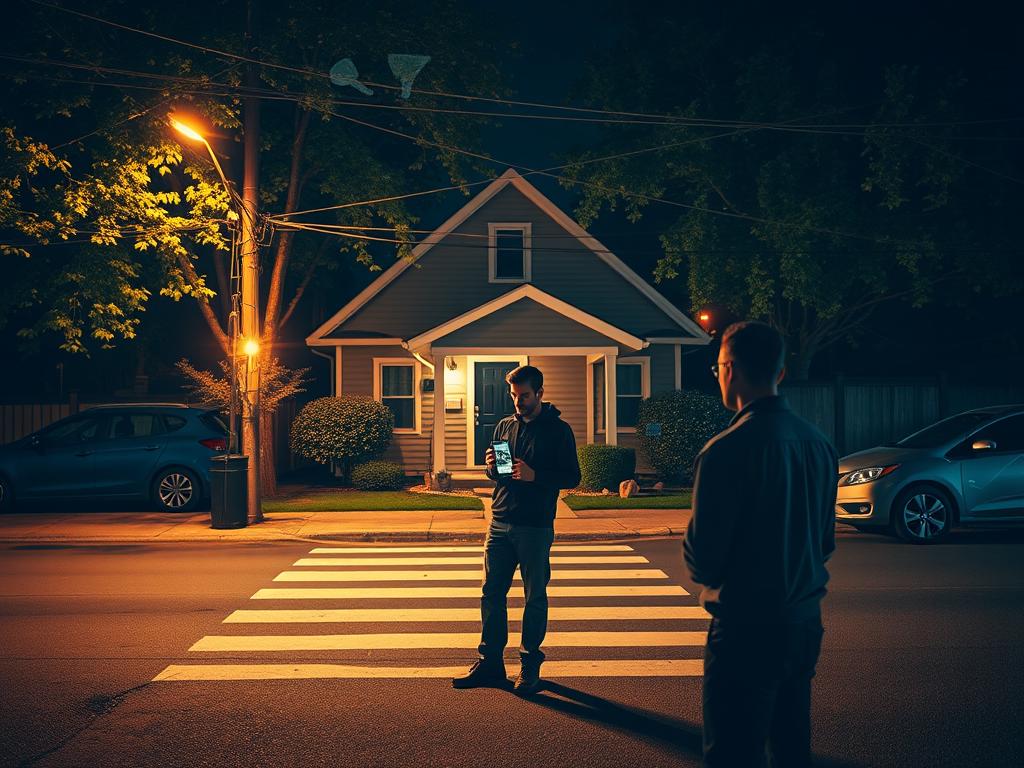
In an unexpected twist of fate, a man found himself replaying footage not just for security purposes but of a life-altering event caught on his own home surveillance system. This occurrence took place right outside his house at a pedestrian crossing, transforming the very notion of home from a place of safety to a witness of vulnerability. Such incidents prompt us to reflect on the increasingly crucial role of surveillance in everyday life.
The pedestrian crossing has long been symbolized as a zone of safety – a demarcation where pedestrians are assured of their right of way. However, this incident underscores a chilling reality; no matter how many precautions are put in place, unforeseen accidents can still occur. The unfortunate event serves as a stark reminder that vigilance needs to extend beyond the infrastructures designed to protect us.
CCTV cameras have often been championed for their deterrent capabilities and their utility in solving crimes. However, this particular scenario highlights another facet – the empowerment they provide to individuals for capturing firsthand the truth of their experiences. For the victim, this footage offers not only clarity and evidence but also a tool for advocacy in a legal and communal space, reinforcing the vital role of personal recordings in today’s digital age.
As technology weaves itself deeper into the fabric of our lives, incidents like these invite us to ponder over the balance between surveillance and privacy. While CCTV systems can be pivotal in capturing definitive evidence, they also raise questions about the extent of monitoring within personal spaces. How do we reconcile the comfort of protection with the potential intrusion of surveillance?
In conclusion, the incident vividly brings to life the multifaceted role of CCTV systems in contemporary society. As they capture moments of brevity and gravity alike, these devices remind us of the dual nature of technology as a guardian and a witness. Ultimately, the footage serves as a bridge between intention and outcome, propelling discussions towards more secure pedestrian interactions and fostering a collective responsibility to protect one another on the roads.