





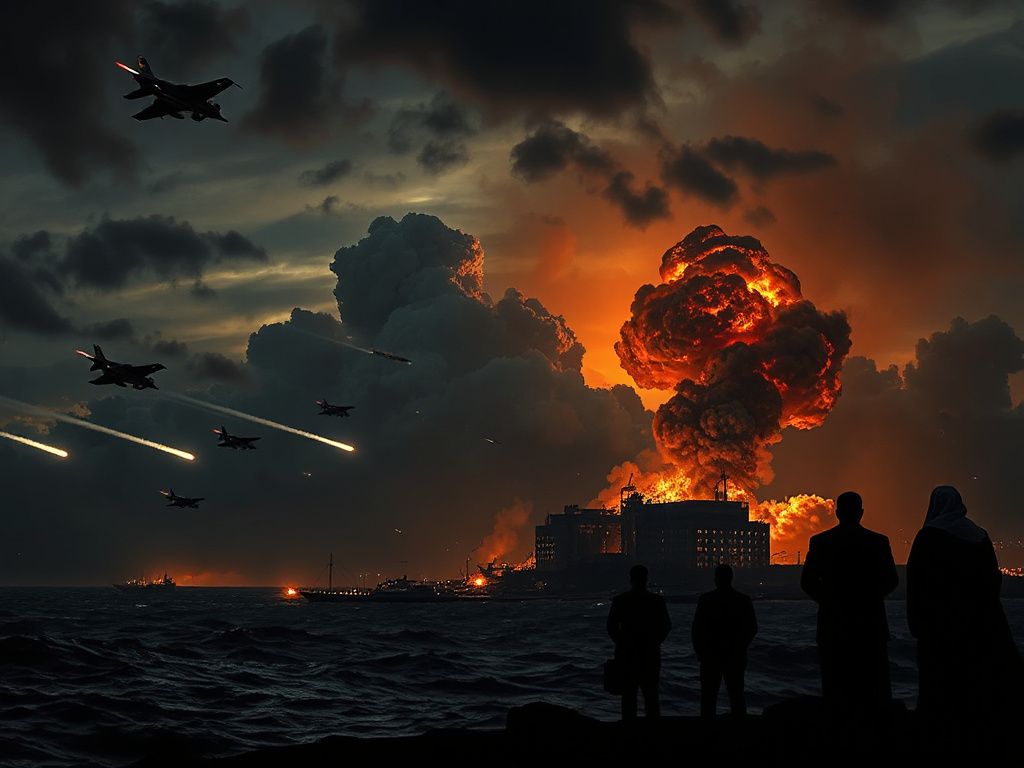
In recent developments on the global stage, a significant spike in tensions between the United States and Iran has captured international attention. This escalation came after reports surfaced that the US carried out a highly potent airstrike targeting Kharg Island, a strategic location for Iran’s oil industry. The full-scale assault reportedly obliterated all identified military targets within its scope, marking a sharp intensification in the ongoing hostilities between the two countries.
The situation took an even more dramatic turn when a missile struck the US Embassy in Baghdad. Though details about potential damages and casualties remain sparse, this aggressive move has significantly raised the stakes. It is perceived as a direct retaliatory measure from Tehran in response to the destruction on Kharg Island. The strategic implications of an attack on diplomatic grounds are profound, potentially leading to a recalibration of defense postures while increasing the risk of further conflicts in the region.
Iran’s reaction to the US bombing is marked by robust rhetoric, as Iranian officials vowed to retaliate by targeting oil facilities. This response highlights the broader economic and geopolitical underpinnings of the conflict. Iran’s oil infrastructure is not just a cornerstone of its economy but also a critical asset in global energy markets. Threatening to disrupt oil facilities poses a serious risk to international economic stability, reflecting the complex interplay between military actions and economic ramifications.
From a broader perspective, these events underscore a volatile geopolitical environment where diplomatic resolutions seem increasingly distant. The sustained cycle of provocations and reprisals could potentially spiral into a more extensive military confrontation unless cooler heads prevail. There is a growing necessity for international intervention to mediate and de-escalate the situation, possibly through diplomatic channels such as the United Nations or regional alliances focusing on peace and stability.
The unfolding crisis serves as a stark reminder of the fragile balance of power in the Middle East. As both nations grapple with internal and external pressures, the international community must remain vigilant. Encouraging dialogue over conflict, and diplomacy over aggression, remains critical. A failure to address these tensions may lead to broader repercussions, affecting global security and economic stability.