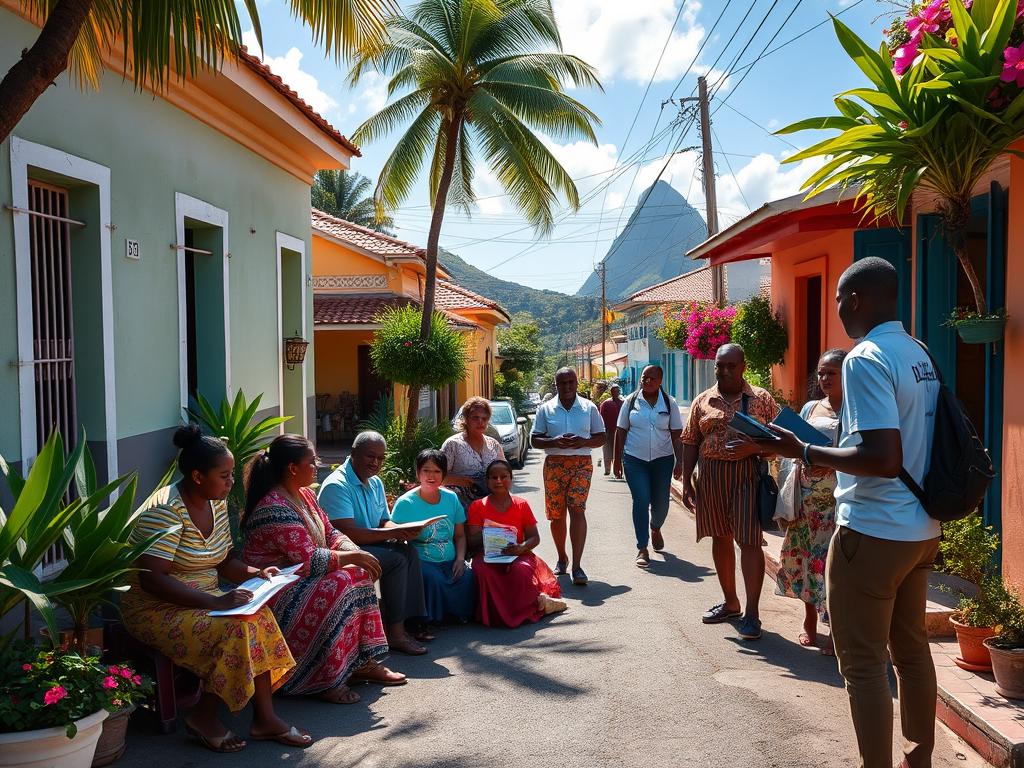
In an ambitious endeavor to understand and improve living conditions across Saint Lucia, the seventh iteration of the Multiple Indicator Cluster Survey (MICS-7) has gathered significant momentum. This extensive initiative, backed by global partnerships, seeks to paint a detailed picture of everyday life on the island by collecting data directly from its residents. With field teams actively engaging with communities, thousands of households are contributing valuable insights, shedding light on issues that affect their daily lives.
The MICS-7 survey stands out not only because of its comprehensiveness but also due to its timing. As our world faces unparalleled challenges, from economic shifts to climate change impacts, understanding local realities has never been more crucial. The data pooled from this survey will provide policymakers with the necessary tools to create strategies that address the unique needs of Saint Lucians, adopting a grounded approach to sustainable development.
By focusing on Saint Lucia’s socio-economic fabric, the survey investigates multiple dimensions such as health, education, and water sanitation. These elements are key to unlocking the full potential of communities. Crucially, it moves beyond statistics, offering a narrative on how these factors interplay in the daily lives of Saint Lucians. The stories gathered are more than numbers; they are reflections of the silent struggles and small victories experienced by ordinary citizens.
This initiative highlights an essential facet of modern governance—engagement. When residents share their experiences and challenges, it fosters a deeper connection between the community and its leaders. This dialogue is an empowering tool, driving change that resonates with the people it is meant to serve. In this way, the MICS-7 survey isn’t just a collection exercise; it’s a step toward inclusive and informed decision-making that could set a precedent for other nations.
As the MICS-7 survey progresses, it reinforces the idea that sustainable progress relies heavily on understanding the complexities of human experience. By embracing the voices of its people, Saint Lucia stands to gain not only in terms of data-driven insights but also in cultivating a society where policies are reflective of those they impact. This effort serves as a reminder that change, rooted in genuine understanding and empathy, can pave the path toward a more equitable and resilient future.