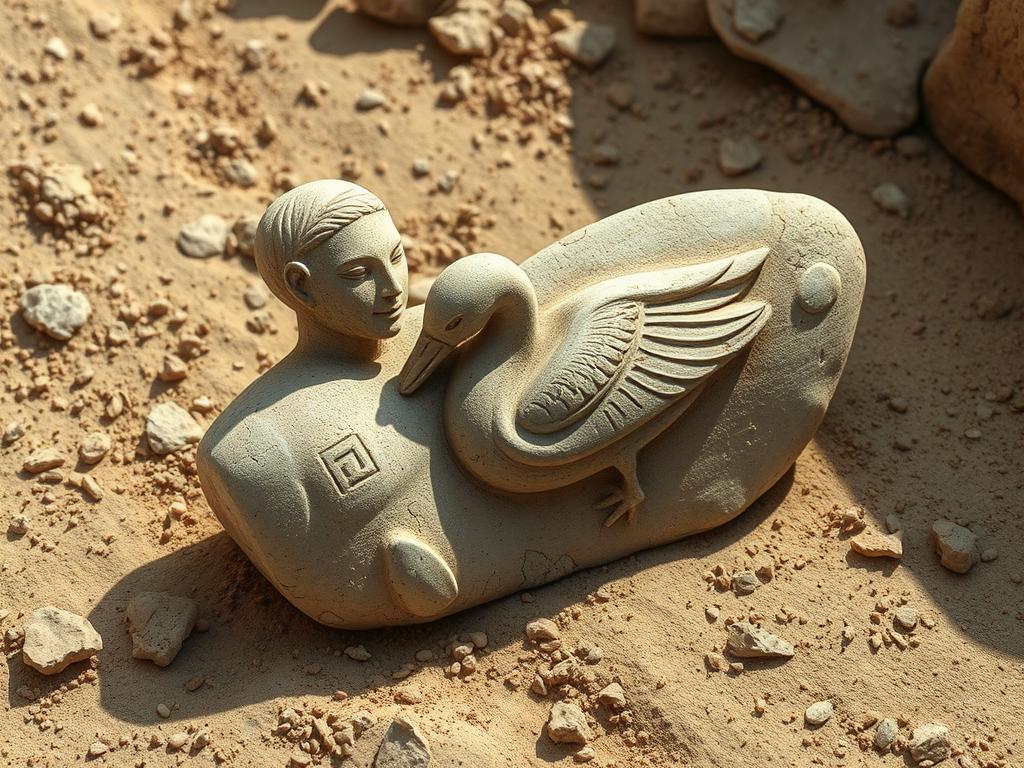
In a remarkable archaeological find, researchers in Israel have unearthed a 12,000-year-old artifact that has captured the attention of historians and art enthusiasts alike. This ancient figurine presents an intriguing depiction of human-animal interaction, featuring a goose seemingly engaged in an intimate act with a human figure. While initially surprising, this discovery provides a fascinating window into the symbolic and cultural practices of our prehistoric ancestors.
Our ancestors often manifested their cultural and spiritual beliefs through art, favoring symbolism to convey complex ideas. The newfound figurine raises questions about the role of animals in early human mythology, rituals, and daily life. Rather than being a mere depiction of what might seem a peculiar union, it’s plausible the artifact encapsulates a sacred narrative or a mythological scene, possibly symbolizing fertility, transformation, or a divine connection between humans and the natural world.
This discovery adds a new layer to our understanding of prehistoric art and symbolism. Many prehistoric societies revered animals, ascribing them significant spiritual meaning—an aspect reflected in cave paintings, carvings, and other art forms. Such artifacts often doubled as storytelling instruments, communicating tales or beliefs concerning life, death, and rebirth. The figurine, possibly part of a larger narrative tradition, suggests a sophisticated level of cultural expression and engagement with the environment.
A key aspect of interpreting such ancient pieces lies in appreciating the cultural context rather than imposing contemporary moral judgments. To dismiss the artifact as simply bizarre or offensive to modern sensibilities limits our understanding of the complex ways early humans viewed themselves in relation to the world. By examining the figurine through the cultural lens of its creators, we gain insights into how ancient societies interpreted their interactions with nature and explored their existential questions through art.
The 12,000-year-old artifact from Israel does more than intrigue; it epitomizes humanity’s unending quest to make sense of life and its myriad mysteries through artistic representation. While it might forever guard some of its secrets, continuing research and analysis may help illuminate this enigmatic piece’s true purpose, offering us a deeper appreciation of our shared past. Ultimately, such discoveries remind us of the universal human drive to express and understand our place in the cosmos through creative means.