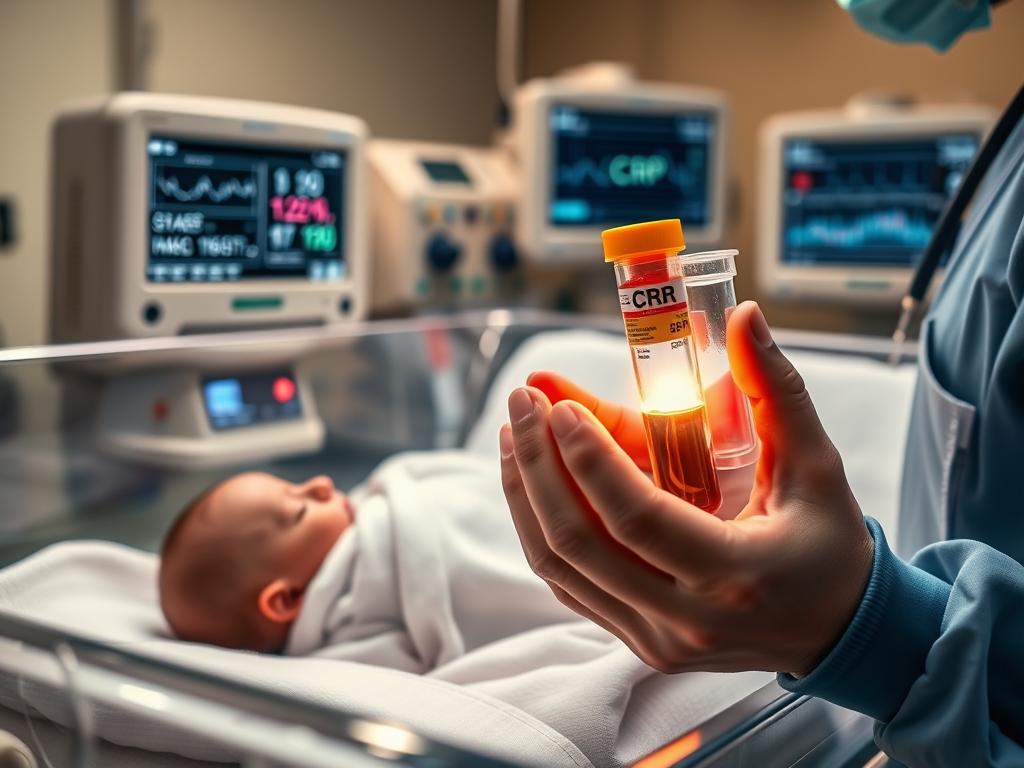
In a significant medical breakthrough, recent research has highlighted the remarkable accuracy of C-reactive protein (CRP) levels in diagnosing early-onset sepsis in preterm newborns. This finding is particularly crucial as early-onset sepsis remains a leading cause of mortality and morbidity in premature infants. The ability to identify and treat this condition promptly can transform outcomes for some of the most vulnerable patients in neonatal care.
Traditionally, the diagnosis of sepsis in newborns has presented numerous challenges, often relying on a combination of clinical symptoms, blood cultures, and various biomarkers. However, these methods can be imprecise and time-consuming, leading to delayed treatment and potentially dire consequences. The study’s revelation that CRP exhibits stronger diagnostic accuracy offers a more reliable and faster alternative, which could save countless lives in neonatal intensive care units worldwide.
CRP is an acute-phase protein that increases in response to inflammation. The significance of utilizing CRP in early-onset sepsis lies in its ability to not only detect but potentially help in understanding the inflammatory processes at play in these young patients. The ease of measuring CRP levels through simple blood tests makes it an appealing tool in the quick-paced environment of neonatal care, where every second counts.
This advancement prompts us to reconsider current protocols and explore how CRP testing can be integrated into standard sepsis screenings for preterm infants. With hospitals seeking more efficient ways to allocate resources, a marker like CRP could streamline sepsis detection, ensuring that affected newborns receive treatments without unnecessary delays. Furthermore, the adoption of this method could reduce the reliance on broad-spectrum antibiotics, which are often used as a protective measure when infections are suspected.
In conclusion, the promising role of C-reactive protein in early-onset sepsis detection brings renewed hope to healthcare professionals and families alike. As we look towards a future where precision medicine tailors treatments to individual needs, the utilization of biomarkers such as CRP could redefine care strategies for newborns. Continued research and collaboration between clinicians and researchers will be vital in refining these methods, aiming for a new standard in neonatal care that prioritizes accuracy and speed.