






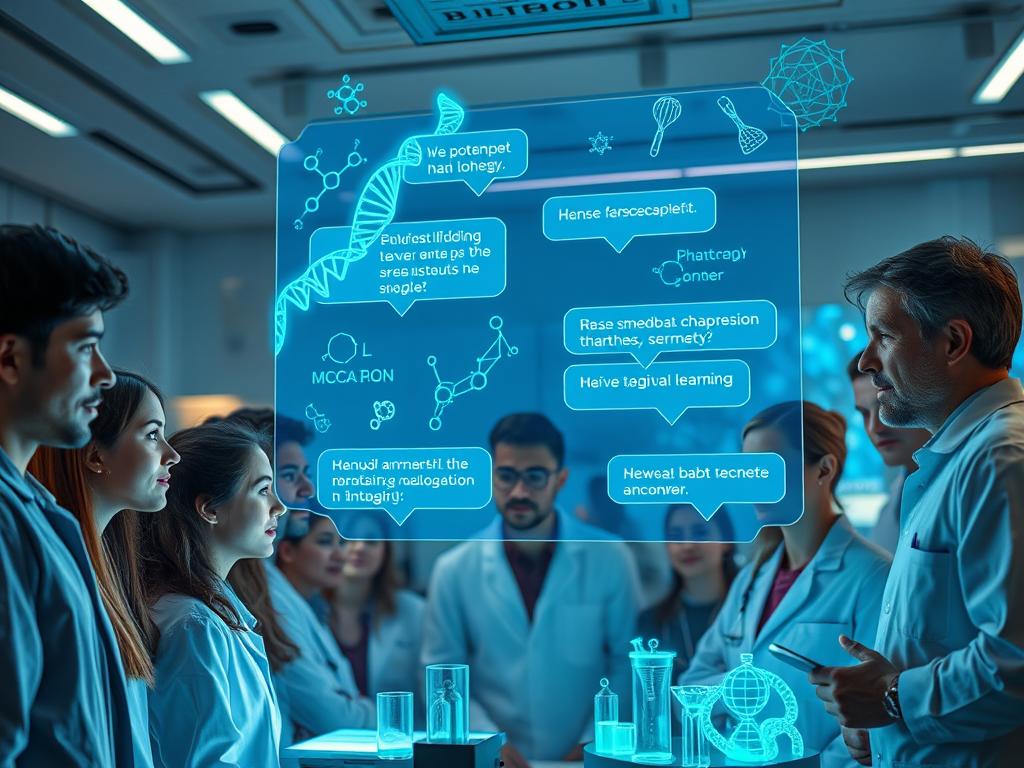
The integration of artificial intelligence into the realm of biological sciences has taken a giant leap forward with the advent of AI-powered chatbots. These sophisticated tools are transforming how researchers and enthusiasts alike approach the intricate subject of biology. For years, the challenge of explaining complex biological concepts in easily digestible language has hindered public understanding and engagement. However, with AI chatboxes now capable of breaking down dense scientific terminologies into conversational English, a new era of accessibility is dawning.
The implications of this innovation are vast. For students stepping into the world of biology, these AI tools serve as a bridge between textbook jargon and comprehensible knowledge. Instead of wading through extensive texts, learners can now engage in interactive dialogue with AI systems that adapt to their level of understanding. This personalized learning experience can significantly enhance retention and comprehension, making biological studies more appealing and less intimidating.
Moreover, researchers who have often faced communication gaps within interdisciplinary teams stand to benefit greatly. AI chatboxes can facilitate smoother collaboration by translating specialized biological language into common parlance that all team members, regardless of their primary domain, can grasp. This fosters more efficient collaboration, allowing diverse fields such as computational biology, genetics, and pharmaceuticals to innovate in tandem more seamlessly.
Nevertheless, the technology is not without its challenges. The nuance of language and context can sometimes escape even the most advanced AI. Thus, users must remain cautious, cross-verifying information obtained from AI with trusted sources. As these tools evolve, continuous improvements will be necessary to refine their accuracy and ensure they remain a reliable educational resource.
In conclusion, AI-driven chat tools are poised to revolutionize the way we interact with biological sciences. By demystifying complex concepts and enhancing communication, they hold the promise of fostering a broader understanding and appreciation of biology. As this technology continues to develop, it carries the potential to not only educate but also inspire the next generation of scientists and innovators who will push the boundaries of biological discovery.