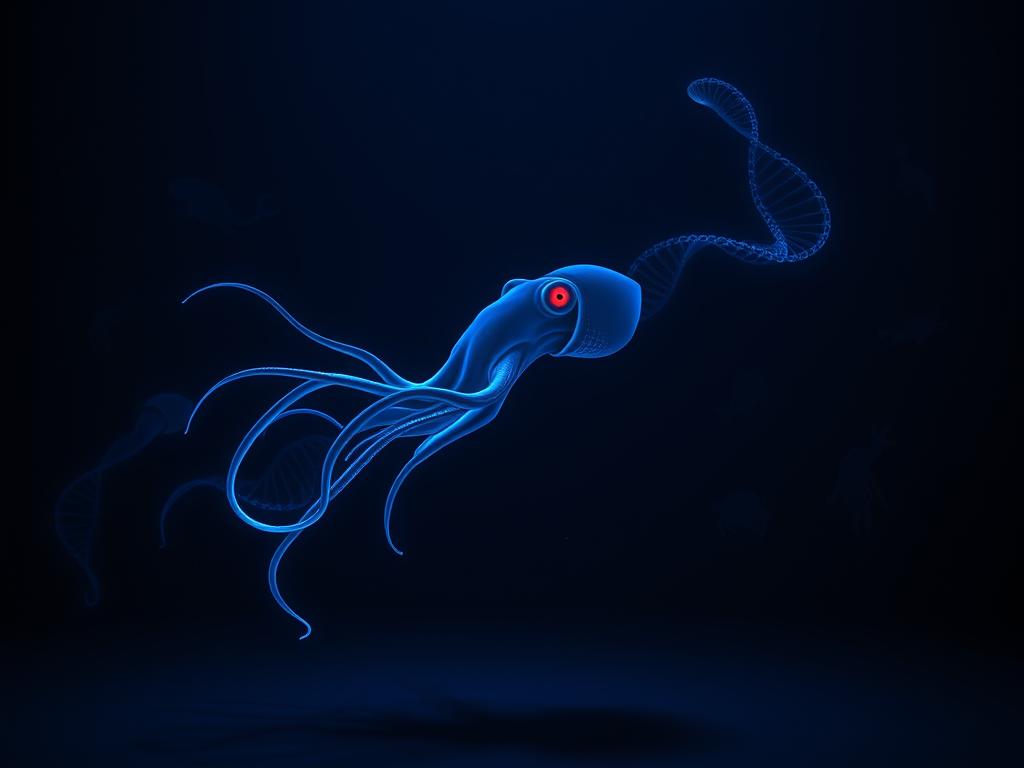
In the watery depths of the ocean resides a captivating creature with an equally intriguing legacy: the vampire squid. Though its name conjures images of Gothic tales, this unique animal harbors historical insights far beyond the superficial allure of folklore. Recent genomic studies have peeled back layers of time, guiding scientists to a deeper understanding of the cephalopod family tree. Intriguingly, the vampire squid’s genome suggests that the diverse group of modern cephalopods, encompassing octopuses, squids, and cuttlefish, may share a surprising common ancestor—a creature akin to the vampire squid itself.
The significance of decoding the vampire squid’s genome lies in its potential to bridge evolutionary gaps. Cephalopods, renowned for their intelligence and adaptability, have captivated marine biologists for centuries. However, tracing their evolutionary path from ancient origins to present-day species has been akin to assembling a puzzle without corner pieces. The discovery that modern cephalopods could descend from a squid-like forebear sets a new stage for understanding morphological and behavioral adaptations that have evolved over millions of years.
One of the most fascinating aspects of this research is how it challenges our preconceived notions of cephalopod evolution. Traditional evolutionary perspectives categorized these creatures based on physical and structural differences, often overlooking the nuanced genetic commonalities. By spotlighting the vampire squid’s genetic code, researchers are reshaping the narrative, recognizing attributes shared across seemingly disparate species. This paradigm shift encourages a reevaluation of how we categorize and understand these complex creatures.
Additionally, the vampire squid genome provides insights into the evolutionary pressures and environmental shifts that shaped the cephalopod lineage. Such knowledge enhances our understanding of how ancient species responded to climatic changes and ecological challenges. As the world faces its own climate uncertainties, these insights offer a valuable perspective on adaptability and survival, showcasing the resilience embedded within the genetic framework of one of the ocean’s most enigmatic inhabitants.
In conclusion, the genetic revelations from the vampire squid propel our comprehension of cephalopod evolution into exciting new territory. As these underwater marvels continue to intrigue scientists and enthusiasts alike, their genetic story serves as a powerful reminder of shared origins and evolutionary ingenuity. The findings not only illuminate the past but also inspire a future where the mysteries of the deep are unveiled, one genetic sequence at a time. As research progresses, the vampire squid may just hold the key to unlocking further secrets of life beneath the waves.