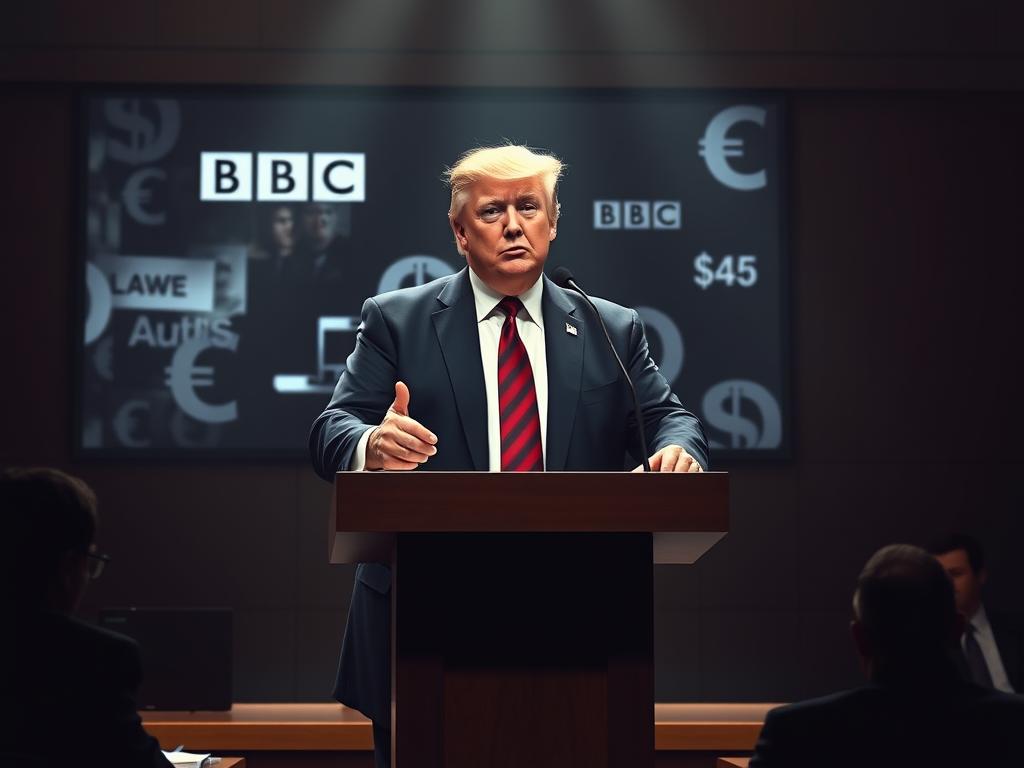
In a move that once again thrusts him into the media spotlight, former President Donald Trump is threatening a colossal lawsuit against the BBC. At the heart of the dispute is an edit the British broadcaster made to his speech from January 6, 2021. Trump’s camp claims the alteration misrepresented his words, prompting him to demand damages spanning from one to five billion dollars. While the BBC has already issued an apology for the incident, they remain firm in their stance against financial compensation, setting the stage for a potential showdown in court.
This isn’t the first time Trump has confronted the media. Throughout his political career, he’s often accused major news outlets of bias and has wielded litigation as a tool for redress. However, the magnitude of this threatened lawsuit is staggering, reflecting the former president’s determination to penalize what he sees as a grave misrepresentation. The BBC, known for its reputable global standing, now finds itself navigating this high-stakes challenge, balancing apology with maintaining its integrity and financial resources.
The timing of the lawsuit threat is intriguing as well. As Trump eyes a possible return to the political arena, this legal gambit could serve multiple purposes. Beyond seeking monetary compensation, it places him back in the public consciousness and underscores his contentious relationship with media narratives. For his supporters, this might reinforce the long-held belief that mainstream outlets deliberately tarnish his image. On the other hand, critics might view it as a publicity stunt aimed to energize his base ahead of upcoming political maneuvers.
What stands out in this scenario is the broader conversation about media accountability and narrative control. As platforms and technology evolve, there is increased scrutiny over how information is disseminated and interpreted. The potential legal tussle between Trump and the BBC highlights the delicate balance between editorial choices and the perception of truth, a narrative dance that is critical in our information-rich era. It raises the question: to what extent should media entities be held accountable in the court of law versus the court of public opinion?
In conclusion, while the looming lawsuit might or might not conclude with a courtroom drama, its implications are significant. This case could set precedents for how public figures address grievances against media interpretations, and it underscores the enduring complexities of transparency and accountability in journalism. As both sides prepare their strategies, the world watches, anticipating not just a legal resolution, but also a deeper understanding of how truth is constructed and challenged in the digital age.