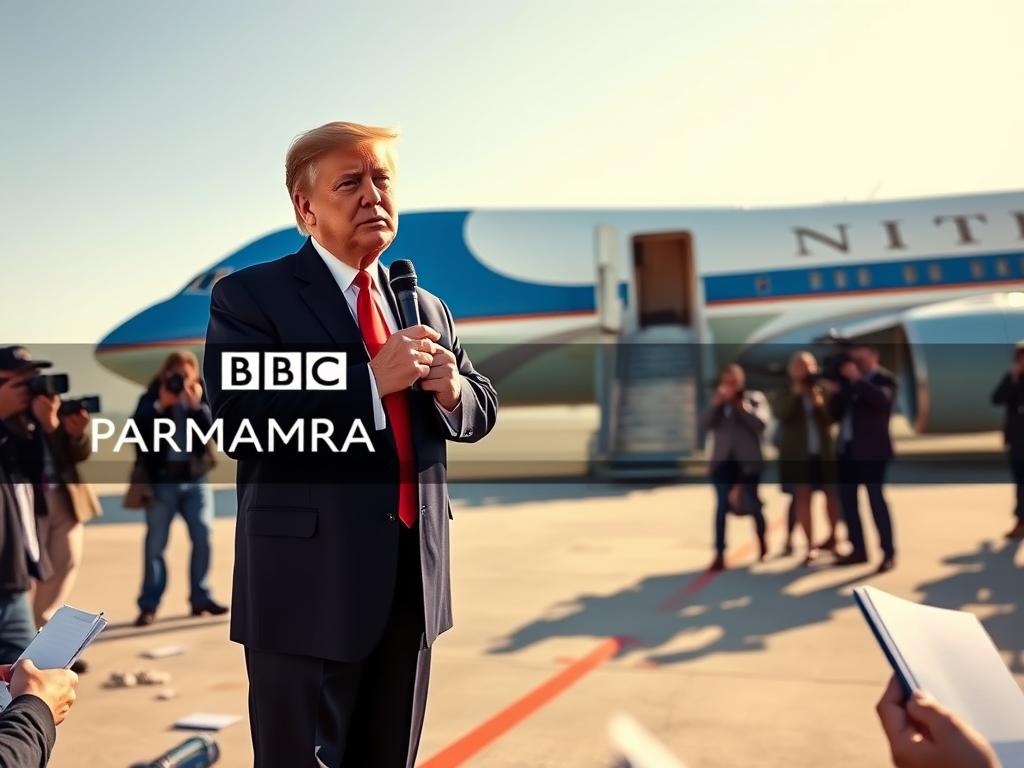
In an unprecedented move that underscores the contentious relationship between the media and political figures, former U.S. President Donald Trump announced his intentions to take legal action against the British Broadcasting Corporation (BBC) over what he claims to be an unfair edit in a recent Panorama episode. The former president, known for his frequent battles with the press, revealed this plan while speaking to reporters aboard Air Force One, adding another layer to his already complicated history with mainstream media outlets.
The Panorama program, a flagship investigative series of the BBC, has not been immune to controversy over its hard-hitting reports. However, Trump’s decision to call out the broadcaster signals a particular grievance, hinting at what he perceives to be a misrepresentation. While the specifics of the segment in question aren’t disclosed in detail, Trump’s response suggests a tactical maneuver to control his narrative and maintain influence in a media landscape often critical of him.
Donald Trump’s vow to contact Sir Keir Starmer, the leader of the UK Labour Party, adds another interesting twist to the unfolding story. This outreach could be interpreted as an effort to gain sympathetic support across the Atlantic or to question broader political motivations and biases within the BBC. Such a move might also be seen as an attempt to exploit existing political rifts in the United Kingdom, making the issue as much about international relations as it is about media accuracy.
From a broader perspective, this confrontation raises questions about freedom of the press, editorial independence, and the rights of public figures to challenge media portrayals. Trump’s legal threats against the BBC may well spark debates on the ethical responsibilities of broadcasters in presenting balanced viewpoints, especially when dealing with polarizing figures. This scenario also highlights how global political figures possess the influence to impact media practices beyond their own national borders.
Ultimately, Trump’s contemplated legal action against the BBC represents more than just another dispute for media headlines. It serves as a reminder of the ongoing tensions between political power and journalistic integrity. As this narrative unfolds, it will be telling to watch whether Trump’s strategy will bolster his standing or backfire by drawing attention to the very coverage he disputes. Either way, this development is sure to keep the conversation about press accountability alive, forcing both politicians and media entities to continuously redefine their roles in society.