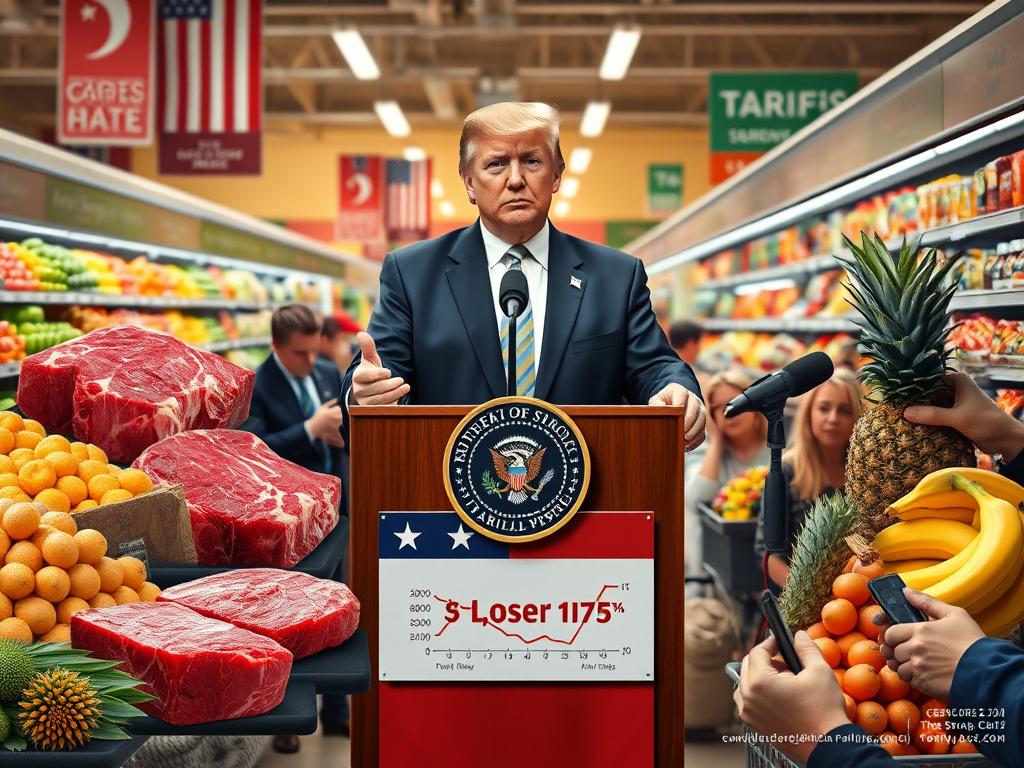
The Trump administration has taken a significant step to ease the financial burden on American households by eliminating tariffs on popular consumer goods such as beef, coffee, and tropical fruits. This decision comes at a time when countless families are grappling with elevated grocery store prices. The removal of these import duties is hoped to provide some relief, especially when budget constraints are becoming a norm for many.
For months, consumers and businesses alike have expressed growing frustration over escalating costs on daily essentials. The tariffs, initially imposed as a strategic move in international trade negotiations, inadvertently escalated domestic prices. By dropping these tariffs, the administration signals a shift in its priorities—preferring immediate consumer relief over maintaining pressure in trade battles. This approach may prove crucial in garnering public support, particularly with the shifts in economic dynamics.
Interestingly, this decision marks a departure from the administration’s earlier stance that strongly tied tariffs to economic security and leverage. Critics had long argued that these duties were adding to financial pressures on average Americans, who have been dealing with supply chain disruptions and inflationary trends. The revocation of tariffs on high-demand imports suggests a newfound flexibility in policy and could be a key move in restoring confidence among consumers and economists alike.
From an economic perspective, the move might stimulate market dynamics by encouraging competitive pricing among retailers, transferring benefits directly to consumers. The strategic alleviation of tariffs also opens doors for foreign traders, potentially boosting trade relationships. However, this tactic doesn’t come without its risks. It raises questions about future trade negotiations and whether this sets a precedent, signaling a more protectionist or open-market approach depending on the pressures at hand.
In conclusion, the abolition of tariffs on essential goods like beef, coffee, and tropical fruits reflects an adaptive governance strategy aiming to address domestic consumer concerns while balancing international economic interests. This might be a win for short-term consumer relief, but its long-term implications will depend on how effectively the administration navigates the ensuing trade ecosystems. As markets adjust, the ultimate question remains: will these quick wins pave the way for sustainable economic solutions?