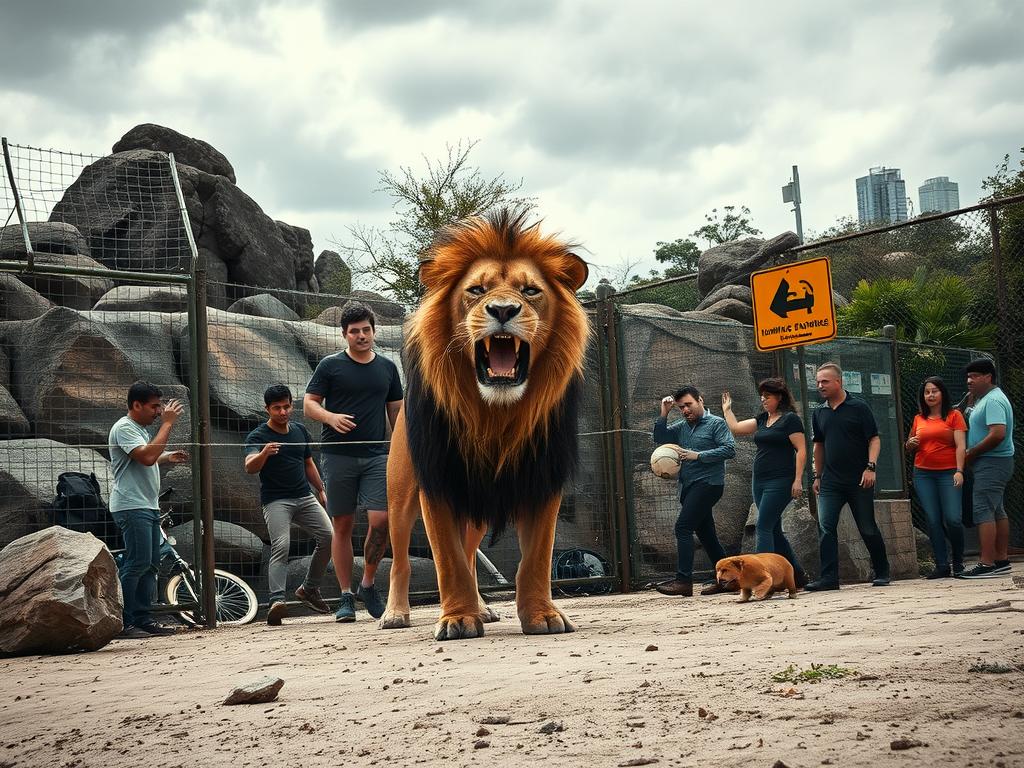
This week, a tragic incident unfolded at a zoo in eastern Brazil, raising profound questions about human interaction with wildlife. A man, whose intentions remain unclear, deliberately breached a lion’s enclosure, resulting in a lethal attack. This unfortunate event not only cost a life but also served as a stark reminder of the potential dangers inherent in ignoring the boundaries set to protect both humans and animals.
Enclosed environments like zoos are designed to safely exhibit and preserve wildlife that people might never otherwise encounter. These artificial habitats are reflections of the natural sanctuaries where animals roam free. However, the separation barriers are essential, maintaining a safe distance between curious onlookers and nature’s unpredictably majestic creatures. Violating these boundaries, as seen in this incident, can have dire consequences.
The motivations behind the man’s actions are still largely speculative. Whether driven by thrill-seeking, misunderstanding the risks, or other unknown reasons, his decision to enter the enclosure disregarded critical safety protocols. It brings to light an essential discussion about the educational roles zoos play in fostering respectful and safe interactions with wildlife. These institutions must continually assess and adapt their security measures and educational outreach, ensuring visitors understand the grave reality of interfering with animals.
This incident also reflects broader aspects of human interaction with the natural world. Increasing urbanization and environmental impact have pushed many species into confined spaces or threatened their habitats. Zoos often become sanctuaries of conservation and education. Still, without mutual respect and understanding, these spaces can become battlefields of tragic misunderstandings, as humans occasionally mistake proximity for a license to intervene without consequence.
As authorities investigate, both zoo officials and the community are left grappling with how best to prevent future tragedies. Reinforced security protocols might seem like a direct solution. However, cultivating an informed respect for these wild creatures remains paramount. We need to understand that even in controlled environments, wildlife retains its instincts, and the lines drawn for protection are not to be blurred. Let this incident be a somber reminder of the vital importance of respecting nature’s boundaries for the safety of all involved.