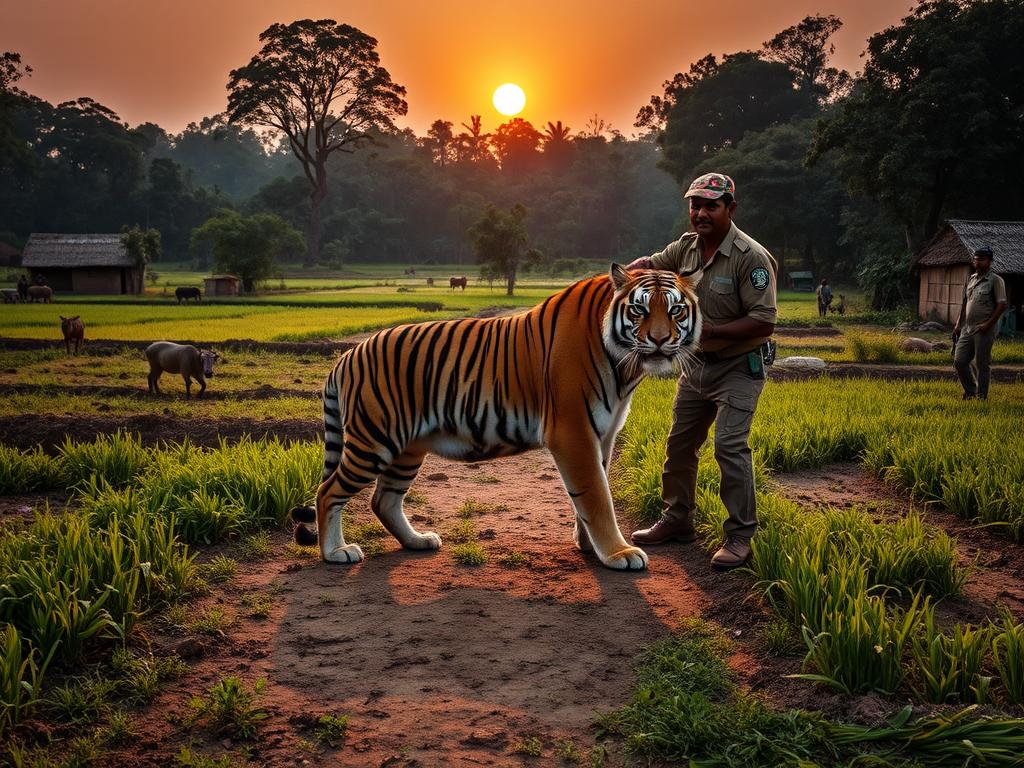
In a dramatic yet reflective twist of events, the elusive tiger that had prowled the serene landscapes of Saragur was finally captured near Devalapura village. This majestic feline, aged between six and seven years, had been at the center of a months-long saga affecting local farmers and communities. The recent capture brings a temporary sigh of relief to villagers whose livestock had become unintended prey in the tiger’s quest for survival.
For several months, reports of livestock deaths and damaged agricultural fields caused a wave of apprehension across Hanchipura, Hegganuru, and surrounding villages. These incidents drew our attention not only to the inconvenience faced by the locals but to the delicate balance between human needs and wildlife conservation. The residents of Saragur learned to navigate this unexpected neighbor with a mixture of fear and respect, hoping for a resolution that would ensure safety without harming the tiger.
This scenario sheds light on the broader theme of human-wildlife conflict, a challenge that numerous communities around the world encounter near forested areas. India, with its diverse ecosystems, is frequently at the forefront of such conflicts, where wildlife corridors overlap with human settlements. The capture of the tiger offers an opportunity for authorities and conservationists to reflect on preventative measures, such as strengthening the natural habitats and creating buffer zones, to minimize future encroachments.
While it’s easy to see the tiger as an adversary, it’s imperative to consider its actions as a response to shrinking habitats and reduced prey availability. Reports suggest a steady decline in territory and resources available to big cats, compelling them to venture closer to human dwellings. This highlights the urgent need for concerted efforts in habitat restoration and sustainable development practices that accommodate both human and natural ecosystems.
The capture of the Saragur tiger is more than just an end to a local problem; it’s a call to action for a harmonious coexistence between humans and wildlife. The solution lies not in eradicating ‘problem’ animals but in understanding and adapting to the ecological tapestry that connects us all. As Saragur breathes a little easier today, let the path forward be one of informed compassion and strategic planning for the future of all living beings.