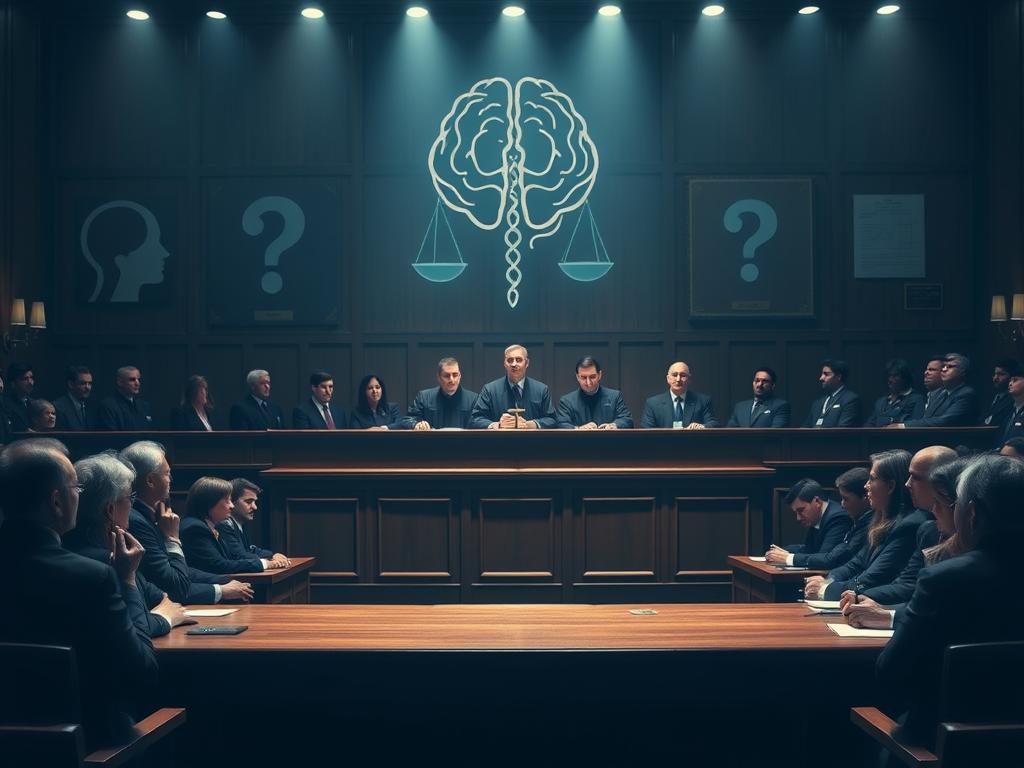
In a landmark decision, the New Jersey Supreme Court has taken a bold step in the realm of forensic science by ruling against the admissibility of shaken baby syndrome (SBS) testimony. This move marks a significant departure from a long-standing approach where such expert testimonies have played a pivotal role in child abuse prosecutions. The high court’s ruling speaks volumes about the evolving nature of scientific evidence and its impact on the judicial process.
Shaken baby syndrome, a diagnosis often attributed to unexplained brain injuries in infants, has been contentious within both medical and legal communities. Critics argue that SBS lacks sufficient scientific foundation and can lead to wrongful convictions, a point that New Jersey’s Supreme Court evidently took into consideration in its decision. This landmark ruling highlights the judiciary’s increasing caution towards relying on scientific theories that are not unequivocally supported by rigorous evidence.
By declaring SBS testimony scientifically unreliable, New Jersey is setting a precedent for other jurisdictions to reconsider how expert evidence is evaluated and presented in courtrooms. This decision calls into question the balance between protecting children and ensuring justice for those accused of abuse. As courts reevaluate such evidence, this adds another layer of complexity to legal proceedings, emphasizing the importance of advancing both legal and scientific standards in tandem.
The implications of this ruling extend beyond the courtroom. It challenges medical experts and legal professionals to engage in deeper interdisciplinary dialogues to establish sound, evidence-based standards that do not merely rely on traditional assumptions. The judiciary’s careful consideration of emerging scientific understandings indicates a shift towards more meticulous scrutiny and validation of what is admissible as expert testimony.
In conclusion, New Jersey’s decision invites a broader reflection on the intersection of law and science, urging both domains to evolve collaboratively. As we navigate these intricate intersections, decisions like these set a thoughtful precedent that justice should not only seek to protect the vulnerable but also uphold the integrity of the evidence that determines guilt or innocence. The ongoing dialogue between legal processes and scientific advancements remains essential to achieving a justice system that is both fair and informed.