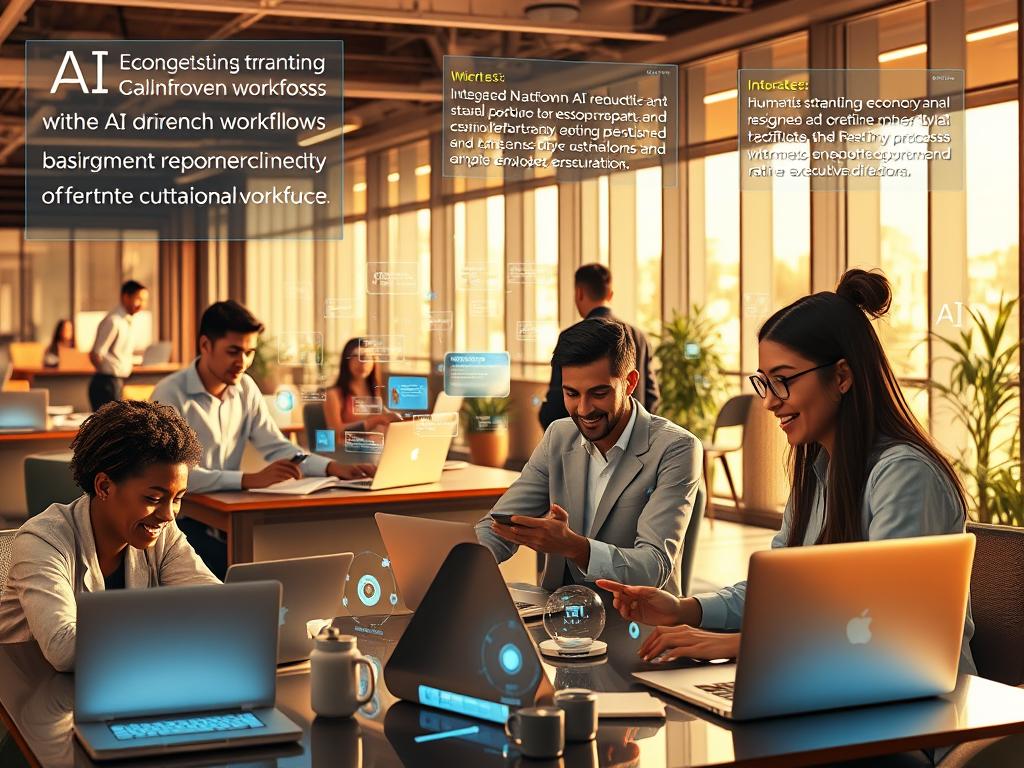
In a world where businesses invest an astounding $1.5 trillion in artificial intelligence, there lies a curious phenomenon: AI has contributed a staggering $400 billion to the U.S. economy alone, yet most generative AI initiatives fail to yield a tangible return on investment. The core issue isn’t rooted in technology’s potential; rather, it is a matter of transformative processes lagging behind. Unexpectedly, the momentum required for change doesn’t emanate from executives in boardrooms but from the ranks of employees who live and breathe the workflow complexities that AI can potentially simplify.
Recent data signals a shift that could redefine how enterprises approach innovation— a move that is now being driven by non-technical staff, thanks to their unique insight into everyday challenges. A striking revelation from a survey of IT executives at major U.S. firms unveils that 91% acknowledge the increasing involvement of non-specialist employees in AI projects. This transformative wave is not about speculative projects but laser-focused initiatives aimed at streamlining operations. Employees utilize AI to eliminate repetitive tasks and rediscover focus on projects they find meaningful, reinvigorating business processes in the process.
The advent of AI in the workplace is not only altering task management but also reshaping the power structure within corporations. Traditional IT departments, which historically held the reins of technological integration, are seeing their influence diminish, with only 38% of executives viewing them as the primary drivers of AI innovation in the near future. The once frowned upon practice of shadow IT is now embraced as a testament to the proactive stance employees are taking. Business units like operations, human resources, and customer support now stand at the forefront of AI-led transformation, potentially opening pathways to new career opportunities across the business landscape.
As this upheaval unfolds, cultural dynamics within organizations demand careful navigation. While a significant proportion of the workforce expresses openness towards AI tools, the preference clearly leans towards these technologies enhancing existing workflows rather than completely overhauling them. This underscores a tension between gradual improvement and radical change. Leading companies are shifting towards a human-centric design of AI, ensuring that these technologies serve to amplify employee strengths rather than dictate operational pathways. The success of AI transformations hinges on leaders stewarding their teams through this evolution, focusing on workforce empowerment, and strategic foresight.
The journey forward emphasizes a few critical steps. Firstly, leaders should recognize that valuable AI initiatives often originate from grassroots employee innovation rather than top-down decrees. Organizations need to foster an environment that empowers staff to propose solutions tailored to specific obstacles. Secondly, the IT function should pivot from a gatekeeping role to one of facilitation, providing necessary resources while liberating other departments to explore AI’s potential. Finally, confronting cultural barriers is crucial, requiring an investment in skill development, trust-building, and ensuring inclusive involvement in AI’s transformative potential. Ultimately, the promise of AI lies not in its digital sophistication but in harnessing the innate creativity and ambition of an organization’s human resources. By embracing a bottom-up approach to AI, companies can realize profound transformative gains.