






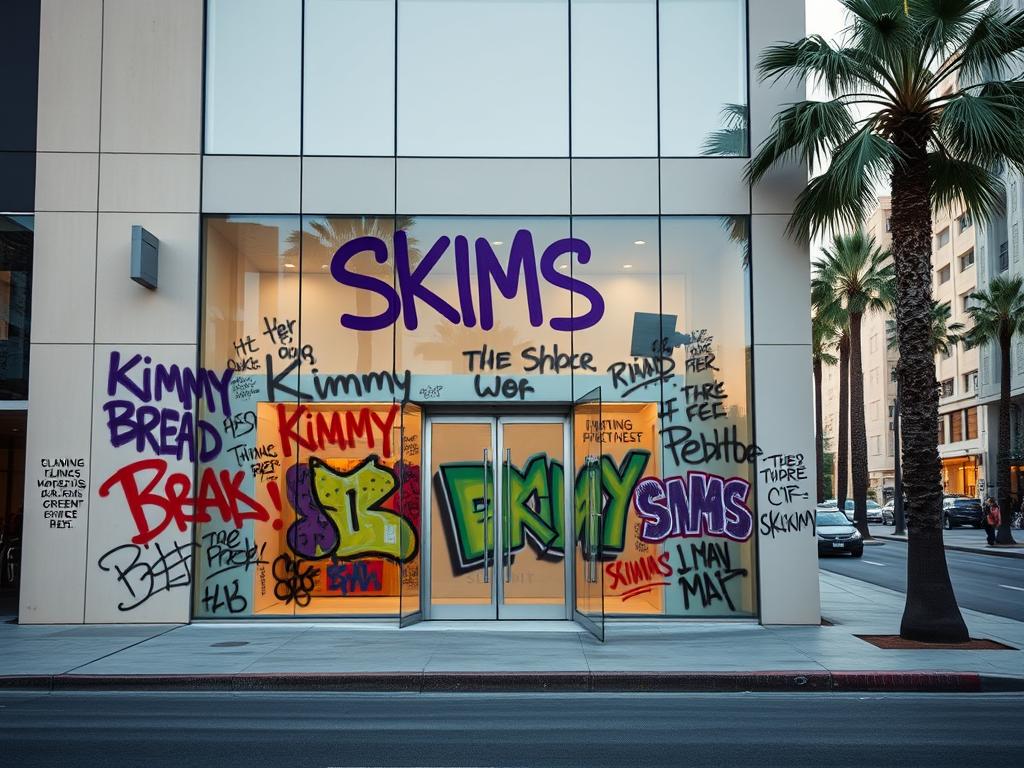
In an unexpected twist to its rise, Kim Kardashian’s burgeoning fashion brand, SKIMS, recently faced an unsightly affair. The flagship store in West Hollywood, a symbol of both celebrity influence and entrepreneurial acumen, was marred by graffiti early on a Monday morning. This act of defacement, occurring shortly after the brand’s valuation skyrocketed to $5 billion, has sparked conversations about the paradoxical relationship between success and unwarranted vandalism.
The facade of the SKIMS store was marked with phrases such as “Kimmy Bread” and indistinct messages that appear to carry a deeper meaning. While the motivation behind these specific choices remains unclear, the incident raises an intriguing question: Could this be a reflection of societal unease with immense celebrity wealth or simply an isolated act of mischief?
At a time when SKIMS is celebrated for its innovative shapewear and broad inclusivity in sizes, the graffiti underscores a jarring contrast between the brand’s mass appeal and this negative attention. As the brand scales new heights, it seems to attract not only consumer interest but also unhappy critics. Such occurrences highlight the dichotomy of public reaction to success, wherein admiration is often accompanied by scrutiny or resentment.
From a broader perspective, the vandalism of SKIMS can be seen as a microcosm of the pressures impacting individuals and entities thriving within the spotlight. It reminds us of the persistent need for public figures and successful brands to navigate not just market challenges but also societal perceptions. While the store’s temporary disfigurement is unfortunate, it also catalyzes important discourse on the responsibilities and vulnerabilities that accompany success.
In conclusion, the graffiti incident at the SKIMS store serves as a modern parable of fame and fortune’s undeniable allure, blended with the inevitable challenges they draw. Perhaps this event will prompt further reflection on how brands like SKIMS, driven by personalities like Kim Kardashian, can continue to thrive amid such mixed public sentiment. It is a thought-provoking narrative that questions whether such acts of defacement are cries for change or mere acts of rebellion against towering success.