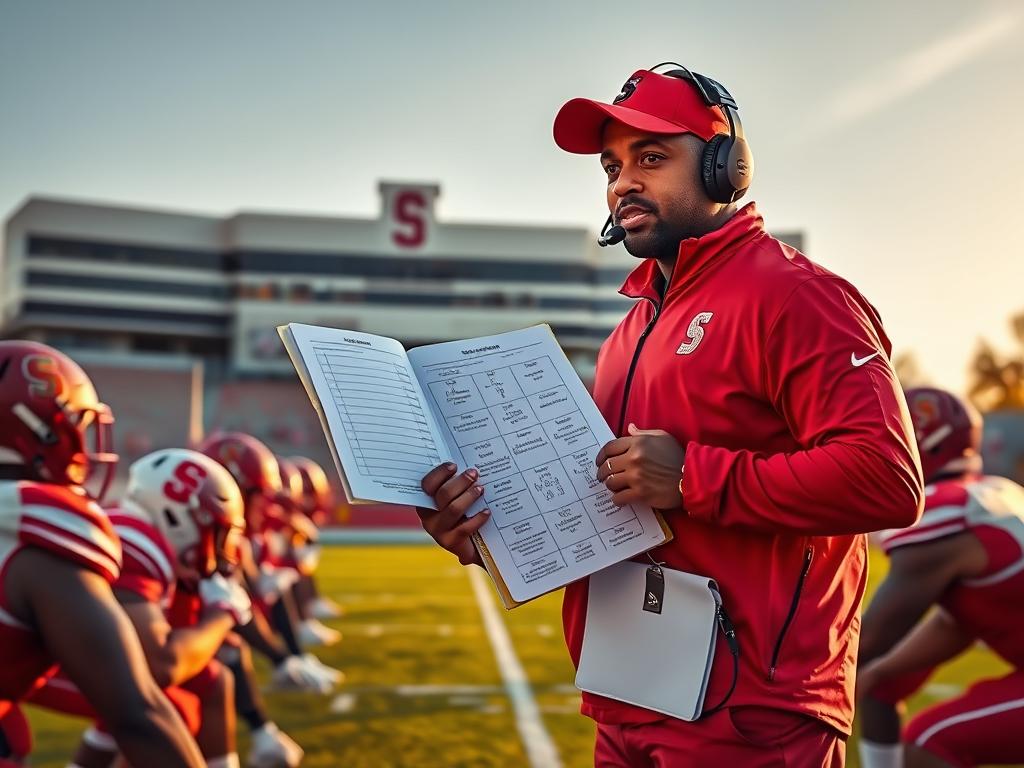
As the Stanford Cardinal football team readies itself for the new season, anticipation is buzzing around the appointment of Tavita Pritchard as the new head coach. Pritchard is no stranger to drama; he was famously pivotal in Stanford’s historic 2007 upset over USC. Now, he’s back at the helm, charged with reviving a program that has yet to see a winning season in seven years. The spotlight is on him, and the task ahead demands not only a tactical overhaul but also a cultural renaissance among players who have seen more downs than ups in recent memory.
Pritchard’s football journey is rooted in experience gained during his playing days under the stewardship of Jim Harbaugh. He comes equipped with an intimate understanding of the game, shaped by years of both triumphs and challenges. His vision for the team heavily emphasizes the power of brotherhood and teamwork—two cornerstones of any successful sports endeavor. His task is clear: instill these values while crafting a team capable of shaking off its recent struggles and rising to meet the high expectations of the Cardinal program.
With Stanford stumbling through a disappointing 4-8 season, Pritchard’s plan for revival hinges on strengthening the backbone of the team’s offensive line. This focus is a strategic decision echoing his roots in offensive coordination, where solid blocking schemes can turn potential rushing yards from dreams into reality. Pritchard seems to acknowledge that power game at its core can bring stability and confidence, which are critical for a team seeking to re-establish itself as a formidable force in collegiate football.
Beyond the tactical shifts on the field, Pritchard recognizes that success also depends on the cultural environment off the gridiron. The memories of being part of a team during his quarterback days under Harbaugh are likely to inform his approach to fostering camaraderie and resilience among his players. Through activities that build unity and a sense of shared purpose, the Stanford team is poised to become not just a collection of athletes, but rather a unit bonded by trust and a common belief in their collective potential.
As Stanford looks towards a challenging season, the impact of Tavita Pritchard’s leadership will soon be under the microscope. While immediate success is never guaranteed in the high-stakes world of college football, what remains certain is that Pritchard’s commitment to rebuilding from the ground up—centered on values of unity and strategic excellence—promises to lay the foundation for a revitalized Stanford football program. The potential for greatness looms on the horizon, and the coming seasons will reveal whether the seeds planted by Pritchard will yield the well-deserved fruits of victory.