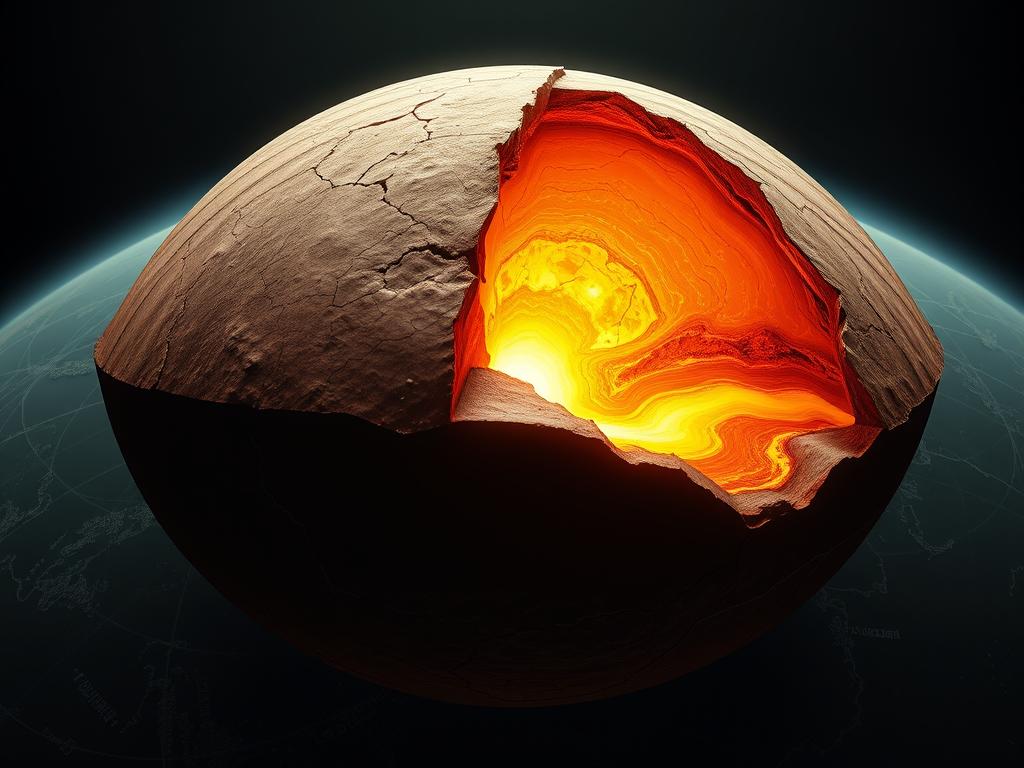
Imagine the Earth as an intricate, living tapestry, one that slowly, almost imperceptibly, changes and evolves over time. Recent scientific findings reveal that the continents we complacently rest upon are undergoing a gradual transformation — a geological peeling from beneath the surface. This new understanding adds another layer to our knowledge of the dynamic planet we call home, a planet whose changes are as subtle as they are profound.
According to recent studies, the continents’ subsurface structure is in a state of constant movement, akin to a silent, geological ballet. The forces driving this movement are not just the tectonic plates but also the viscous flow of Earth’s mantle, driven by thermal convection. This process is likened to a slow but steady peeling effect, where the lithosphere — the rigid outer part of the earth — is subtly detaching itself from the upper mantle.
This peeling phenomenon might not appear to shake our everyday world, but it has deep implications for understanding continental evolution. The constant unwrapping and recycling of the lithosphere influence not only the topographical changes we observe but also affect planetary chemistry and climate over eons. If Earth were a book, the pages beneath our feet are being revised, changed, and occasionally rewritten, creating a never-ending story in stone.
However, the implications of this peeling process are not purely academic. For geologists and environmental researchers, understanding these shifts can enhance predictive models of seismic activity and even offer insights into resource distribution. As continents slowly evolve and reshape themselves under constant geological pressure, they create patterns and formations that can highlight both risks and opportunities. This peeling doesn’t just shape our land but is a grand narrative of Earth’s geological health and vitality.
Reflecting on how these insights craft our understanding of Earth’s future, it’s clear that this slow geological dance is not just the story of rock and soil, but of the interconnectedness of all Earth’s systems. As we peel back the layers of understanding, we uncover a deeper appreciation of our planet’s complexity. This knowledge encourages a new era of science where observing Earth’s subtle changes leads us to anticipate its future pathway, ensuring its preservation for generations yet to come.