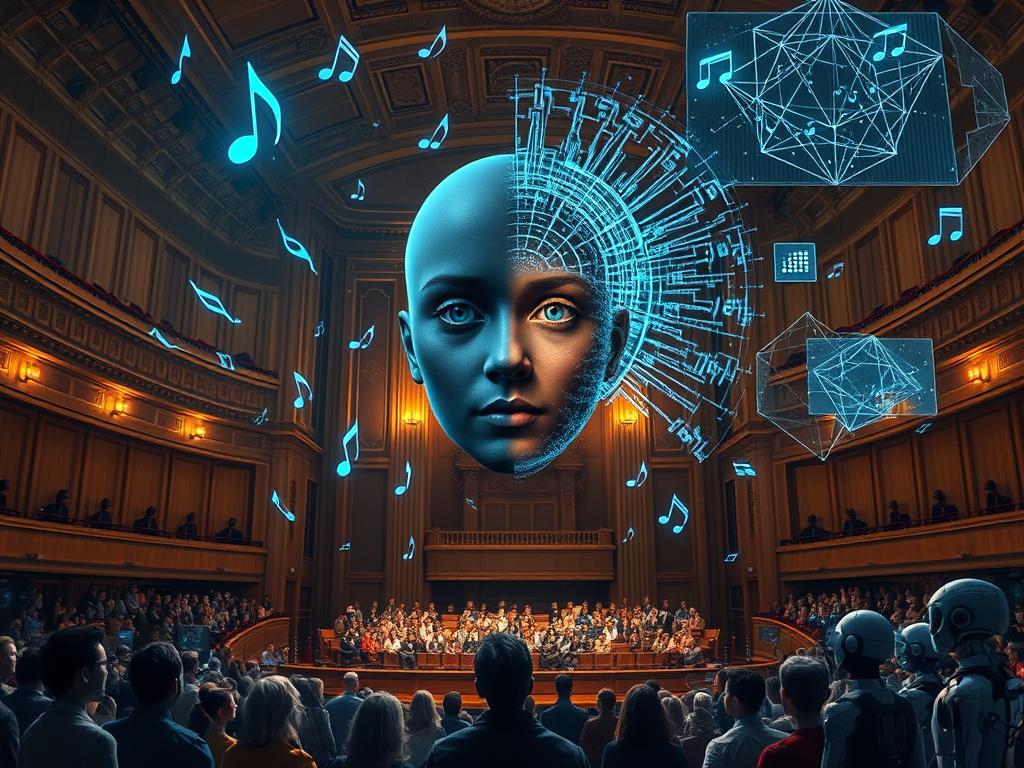
Music has always been a universal language that connects people, and for centuries, the creation of music has been a distinctly human endeavor. However, a groundbreaking survey released this week reveals that the borders between human-created compositions and those generated by artificial intelligence are becoming nearly indiscernible. An astonishing 97% of survey participants admitted struggling to distinguish AI-generated music from compositions crafted by human musicians. This finding is a testament to both the advancement of AI technologies and the evolving nature of music comprehension.
At the heart of this phenomenon lies the rapid evolution of machine learning and its application in creative fields. AI algorithms can now analyze vast datasets of music, learning patterns, themes, and structures that enable them to mimic the human creative process convincingly. This capability has not only democratized music production but also raised intriguing questions about originality, creativity, and authenticity in music. As AI continues to refine its ear for harmony and rhythm, the line between human creativity and machine efficiency becomes increasingly blurred.
The notion that machines could create music indistinguishable from that of human artists challenges traditional perceptions of artistic value. While some critics argue that AI-created music lacks the emotional depth and context only living creators can imbue, others believe this technology might unlock new genres and spaces for creative exploration. With AI music emerging in commercials, playlists, and compositions, listeners might soon be enjoying melodies unaware of their digital origins.
As consumers become more familiar with AI-generated music, the music industry itself is poised for transformation. Record labels, content creators, and musicians may need to reconsider their roles in a world where an algorithm can produce music as convincingly as a maestro. This shift could potentially lead to unique collaborations between humans and machines, fostering a new era of musical innovation. However, it also raises concerns around intellectual property rights and the ethical implications of a machine-driven creative process.
The ability of listeners to discern AI-generated music from human-made tracks—or the increasing difficulty thereof—marks a significant milestone in the evolution of artificial intelligence. While the future landscape of music creation and consumption remains uncertain, one thing is clear: the convergence of technology and art will continue to challenge and redefine our understanding of creativity. As we tune into this new symphony of sounds, it is essential to appreciate both the technological achievements and the intrinsic human desire to create and express through music.