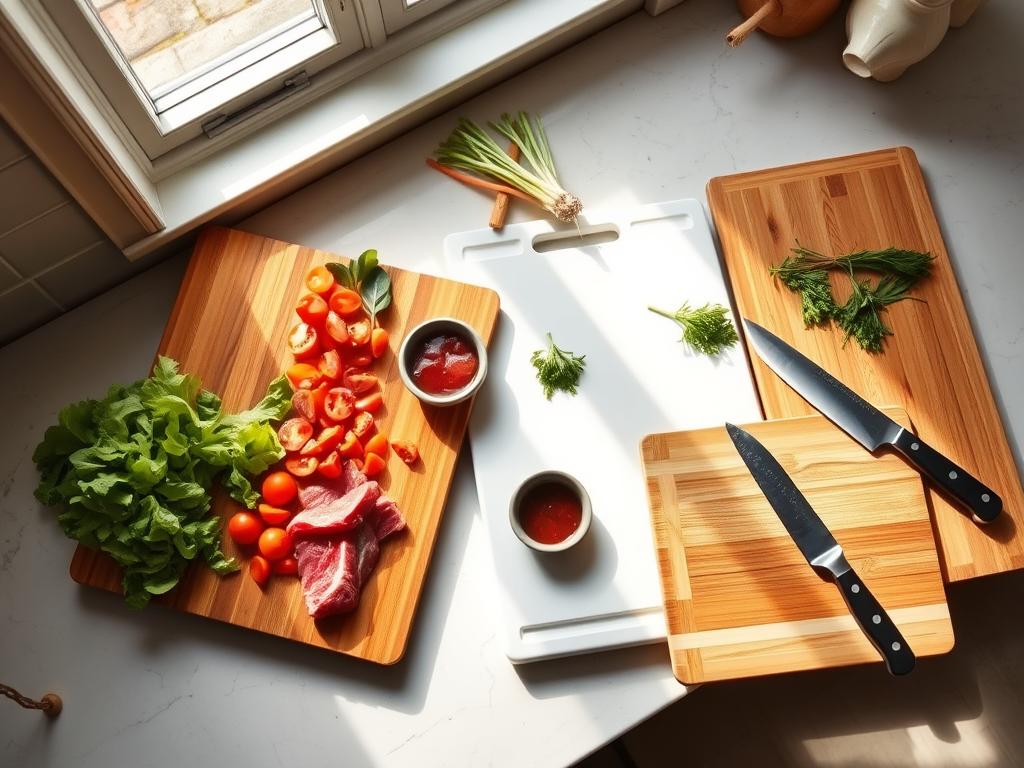
Choosing the right cutting board is the unsung culinary decision that influences both the efficiency of your meal prep and the longevity of your kitchen tools. Whether you’re a home chef slicing veggies for a salad or preparing a juicy steak, the surface on which you work can make all the difference. In today’s exploration, we dissect the nuances that define a cutting board’s suitability for different kitchen tasks, making your choice as informed as it is intuitive.
The first consideration when selecting a cutting board is the material. Wooden cutting boards, often composed of maple, walnut, or cherry, offer a gentle landing for your knives, reducing dullness while providing a naturally antimicrobial surface. These boards excel in handling a wide spectrum of food types but do require regular maintenance to preserve their integrity and prevent warping. For those who find joy in culinary rituals, oiling your board can be a meditative practice that enhances its longevity.
On the flip side, plastic or synthetic cutting boards boast practicality and ease of maintenance. Lightweight and usually dishwasher-friendly, these boards are highly prized for their resilience in the face of everyday cooking challenges. They’re less porous than wood, which can make them a preferable option for those concerned with raw meat cross-contamination. However, they can be more susceptible to marked cuts and bacteria harboring over time if not properly sanitized.
For those inclined towards durability and durability, bamboo emerges as an eco-friendly contender. This material is sustainable, harder than most woods but softer than ceramic, striking a balance between being knife-friendly and robust. Bamboo cutting boards are generally resistant to knife scars, yet they’re harder on blades than wooden alternatives. So, they may not be ideal for those prioritizing their knife’s edge.
Ultimately, your choice in cutting boards should reflect your cooking practices and care preferences. If you’re seeking minimal upkeep with hygiene in mind, plastic might be your ally; however, lovers of tradition and natural aesthetics might find joy in the embrace of wooden boards. As culinary enthusiasts know, the tools we select in our cooking journeys not only facilitate the task at hand but also add a layer of personal style and enjoyment to the process. Whatever your preference, a nuanced appreciation of your cutting board will certainly enhance your kitchen prowess.