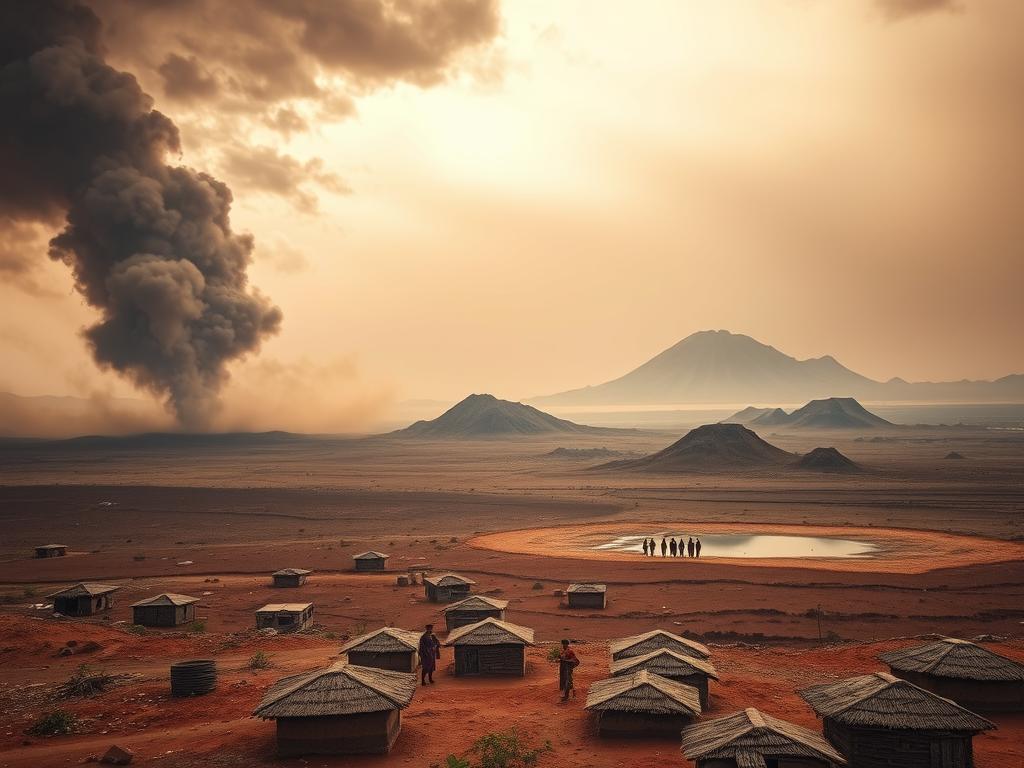
In a striking twist of natural phenomena, Ethiopia’s Hayli Gubbi volcano temporarily awakened from its long dormancy, making headlines as it spewed clouds of ash across the landscape. For many years, this volcanic giant remained silent, its last known activity so distant in memory that it had become a mere whispered tale among locals. Yet, as with any force of nature, its quietude was not an eternal promise, reminding us of the intricate balance held by Earth’s dynamic inner workings.
The unexpected eruption last Sunday brought an impressive yet disruptive spectacle. Within moments, the very air over the Afar region, rich in geologic history and diversity, was filled with swirling ash and smoke, casting an abrupt and eerie twilight over the unsuspecting villages. The fallout reached beyond the borders of Ethiopia, causing significant flight disruptions extending through the Middle East and into South Asia, driving home the interconnectedness of our global ecosystem.
As the skies began to clear, scientists and locals alike turned their attention back to the now-calmed giant. Geologists are busily analyzing the volcanic activity for insights that might help predict future outbursts. Their work underscores the importance of monitoring these natural events closely, not just for the sake of scientific curiosity but to better prepare and protect the communities living in volcano-prone regions worldwide. The delicate dance of tectonic plates that gave rise to the Hayli Gubbi explosion continues to hold secrets that could reshape our understanding of volcanic behavior.
For the villagers in the Afar region, however, the volcano’s brief existence was more than just a chance to study; it was a dramatic reminder of nature’s power and unpredictability. The days of ash-covered homes and farmland have posed both immediate health risks and long-term challenges for agricultural recovery. Community resilience is now on display as residents band together to clean up and restore their lives with remarkable ingenuity and spirit, showcasing the enduring strength of human will against nature’s whims.
In observing the landscape gradually returning to its serene state, there’s a lingering awareness of the impermanent slumber of Ethiopia’s volcanic giants. The Hayli Gubbi’s eruption may have subsided, but it has left an indelible imprint on the history and consciousness of the region. It serves as a poignant reminder that beneath the Earth’s seemingly calm exterior lie forces of immense power, where periods of dormancy are but pauses in a broader symphony of natural energy. As communities rebuild and scientists unravel the mysteries beneath, they both stand testament to humanity’s tireless quest to understand and coexist with the planet’s untamed heart.