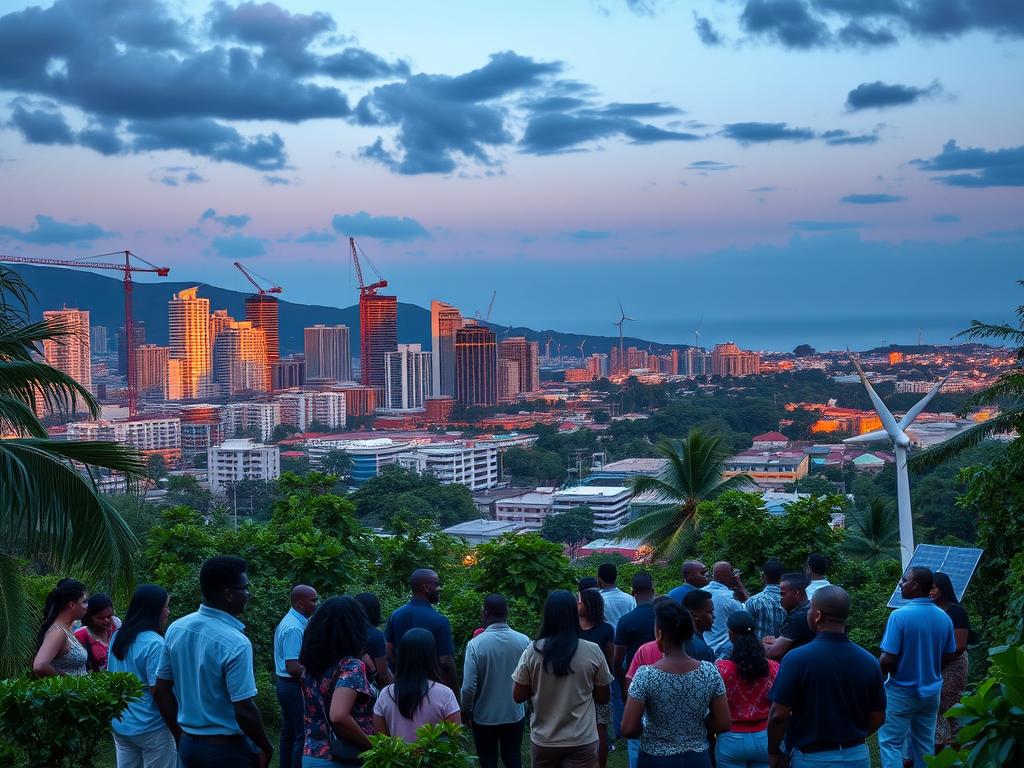
In the heart of the Caribbean, the skyline of Port of Spain tells a tale of dreams deferred but not forgotten. Two decades ago, Trinidad and Tobago’s Vision 2020 emerged as a bold blueprint for the nation’s future, initiated under the leadership of Patrick Manning. This strategic plan aimed to catapult the nation into a developed status by mobilizing resources and efforts towards infrastructure, education, and economic diversification. While the cranes symbolized a hopeful transformation, the journey of realizing Vision 2020 encountered several obstacles that delayed its ambitious goals.
Ambitions sometimes outpace the reality of implementation, and Trinidad and Tobago’s story is no exception. Despite the initial fervor, the vision faced economic and political hurdles that stifled its momentum. Global financial instability and fluctuating oil prices posed challenges to the nation’s growth trajectory. Additionally, shifting political priorities over successive administrations led to the dilution of initial initiatives. However, the underlying aspiration of Vision 2020—of fostering a robust and resilient economy—still echoes within the nation’s cultural and political framework today.
The resurgence of interest in these visionary goals signals a renewed belief that, with the right adjustments, the dream can once again take flight. Current leaders and policymakers appear to be drawing lessons from the past, focusing on sustainable practices, technological innovation, and more inclusive governance to revitalize the original blueprint. The momentum is shifting towards a future that reconciles the grand visions of yesterday with the practical realities of today, laying the groundwork for transformative change.
Moreover, the evolving societal consciousness towards environmental responsibility and social equity adds another dimension to the reimagined vision. Embracing green technologies and prioritizing human capital development are becoming central to national discourse. These efforts highlight a keen awareness that development must be holistic and inclusive to truly unlock the islands’ potential and meet the expectations set forth years ago. Times may have changed, but the ethos of Vision 2020 continues to inspire a new generation of leaders and citizens.
The story of Trinidad and Tobago’s Vision 2020 serves as a compelling reminder that visionary ideas can endure the test of time. They linger, waiting patiently for opportune moments to emerge stronger and more relevant than before. As the nation stands on the brink of a new era, it is clear that past dreams can still shape future realities, affirming that, indeed, it is better to rekindle and refine what was once started than to let it flicker out completely.