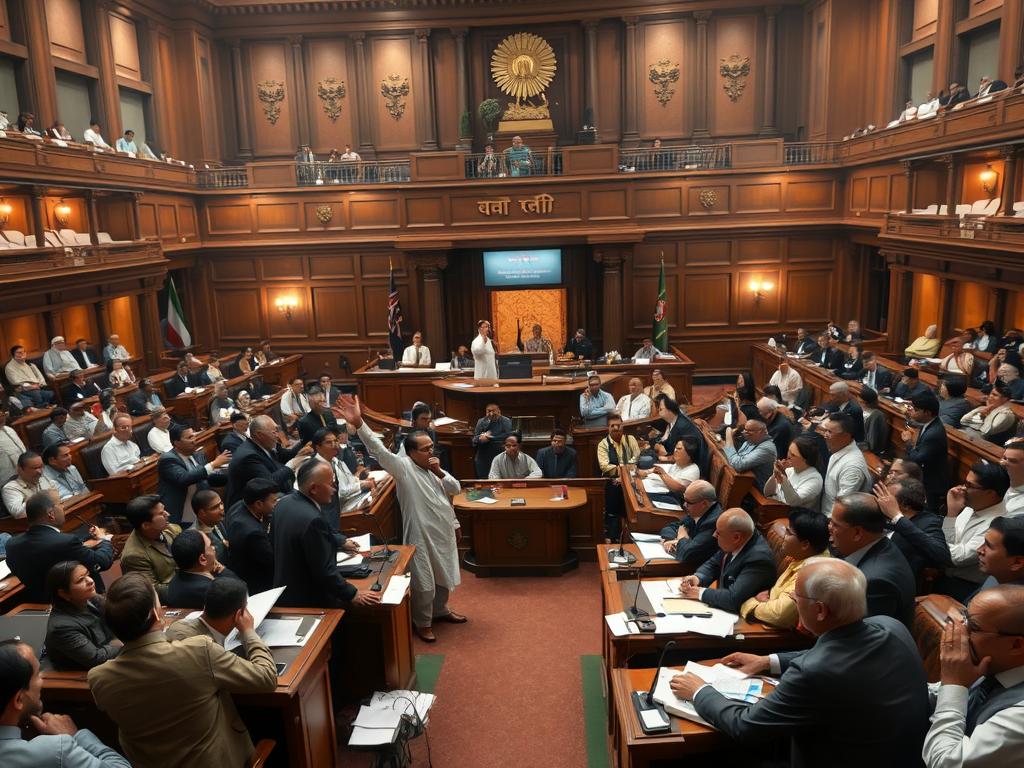
The winter winds of New Delhi seem to have brought more than just a chill to the corridors of Parliament, as the much-anticipated Winter Session continues to encounter rough waters. On December 2, 2025, both the Lok Sabha and Rajya Sabha found themselves mired in chaos for a second day, thrust into adjournments amid unrelenting protests from the Opposition. At the heart of the dispute lies the controversial Special Intensive Revision (SIR) of electoral rolls, a measure that has sparked a fiery debate on its implications for the democratic fabric of India.
The ruling government, steadfast in its commitment to advance crucial legislative agendas, finds itself on a tightrope walk, steering bills amidst a relentless storm of acrimony and disruption. The SIR, intended to update and purify electoral rolls, has come under scrutiny from various political factions. Critics argue that the revision could disproportionately affect the voter registry and potentially disenfranchise sections of the electorate, thereby igniting concerns over gerrymandering and electoral fairness.
Amidst this charged atmosphere, the government’s strategic maneuvering to keep the legislative process relatively on track deserves closer examination. By skillfully navigating procedural protocols, the ruling coalition continues to push through key bills, showcasing their legislative prowess despite the Opposition’s vehement demonstrations. This not only tests the resilience of the parliamentary system but also highlights the dynamic between government pacification efforts and Opposition roadblocks.
Yet, these persistent disruptions spotlight deeper issues within the political landscape of India. For a vibrant democracy to thrive, a balance between robust debate and effective governance must be maintained. While the Opposition’s role in holding the government accountable is crucial, the methods employed bring into question the efficacy of continual unrest in addressing political grievances. This ongoing impasse hints at a need for re-evaluated communication channels, where dialogue, rather than disruption, takes center stage.
The outcome of this parliamentary session remains uncertain, but its larger implications are clear. As the government navigates through legislative turbulence, a recalibration of parliamentary ethos and strategies seems imperative for both sides. Ensuring that democracy does not become a casualty of political brinkmanship requires collective introspection and action, fostering an environment where constructive political discourse can flourish for the betterment of the nation.