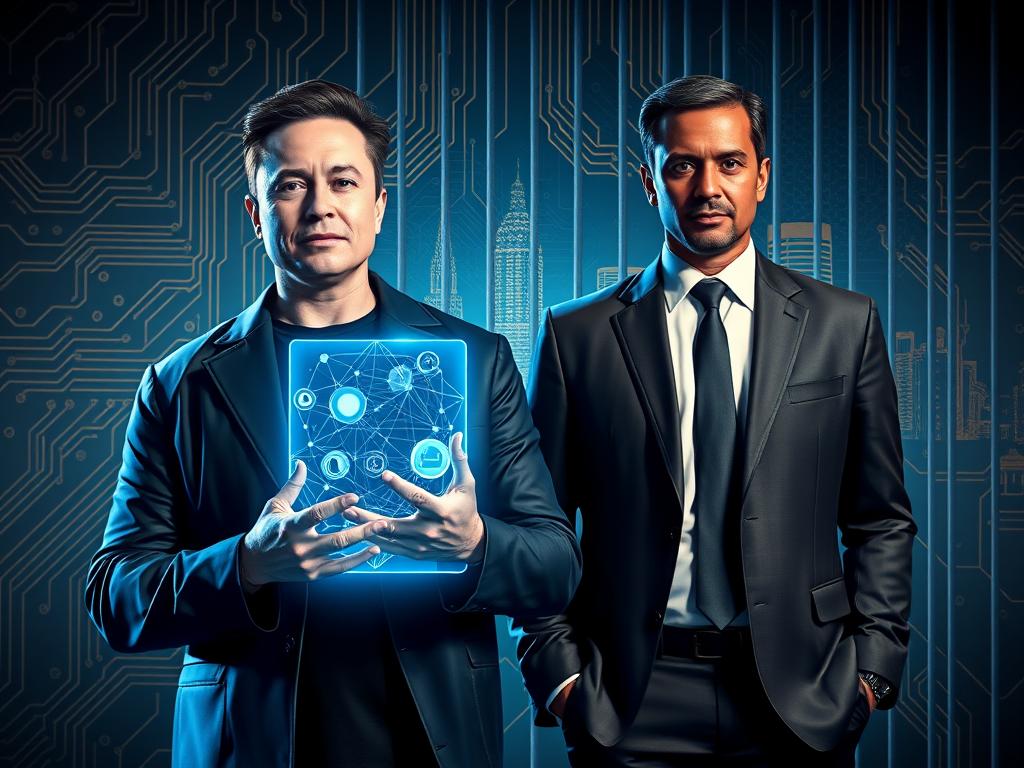
In a surprising alignment of minds from the worlds of technology and governance, Elon Musk has publicly supported El Salvador’s President Nayib Bukele’s staunch stance on crime reduction through a robust prison system. This unusual coalition between a tech mogul and a political leader brings forth a new dialogue on the age-old debate of whether stringent incarceration can genuinely serve as a deterrent to crime. Bukele has been a vocal advocate for what some may see as controversial measures, arguing that society benefits from the palpable threat of imprisonment as a cornerstone of public safety.
Elon Musk’s endorsement of Bukele’s policies is a reflection of his often maverick approach to challenges. Known for his unorthodox views and willingness to disrupt conventional wisdom, Musk appears to see merit in Bukele’s hardline strategies. Musk’s support isn’t surprising when considering his own methodology in business: Confront problems directly and with full force. In a digital age where issues of crime increasingly intersect with technology, the alliance suggests Musk sees merit in a straightforward solution to a complex problem.
This endorsement, however, inevitably raises eyebrows and invites criticism. There are ongoing debates about the ethics and effectiveness of punitive incarceration systems. Critics argue these methods fail to address the root causes of crime and may perpetuate cycles of poverty and violence. Yet, proponents suggest that without firm repercussions, crime could proliferate unchecked. The conversation now tilts towards finding a balanced solution that satisfies both the necessity of deterrence and the humane treatment of individuals within the justice system.
Adding Musk’s voice to this global discourse could reinvigorate discussions around balancing innovation with traditional methodologies in solving societal issues. What is noteworthy here is not just the endorsement itself but the broader implications of merging different sectors—technology, governance, and social justice—in seeking viable solutions. A collaboration of this nature poses questions about the potential for tech leaders to influence public policy beyond their domain, potentially shaping societal norms based on their distinct perspectives.
In conclusion, the backing of Bukele by Musk highlights the confluence of influence and ideation, signaling a possible shift in how world problems are approached. Whether these perspectives can harmoniously integrate remains to be seen. Ultimately, the challenge is to ensure that while seeking these innovative partnerships, we remain vigilant about preserving the ethical and social frameworks that protect humanity. As we look toward the future, the fusion of technological perspective and policy-making could unearth new methodologies in crime deterrence that are both effective and equitable.