





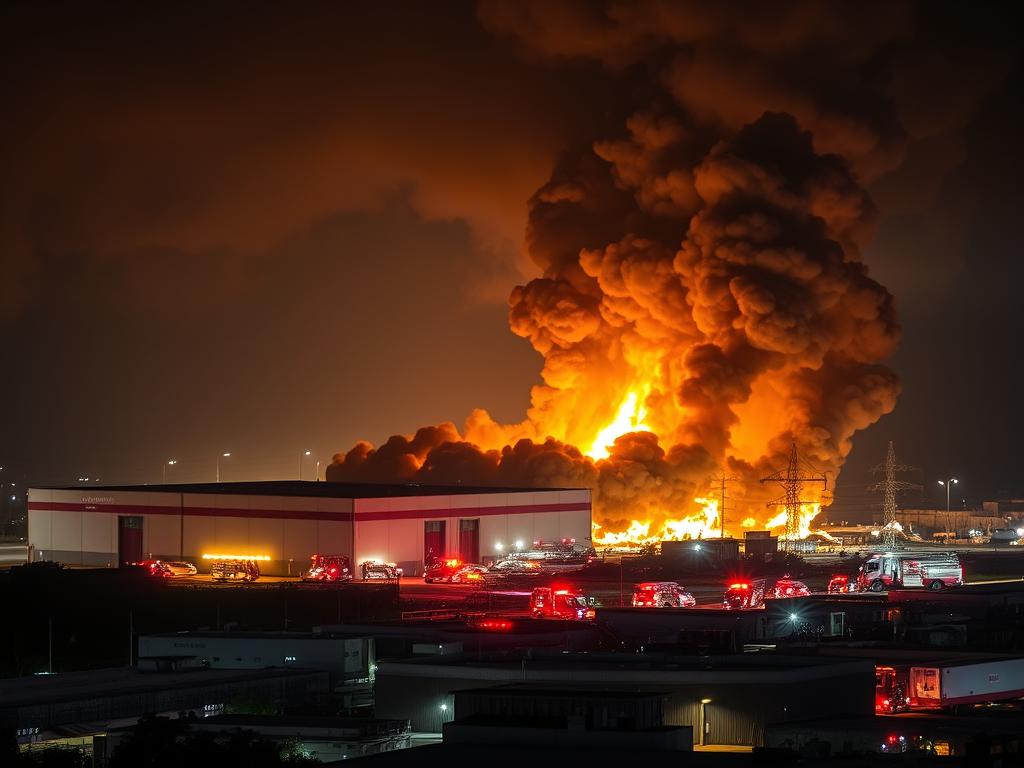
The skies over Cheonan City in South Korea turned foreboding as a massive fire erupted at the E-Land Fashion logistics center. The surreal scene, captured in videos circulating online, shows thick, dark smoke clouding the horizon, a stark reminder of the chaos unfolding below. This blaze marks a significant event, not just in scale, but in its implications for logistics and safety protocols within the industry.
The fire authorities, confronted with the task of taming the fiery beast, promptly issued a Level 2 response. This indicates a serious threat, mobilizing a substantial response from local fire services in an attempt to bring the situation under control. As responders work tirelessly to extinguish the fire, their efforts underscore the critical nature of preparedness and efficient response systems in the face of unforeseen crises.
Beyond the immediate firefighting efforts, this incident serves as a wake-up call for the logistics and warehousing sector. It’s a stark reminder of the vulnerabilities that even the most established facilities face. Safety measures, risk assessments, and emergency protocols are scrutinized in the aftermath of such events, pushing companies to reinforce their strategies to prevent future disasters.
The economic reverberations of the fire at the E-Land Fashion logistics center are also likely to be felt widely. As a significant hub in South Korea’s supply chain, operational disruptions could lead to ripple effects impacting the timely distribution of goods and the overall efficiency of the logistics network. This incident highlights the importance of building redundancy and resilience into logistics systems to mitigate the impacts of such catastrophic events.
In conclusion, while the E-Land Fashion logistics center fire in Cheonan presents immediate challenges, it also offers an opportunity to re-evaluate and innovate within the logistics industry. As the smoke clears, it becomes increasingly important to learn from this incident, enhancing safety and response protocols to protect both facilities and the people who work within them. Ultimately, the resilience of the supply chain in the face of such adversities can define the future of logistics in a world where preparedness is paramount.