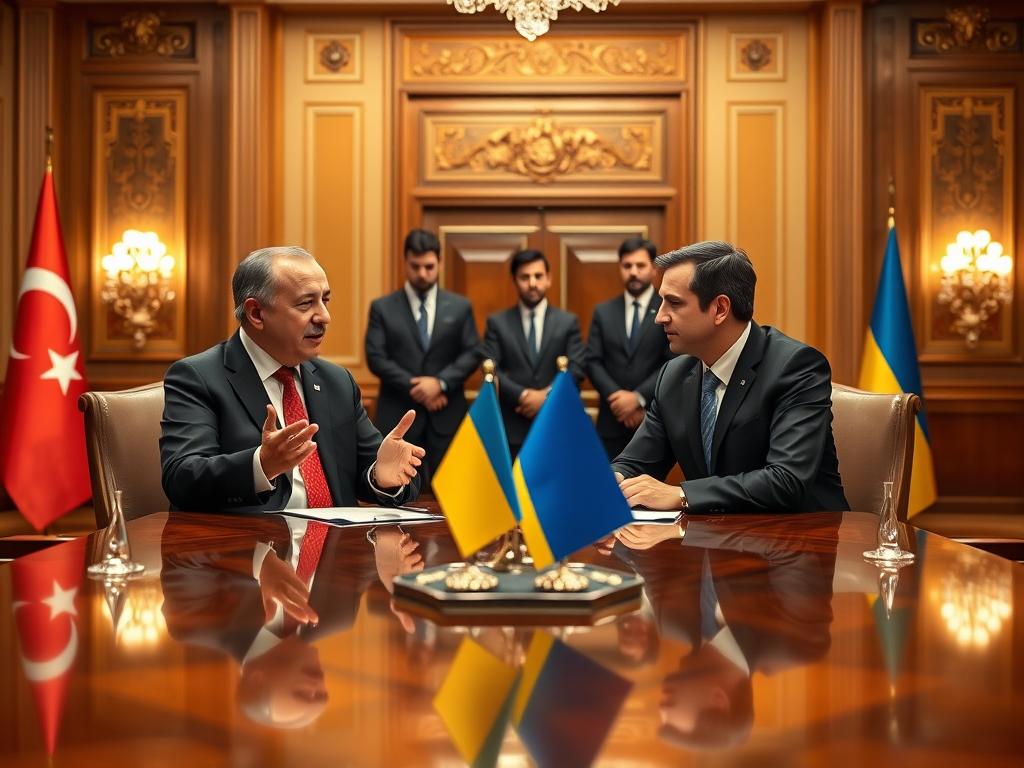
This week, diplomatic lenses are firmly set on Ankara as Turkey’s President Recep Tayyip Erdogan prepares to engage in discussions solely with Ukraine’s President Volodymyr Zelenskiy. This exclusive meeting underscores the increasingly pivotal role Turkey plays within the geopolitical landscape of Eastern Europe. Erdogan’s decision to only host Zelenskiy initially raises questions about the current dynamics between Turkey, Ukraine, and Russia. It reflects Turkey’s strategic balancing act, as it aims to solidify its mediating influence while addressing the festering conflict in the region.
Erdogan’s conversations with Zelenskiy are emblematic of Turkey’s broader diplomatic strategy, focusing on wielding influence in Eastern Europe and potentially reasserting itself as a key peace broker. As tensions between Ukraine and Russia linger, Erdogan has chosen to navigate this complex terrain by engaging directly with Ukrainian leadership, which may indicate a pursuit of deeper alliances or mutual interests shared by Ankara and Kyiv. Such a move could strengthen Turkey’s standing in European diplomacy while also showcasing its commitment to regional stability.
In the backdrop of these talks, Zelenskiy’s presence in Ankara symbolizes more than just a bilateral meeting; it is a statement of Ukraine’s ongoing efforts to solicit wider international support amid its largely frozen conflict with Russia. This dialogue provides an opportunity for Ukraine to reiterate its security concerns and territorial integrity while also exploring avenues for economic cooperation and political support from a pivotal NATO member. For Zelenskiy, securing Turkey’s backing can significantly bolster his administration’s diplomatic arsenal.
For Erdogan, the timing of the meeting could not be more critical. As Turkey navigates its own internal and external challenges—ranging from economic pressures to complex regional dynamics—positioning itself as a principal actor in the Russia-Ukraine conflict offers leverage on the global stage. With attention tuned to Ankara, Erdogan has the chance to reinforce Turkey’s image as an indispensable interlocutor capable of bridging divides in one of the world’s most volatile regions.
As the talks between Erdogan and Zelenskiy unfold, the international community watches with anticipation. The meeting reflects the intricate tapestry of modern diplomacy, where strategic partnerships are as vital as formal alliances. In fostering dialogue and potential collaboration with Ukraine, Turkey demonstrates its dexterity in foreign policy—one that, ideally, could pave the way for renewed efforts towards regional peace and stability. The outcome of their discussions, though yet uncertain, carries the potential to reshape geopolitical narratives in Eastern Europe.