






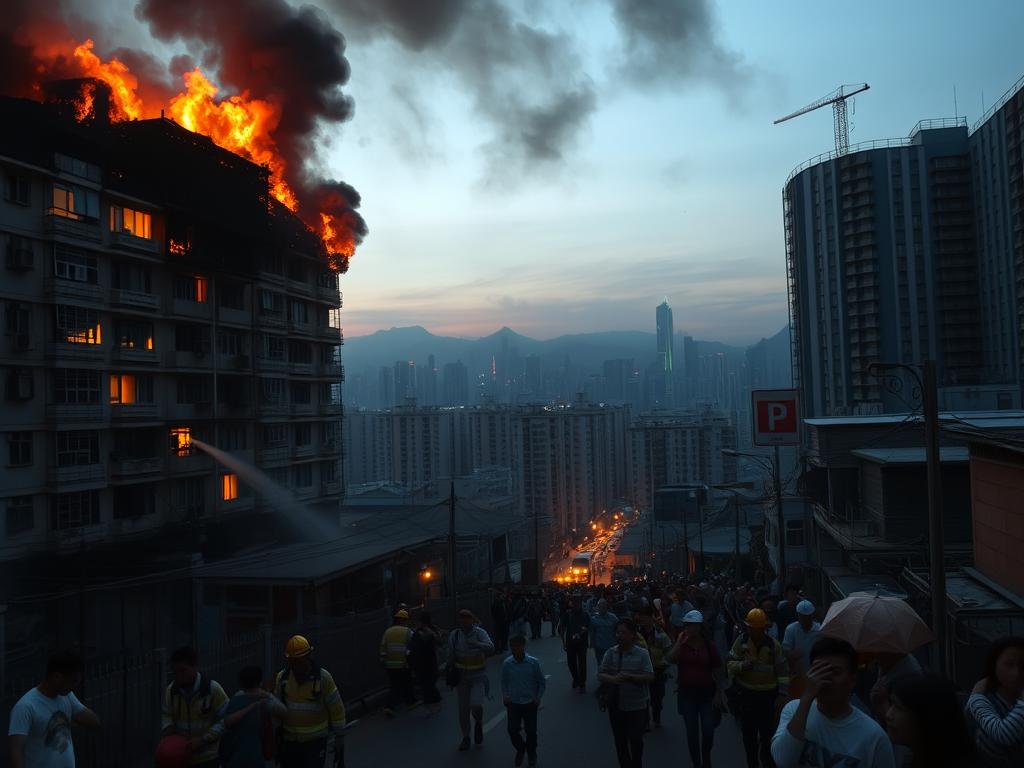
The picturesque skyline of Hong Kong was marred by tragedy as the city witnessed its deadliest fire in decades. With at least 83 lives lost and many still unaccounted for, the inferno that engulfed the Wang Fuk Court residential estate in Tai Po has left a deep scar on the bustling metropolis. The fire, which reportedly raged over 24 hours, consumed four units of the vast apartment complex, despite the valiant efforts of the city’s firefighting units. This incident sadly reminds us of the vulnerabilities even in some of the world’s safest urban landscapes.
The attempts to pinpoint the catalyst of this disaster have brought under scrutiny the renovation practices in Hong Kong’s high-rise apartments. The presence of bamboo scaffolding and plastic meshes typical of renovation sites has raised serious concerns about fire safety standards. The city’s anti-corruption body, along with the police, has already jumped into action, scrutinizing renovation protocols and looking into potential lapses that could have fueled the tragic chain of events. These investigations could lead to significant regulatory changes in Hong Kong’s construction and renovation norms, ensuring such an occurrence remains a grim anomaly.
Eyewitness accounts paint a poignant picture of resilience and community spirit amidst chaos. Residents reportedly resorted to door-to-door alerts due to a lack of functional fire alarms, symbolizing both a fail-safe against technology shortfalls and a testament to communal solidarity. This incident has not only spurred an immediate review of fire safety measures but also highlighted the humanitarian impulse ingrained within the city’s fabric, as residents took it upon themselves to warn and protect their neighbors.
Responses from the government and community efforts further underscore the spirit of unity during hardship. The government has moved swiftly, opening shelters and launching emergency fund initiatives, reflecting a robust civic mechanism ready to support its citizens in distress. Meanwhile, ordinary residents have shown extraordinary kindness, distributing essentials and organizing aid for the affected families. Their collective actions embody a city united by empathy and a profound sense of responsibility towards one another.
As Hong Kong mourns, the world watches how this tragedy might shape the city’s future. There is a dire need for a renewed focus on urban planning that prioritizes safety alongside development. This disaster highlights the importance of proactive governance and vigilant community efforts. In adversity, Hong Kong comes together in a testament to its resilience and enduring spirit, reminding us all of the duty to care and prepare for the unforeseen.