In the ever-expanding universe of astronomical exploration, researchers at the International Centre for Radio Astronomy Research (ICRAR) have embarked on a groundbreaking survey that sheds new light on the cosmic forces steering galaxy evolution. By meticulously mapping these celestial formations, they’ve uncovered essential elements influencing the birth, life, and eventual fate of galaxies across the universe. This recent study is transforming our understanding of how galaxies interact with their cosmic environments, and how these relationships impact their lifecycle.
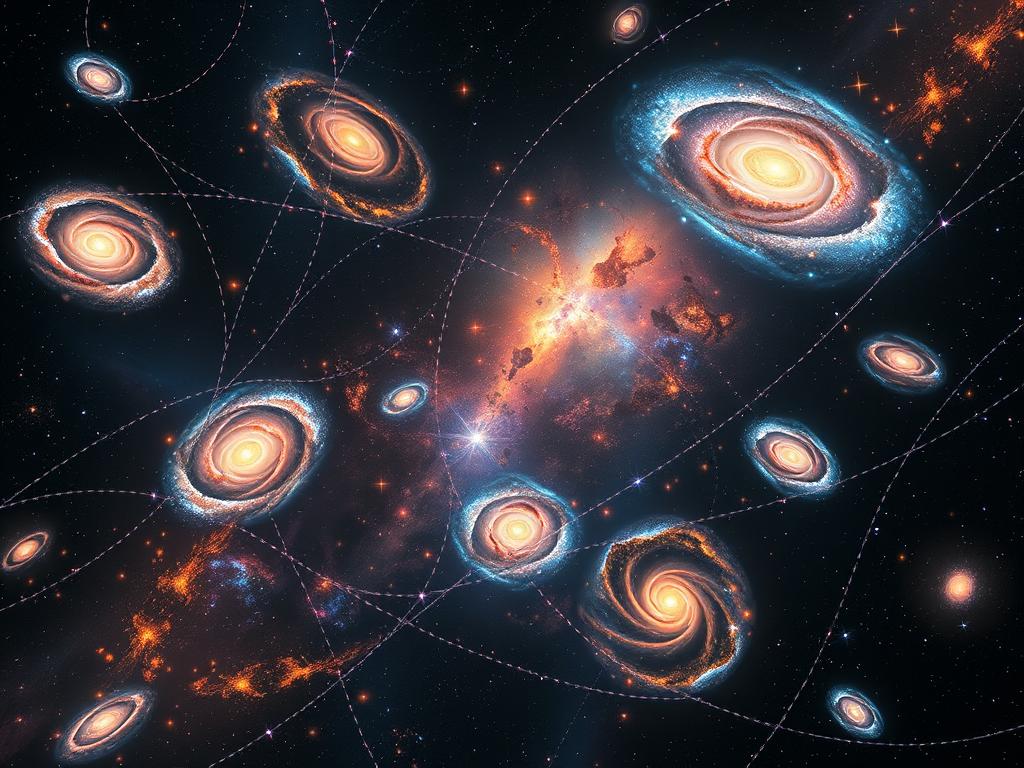
The findings from this survey are revealing intricate connections between individual galaxies and the vast cosmic web they inhabit. This web, composed of dark matter, intergalactic gas, and other extragalactic elements, acts as an unseen yet omnipresent force directing the development of galactic structures. The patterns identified offer clues about how these giant cosmic tapestries guide galaxies’ transformations over billions of years. Astronomers noted subtle but significant impacts, such as gravitational influences and gas inflows from larger superstructures, which shape a galaxy’s growth and star formation rates.
One particularly intriguing aspect of the research is the role of environment on galaxy evolution. It appears that galaxies do not evolve in isolation; rather, they are deeply influenced by the neighborhoods they occupy. In denser clusters, galaxies may experience more rapid interactions and mergers, leading to accelerated star formation or, paradoxically, quenching processes that halt star production altogether. This insight forces a paradigm shift in how astronomers perceive galaxy evolution, emphasizing the need to consider the wider cosmic context, rather than focusing solely on individual galaxies as isolated entities.
The implications of this research extend beyond academia. By enhancing our comprehension of galaxy formation and evolution, these insights contribute to the broader quest of understanding the universe and our place within it. They provide a more nuanced view of cosmic history and present new opportunities for theoretical and computational models attempting to simulate galactic dynamics. This symbiotic relationship between observational data and theoretical innovation is crucial for propelling forward the frontier of astronomical discovery.
In conclusion, the ICRAR’s survey underscores the importance of considering the interconnected nature of galaxies and their environments. The cosmic landscape is not a mere background to galactic life but an integral part of its narrative. As researchers continue to probe deeper into the cosmos, each discovery paves the way for future explorations into these distant realms, offering a more profound understanding of the universe’s mesmerizing complexity. This research not only informs our scientific knowledge but also fuels the human imagination, reminding us of the subtle yet powerful ties that connect all forms of cosmic life.