






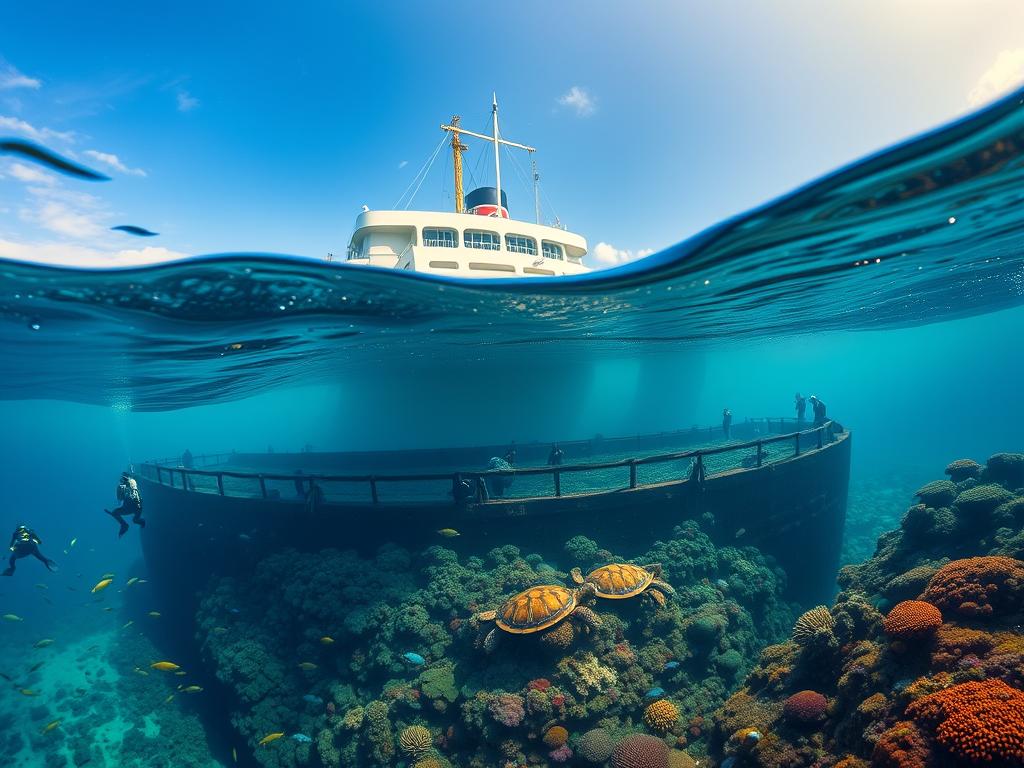
The SS United States, a hallmark of maritime history and former champion of speed across the Atlantic, is embarking on a final, transformative journey. After decades of service and subsequent dormancy, this legendary liner is set to become an artificial reef off the coast of Florida. This novel transformation not only ensures the preservation of its legacy but also contributes positively to marine ecosystems. Over the past year, extensive efforts have been made at the Port of Mobile in Alabama to rid the ship of hazardous materials, setting the stage for its new underwater chapter.
The decommissioning and repurposing of the SS United States are emblematic of broader trends in maritime conservation and creative reuse. As the ship is stripped of harmful substances, it underscores a growing environmental awareness within the maritime industry. Crafting artificial reefs from old vessels is a burgeoning practice that helps restore marine habitats by providing structures where sea life can thrive. It also offers a reminder of how humans can harmonize industrial heritage with ecological stewardship.
Artificial reefs not only bolster biodiversity but also offer additional benefits—such as enhancing local tourism and fishing opportunities. The SS United States will soon be home to myriad marine species, inviting divers and marine biologists alike to explore its submerged corridors. This initiative is expected to bolster the state’s appeal as a prime location for aquatic tourism while fostering new avenues for environmental research and education.
The ship’s transformation from gliding the ocean’s surface to resting beneath its waves highlights humanity’s enduring bond with the seas. Vessels like the SS United States carry stories within their hulls, stories that contribute to our cultural heritage. Repurposing such a vessel is a testament to innovative preservation, ensuring these narratives remain part of our marine environment and collective consciousness.
As the SS United States prepares to grace the ocean floor, it prompts reflection on the cyclical nature of progress and conservation. Its legacy, woven through its towering past and forthcoming ecological role, serves as a beacon of how history and innovation can coexist. By converting an icon of a bygone era into a vessel of oceanic renewal, we are reminded of our capacity to shape a future that respects both our past and our planet’s health.