






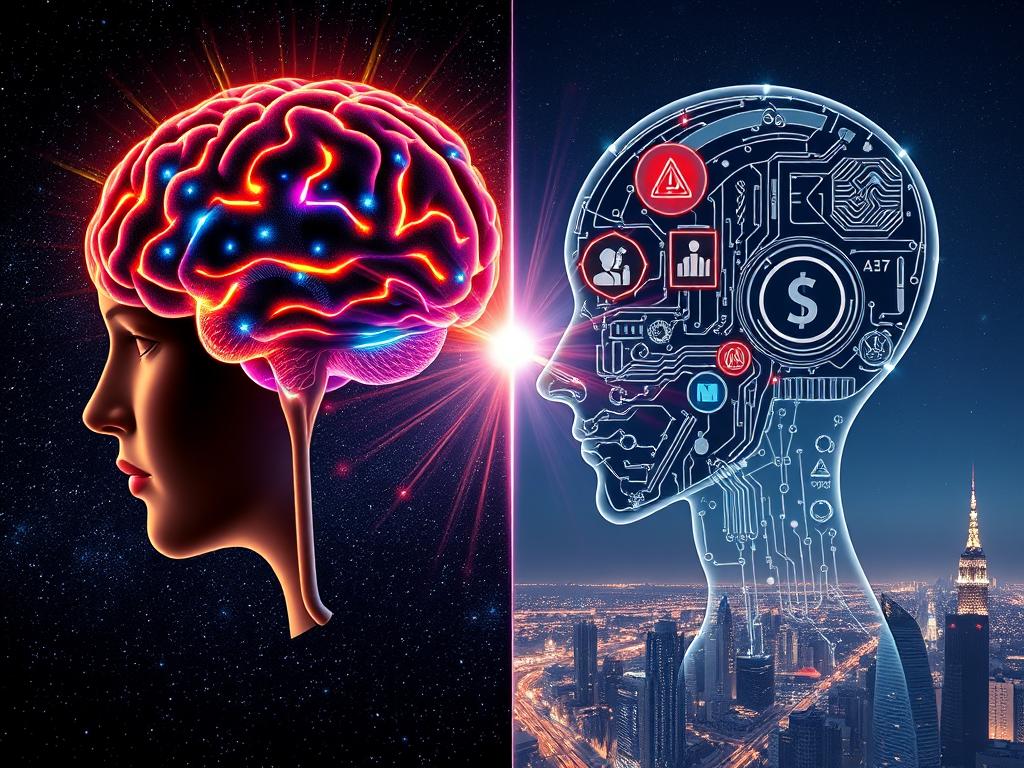
The story of human progress is a tale scripted by the remarkable capabilities of the human brain, the architect of every civilization and the catalyst for every cultural renaissance. At the heart of this expansive journey is our innate proclivity towards innovation and understanding, which has allowed us to manipulate natural resources, understand the cosmos, and decode the very codes of life. Yet, as we stand on the cusp of a new technological frontier, artificial intelligence presents both a mirror reflecting our cognitive brilliance and a prism through which we must navigate its implications.
Artificial Intelligence (AI), with its roots deep in human aspiration, embodies the culmination of centuries of intellectual endeavor. It represents our attempt to replicate the enigmatic processes of the human mind through algorithms and data-driven models. From language processing marvels to complex problem-solving and predictive analytics, AI not only assists but sometimes exceeds human capability. As much as it inspires awe with its potential to revolutionize healthcare, finance, and education, AI is a testament to human tenacity and creativity.
However, within this celebration of AI’s potential lies an undercurrent of caution that surfaces prominently with the advent of deepfakes. These technologically engineered illusions challenge our perceptions of reality by creating hyper-realistic audio and visual content. While deepfakes can serve entertainment and artistic endeavors, their potential misuse in misleading information campaigns or invasion of privacy raises ethical concerns about authenticity and trust in digital media. As curators of this powerful tool, the onus is on us to ensure that its application does not erode societal structures that value truth and credibility.
This dual nature of AI—its capacity for immense creativity and potential for disruption—raises compelling questions about the ethical frameworks that must accompany technological advancements. How do we harness AI’s capabilities to enhance human life while regulating its dark side? Policymakers, technologists, and ethicists must collaborate to forge new paths that safeguard against misuses while fostering innovation. The emerging narrative around AI is not just about its functionality but about crafting a balanced approach that respects human values and societal well-being.
In conclusion, AI mirrors the intricate dance of human evolution—the fusion of originality and invention. As architects of our future, we must guide AI’s journey with care, ensuring it reflects our highest aspirations rather than our fears. Embracing AI’s potential while vigilantly guarding against its misapplications will be our greatest challenge and testament to our ingenuity. Only through thoughtful stewardship can we ensure that AI remains a force for positive transformation, echoing the wonders of the human brain that made it possible.