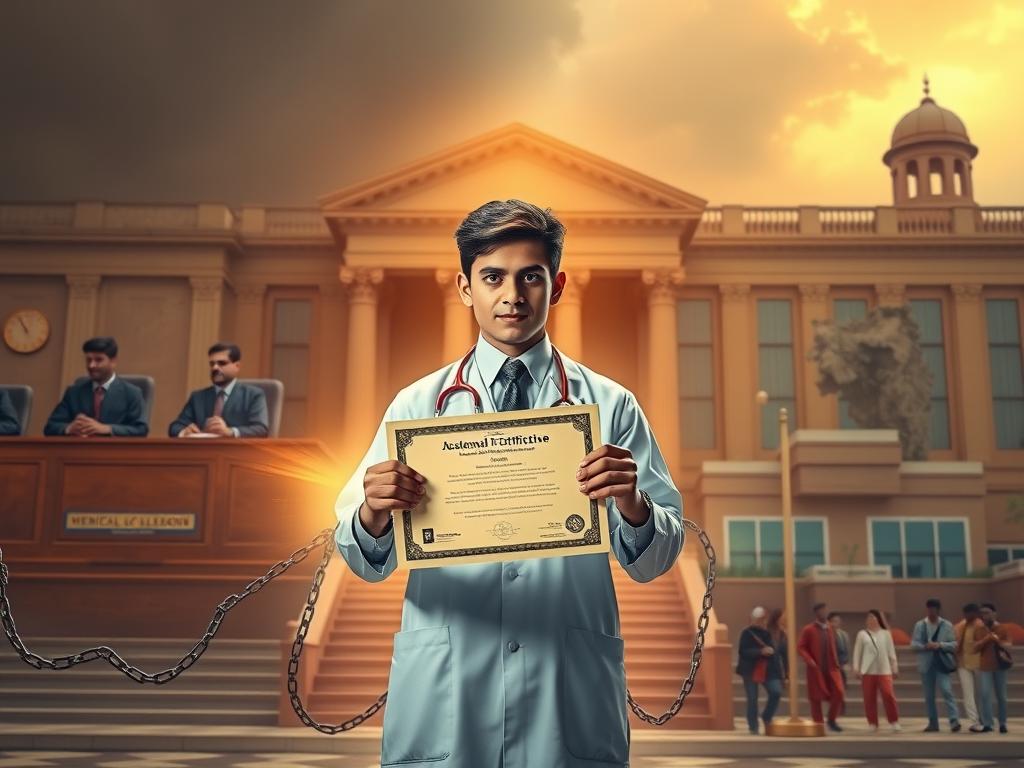
The recent ruling by the High Court emphasizing that students’ certificates are their personal property and cannot be held by educational institutions marks a significant development in educational autonomy and accountability. This verdict comes in the wake of issues faced by students of White Medical College and Hospital, who were transferred to other institutions in Punjab due to critical infrastructural shortcomings. The decision serves as a profound reminder of the legal and ethical obligations educational bodies owe to their students.
At the heart of the matter is the notion of ownership. Certificates represent not just proof of academic achievement but also the hard work, dedication, and future opportunities for students. Retaining such documents as leverage or collateral undermines students’ autonomy and can severely impact their career prospects. By reaffirming the rightful ownership of educational certificates, the court has set a precedent that could foster a more equitable academic environment.
Inadequate infrastructure at educational institutions is an issue that extends beyond merely physical deficiencies. It echoes a broader systemic problem where students’ aspirations are jeopardized by institutional incapacity. The transfer of students from White Medical College was necessitated not only for their immediate educational needs but also to ensure they graduate from credible, respected institutions. Thus, this ruling not only advocates for individual ownership but also pushes for higher quality standards in education, holding institutions accountable for their operational responsibilities.
While administrative and legal efforts address the aftermath, proactive measures are crucial. Educational institutions must prioritize transparency and accountability, aligning their infrastructure and policies with the best interests of their students. Furthermore, the education system as a whole should evolve with stringent mechanisms to prevent the recurrence of such scenarios, ensuring students are protected from being collateral damage in institutional shortcomings.
Ultimately, this ruling is a victory for student rights and a clarion call for educational reform. By liberating certificates from the hands of institutions, the High Court has empowered students, giving them control over their educational narrative and future. As institutions take heed of this development, a transformative shift towards a more student-centric academic ecosystem may just be on the horizon.