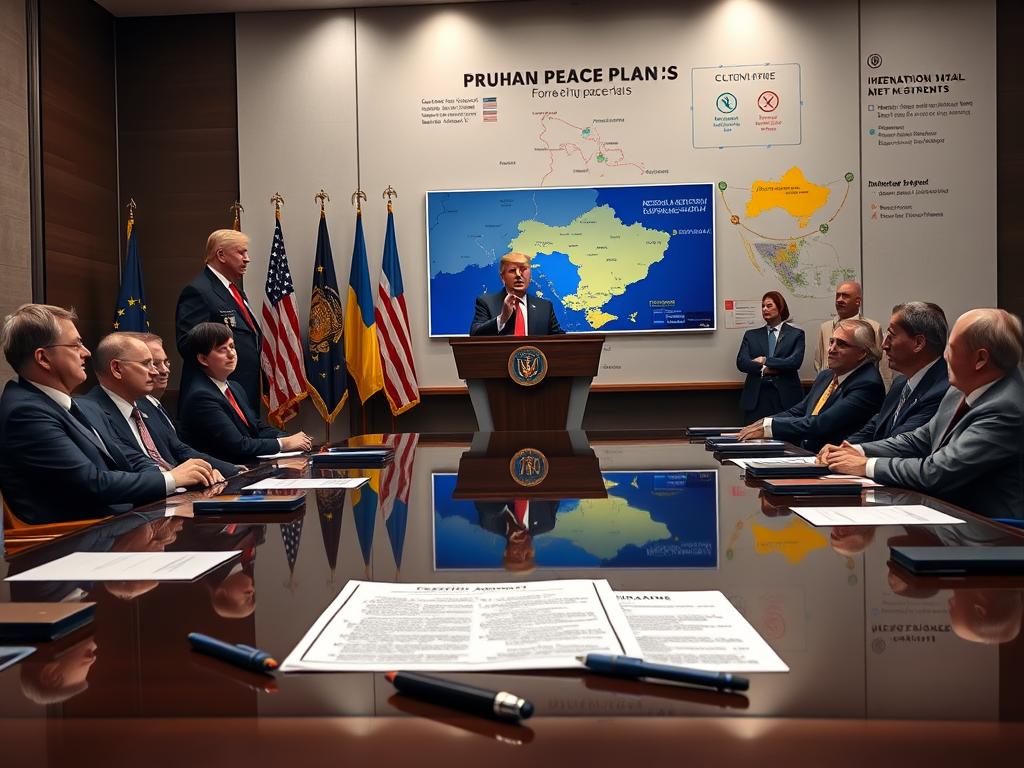
In a world increasingly characterized by geopolitical tensions, former President Donald Trump’s recent peace plan for Ukraine has sparked considerable interest and debate. With a blend of diplomacy and strategic restraint, Trump’s proposal comes at a crucial time when the stakes are high, not just for Ukraine, but for its broader European allies. While the specifics of the plan remain under rigorous scrutiny, key aspects highlight Trump’s approach to mitigating conflict while attempting to address the deep-rooted grievances that have long fueled discord.
A significant element of Trump’s proposal involves a ceasefire followed by guided negotiations. Historically, ceasefires have been fraught with challenges, often unraveling before peace negotiations can gain traction. However, Trump’s plan argues for an internationally monitored truce, positing it as a vital first step towards de-escalation. For Ukraine, whose sovereignty has been persistently challenged, any cessation of hostilities needs to ensure that their territorial integrity is respected. The international community, particularly European nations, will need to balance backing Ukraine’s autonomy with diplomatic delicacies to avoid further provocation from involved parties.
Another cornerstone of the plan is a call for economic rebuilding through a comprehensive international aid program. Such financial injection aims to stabilize Ukraine’s economy, buffering it against the turmoil incurred during the conflict. For European allies, who are also economically intertwined with Ukraine, the proposal brings forth both an opportunity and a challenge. Sustaining economic aid will require a concerted effort from the EU, necessitating collective commitments while managing domestic political pressures to prioritize local economic concerns.
Implicit in Trump’s approach is a strategic realignment of alliances and recalibration of military commitments. While this element might appeal to advocates of de-escalation, it also raises questions about longer-term security guarantees for Ukraine and the broader Eastern European region. A potential reduction in military presence could be interpreted as an opportunity for adversarial forces to fill any perceived security vacuums. Therefore, Ukraine and its European allies must critically evaluate how to incorporate robust defensive mechanisms while engaging in any potential peace dialogues.
Ultimately, whether Trump’s peace plan serves as a catalyst for meaningful change or remains another entry into the annals of unrealized political promises hinges on multifaceted diplomacy and collaboration. As Ukraine holds the line against ongoing aggressions, its European partners must ensure that any peace negotiations reinforce Ukraine’s sovereignty and safety while fostering pathways to sustained peace. This endeavor calls for nuanced diplomacy, unwavering support, and a shared vision for a stable post-conflict future.